The AnewZ Opinion section provides a platform for independent voices to share expert perspectives on global and regional issues. The views expressed are solely those of the authors and do not represent the official position of AnewZ
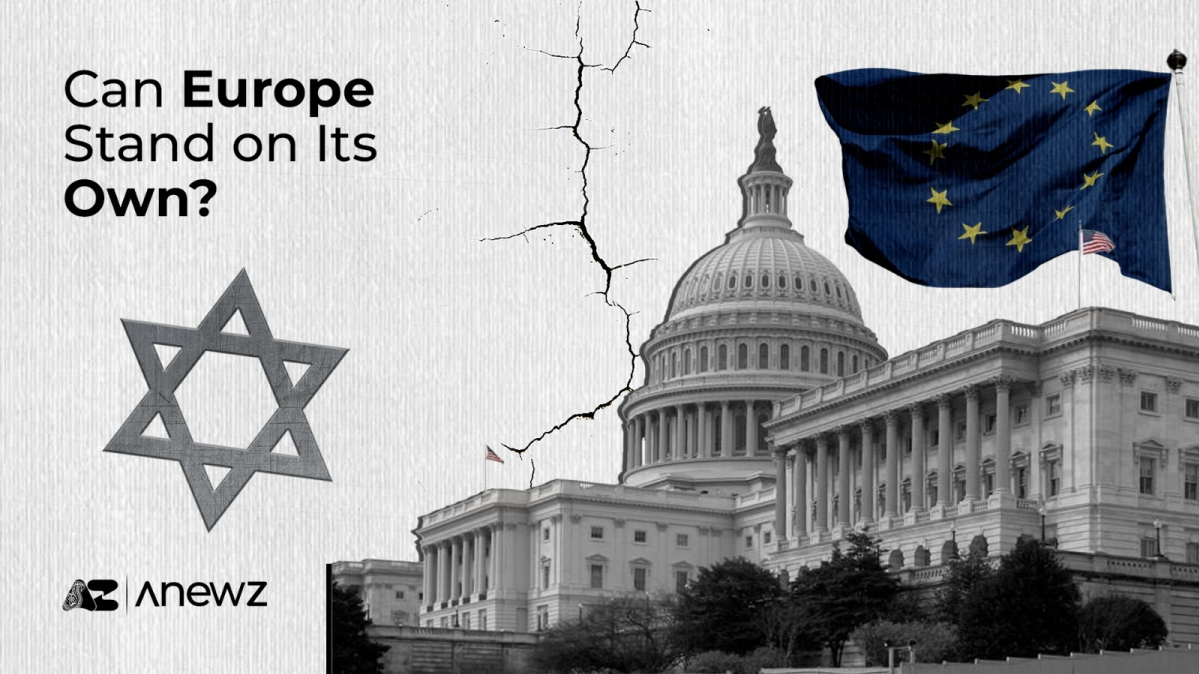
The ongoing escalation in the Middle East involving the United States, Israel and Iran is not merely another episode in the long history of the region's crises. It is also a revealing illustration of Europe’s increasingly conflicted position within a rapidly transforming international order.
Confronted with the prospect of a regional war involving one of its key transatlantic allies and a long-standing adversary, Europe finds itself navigating a difficult strategic triangle between Washington, Tel Aviv and Tehran. The conflict, which in some respects has already begun in 2025, exposes both the limits of Europe’s geopolitical influence and the structural ambiguities of its foreign policy.
These tensions are evident both among Europe’s major powers and within the European Union itself, as it aspires to act as a coherent geopolitical actor.
A precedent for division
A revealing precedent for these ambiguities emerged after the United States withdrew from the Joint Comprehensive Plan of Action in 2018 during the first Trump administration. In the years that followed, European powers attempted to preserve the agreement through diplomatic engagement with Tehran and mechanisms such as INSTEX - liquidated in March 2023 - designed to facilitate limited trade while circumventing U.S. sanctions.
Although these efforts ultimately failed to sustain the agreement, they demonstrated Europe’s determination to maintain a negotiated framework with Iran, even as transatlantic unity on the issue fractured.
A structural contradiction
At the heart of Europe’s current dilemma lies a contradiction that has become increasingly visible in recent years. European governments share many of the concerns expressed by the U.S. and Israel regarding Iran, including its nuclear ambitions, missile capabilities and support for regional proxy networks.
At the same time, many European policymakers remain deeply uneasy with the strategic logic of military escalation, which risks triggering a broader regional conflict. The consequences of such a conflict would inevitably be felt across Europe.
This ambivalence is not accidental. Rather, it reflects deeper structural changes both in the international system and within the transatlantic alliance.
The erosion of the post-Cold War order
Following the Cold War, the European security order rested on a relatively stable division of labour. The United States, acting as the liberal hegemon, provided the overwhelming share of military power within NATO. Meanwhile, European states prioritised economic integration, multilateral diplomacy and the projection of normative influence.
The resulting “peace dividend” allowed Europe to externalise much of its security burden.
Today, however, that model is under increasing strain. The erosion of the liberal international order and the emergence of what may be described as a “multipolar” system have fundamentally altered the strategic environment. This system is characterised by the diffusion of global power and growing political polarisation within the West, which has been central to the international system since 1945.
Washington’s strategic reorientation
On the American side of the Atlantic, a shift towards prioritising the Indo-Pacific and a growing focus on domestic economic and political resilience have gradually reduced Washington’s willingness to sustain the global role it assumed after 1945.
Even where the U.S. remains militarily engaged in regions such as the Middle East, its strategic calculations are increasingly selective and transactional. This shift appears more structural than cyclical.
As the U.S. National Security Strategy published last December suggests, the reorientation underway reflects the culmination of a bipartisan trend that began during the presidency of Barack Obama and has since consolidated across successive administrations.
The strategy articulates a more restrictive definition of U.S. national interest, subordinating external commitments to domestic economic, technological and political resilience. In this framework, foreign policy becomes increasingly instrumental to internal regeneration, prioritising border control, economic security, technological supremacy and credible military deterrence, including nuclear capabilities.
Crucially, the document also questions the expansive logic of post-Cold War liberal hegemony. Rather than seeking to sustain global primacy, the U.S. signals a willingness to act more selectively, focusing on preventing the emergence of hostile regional hegemons.
Europe’s exposure to crisis
The Iran crisis illustrates the consequences of this evolving dynamic. Europe remains heavily dependent on American military capabilities to manage instability on its broader periphery, yet it often has limited influence over the strategic decisions shaping those interventions.
The result is a recurring pattern: Europe is affected by crises it neither initiates nor decisively controls.
The consequences of such crises are also structurally asymmetric across the Atlantic. Europe is significantly more exposed than the United States to the secondary effects of a large-scale Middle Eastern conflict.
From an energy perspective, European economies are more dependent on oil and natural gas from the region, while the U.S., with its domestic production and greater energy autonomy, is better insulated from regional shocks.
Humanitarian consequences would also fall disproportionately on Europe. Large-scale instability in Iran would likely generate refugee flows primarily directed towards Europe, as occurred during the Syrian civil war - despite Syria’s much smaller population.
A further escalation, particularly involving a large-scale ground intervention or the fragmentation of the Iranian state, could therefore generate migration pressures far exceeding previous levels.
Internal divisions within Europe
The European Union could also face significant political costs to its external influence. Continued ambiguity or perceived inaction risks further eroding the Union’s diplomatic credibility across the Middle East, the South Caucasus and Central Asia.
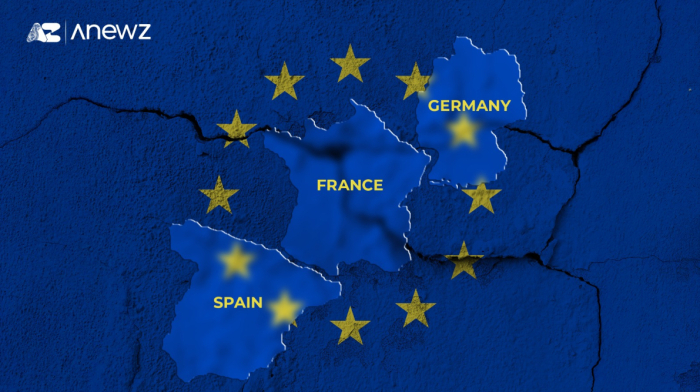
At the same time, differing national positions on the conflict could deepen internal divisions. Countries such as Spain often advocate more critical positions towards Israel and the U.S., while Germany and Italy tend to adopt more cautious approaches aligned with transatlantic priorities.
This structural predicament is compounded by institutional realities within the EU. Despite repeated calls for “strategic autonomy” and a more “geopolitical” posture, the Union remains a sui generis entity in which foreign and security policy largely remains a national prerogative.
Divergent threat perceptions, limited military capabilities and persistent institutional fragmentation continue to constrain the EU’s ability to act as a unified geopolitical actor.
Wider regional implications
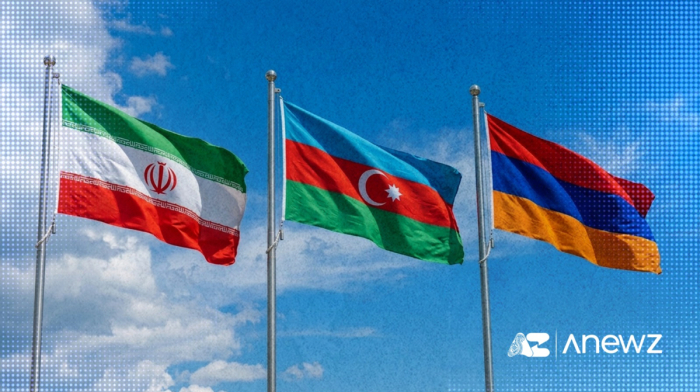
The implications extend well beyond the Middle East. Countries along Europe’s extended strategic periphery - particularly in the South Caucasus - are directly affected by shifts in the broader balance of power linking the Middle East, Eurasia and the Black Sea basin.
Azerbaijan, positioned at the intersection of these geopolitical spaces and serving as a key energy and transport hub connecting the Caspian region to Europe, has a direct stake in regional stability.
Escalation involving Iran therefore carries consequences that reverberate far beyond the immediate theatre of conflict.
Europe’s unresolved question
Ultimately, Europe’s response to the Iran crisis highlights a deeper unresolved question at the heart of its foreign policy.
The EU aspires to act as a geopolitical actor capable of shaping the international order. Yet it remains structurally dependent on American military power and often distances itself from the strategic choices that accompany it.
As the international system becomes increasingly defined by great-power competition, regional power projection and the gradual erosion of the post-Cold War order, this contradiction will become harder to sustain.
The Iran crisis, therefore, not only tests Middle Eastern stability but also underscores the limits of Europe’s geopolitical ambitions - limits that will persist until it resolves the fundamental tension between strategic dependence and strategic autonomy.
















What is your opinion on this topic?
Leave the first comment