Reeling from macroeconomic shockwaves triggered by the escalating conflict in the Middle East, authorities in Dhaka have activated emergency national protocols aimed at sharply reducing domestic power consumption.
With the U.S.-Israeli war involving Iran sending global fuel markets into turmoil, the South Asian nation has been forced to alter daily life in a bid to stretch rapidly dwindling energy reserves.
Following an emergency cabinet session on Thursday, the government approved a sweeping package of austerity measures to stabilise an increasingly fragile domestic energy situation. Heavily reliant on maritime fuel imports, Bangladesh is acutely exposed to price volatility and supply chain disruption across global energy markets.
Drastic curbs on daily life and education
The most immediate impact of the government’s conservation strategy is a significant reduction in working hours. Under newly gazetted rules, all government offices and state institutions will operate from 9:00 a.m. to 4:00 p.m.
Commercial activity faces even tighter restrictions. Markets, shopping centres and retail hubs must close by 6:00 p.m., a move expected to hit the informal economy hard. In densely populated Dhaka, where evening trade is vital, the curbs could affect millions of small business owners and daily wage earners.
The disruption extends into the education sector. The education ministry is preparing emergency guidelines for schools, due to be issued on Sunday. Officials are considering shifting a large portion of lessons online to reduce electricity demand, echoing measures used during the pandemic.
Timetables are also expected to be adjusted to maximise daylight hours. In a parallel long-term initiative, the government has approved duty-free imports of electric buses for school transport, alongside financial incentives for institutions adopting greener options.
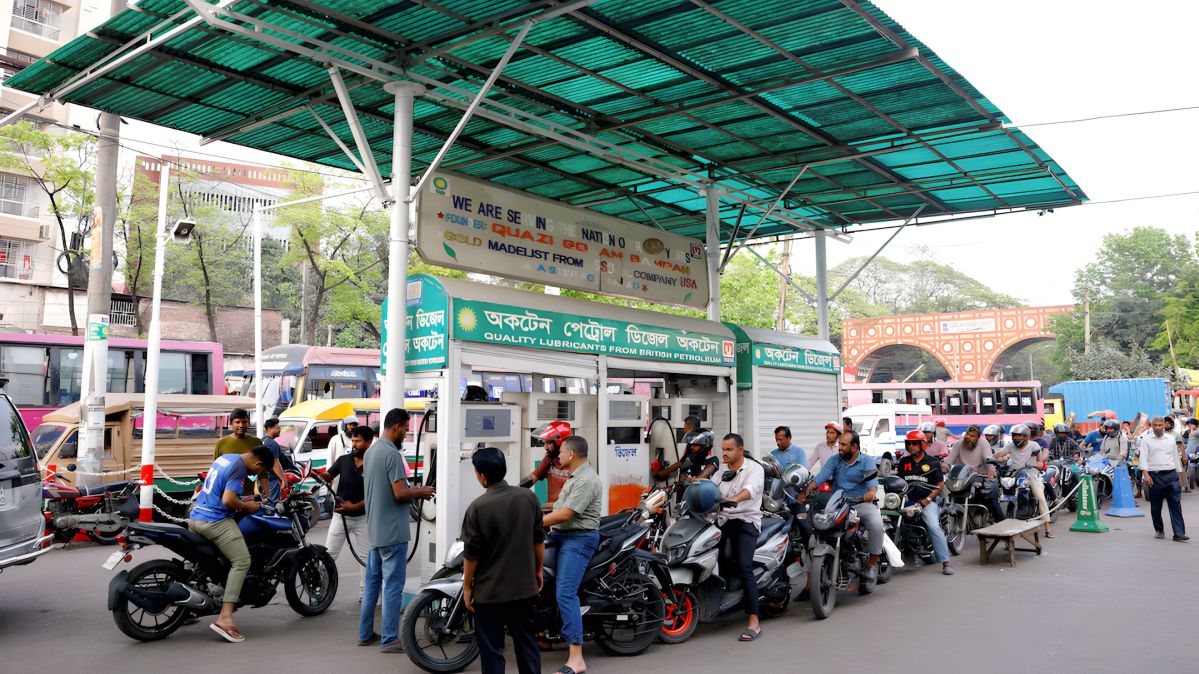
Despite these measures, public anxiety is rising. Over the past two weeks, fears of fuel shortages have triggered panic buying and hoarding across major cities.
In response, authorities have introduced fuel rationing. Vehicle fuel sales have been restricted, petrol station hours reduced, and monitoring teams deployed to manage long queues. While demand eased slightly during recent religious holidays, officials warned on Friday that supplies remain critically tight.
Financial strain and the desperate hunt for imports
Beyond daily disruption, the crisis has triggered a broader macroeconomic emergency. Bangladesh, home to around 175 million people, has built its recent economic growth - driven largely by garment exports - on imported liquefied natural gas (LNG) and diesel.
The conflict involving Iran has driven up shipping insurance, risk premiums and global commodity prices, pushing fuel import costs to unsustainable levels. State energy agencies are scrambling to secure alternative supplies outside the Persian Gulf, but face a highly competitive and costly global market.
Measures to conserve energy
To preserve state finances, the government has ordered immediate cuts to non-essential public spending across all ministries. It has also instructed industries to reduce energy consumption.
Factories have been told to limit lighting and shift non-essential production to off-peak hours to avoid widespread power outages. However, officials acknowledge that domestic conservation alone cannot offset soaring import costs.
Rising energy prices are placing severe pressure on Bangladesh’s already fragile foreign exchange reserves. The government is now seeking more than $2.5 billion in emergency financing from international lenders and partner nations.
The funding is needed to cover short-term fuel and LNG imports. Economists warn that failure to secure it could trigger a balance-of-payments crisis, forcing deeper industrial shutdowns, damaging exports, and increasing unemployment.
The situation highlights the far-reaching economic consequences of the Middle Eastern conflict for developing economies far beyond the region.












What is your opinion on this topic?
Leave the first comment