Bangladesh’s new PM Tarique Rahman takes oath in parliament
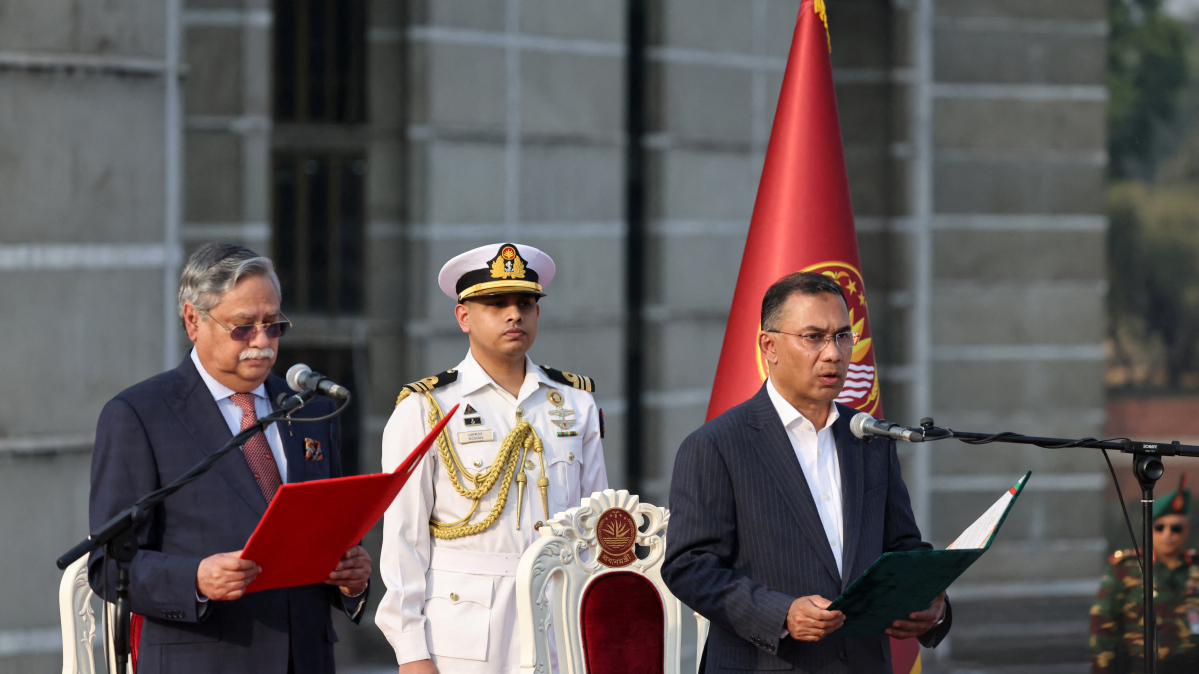
Bangladeshi President Mohammed Shahabuddin administers the oath to Tarique Rahman as Prime Minister at Dhaka’s parliament South Plaza on 17 February 2026.
Bangladesh Nationalist Party (BNP) leader Tarique Rahman was sworn in as prime minister on Tuesday (17 February), marking an important political shift in the South Asian nation following a period of turmoil.
Rahman, 60, son of former Prime Minister Khaleda Zia and assassinated President Ziaur Rahman, has taken office after his party’s sweeping parliamentary election victory.
He faces urgent challenges, including restoring political stability, rebuilding investor confidence and reviving key industries such as the garment sector after the turmoil that followed the Gen Z‑led uprising that toppled Sheikh Hasina’s government in 2024.
An interim administration led by Nobel laureate Muhammad Yunus ran the country through the transitional period leading up to the election.
Balance of experience and expertise
Breaking with tradition, the open-air swearing‑in ceremony was held at the South Plaza of the national parliament building, instead of the Bangabhaban, the president’s official residence.
President Mohammed Shahabuddin officiated as Rahman and his 49-member council of ministers took oaths in the presence of senior political figures, diplomats, civil and military officials, and representatives from countries including China, India and Pakistan.
The new government includes both senior and junior ministers - a mix of experienced BNP leaders and fresh faces, reflecting an effort to balance political experience with technocratic expertise as the government focuses on economic recovery, law and order and governance reforms.
Former Commerce Minister Amir Khasru Mahmud Chowdhury was named finance minister and Khalilur Rahman, who was national security adviser in the interim government, was made foreign minister.
Rahman’s BNP secured a commanding two‑thirds majority, returning to power after nearly two decades. The Islamist party Jamaat‑e‑Islami, contesting its first election since a 2013 ban was lifted following Hasina’s ouster, won a record 68 seats.
Hasina's Awami League party was banned from contesting after its registration was revoked by the Election Commission.
Jamaat and its allies, including the National Citizen Party (NCP), led by youth activists who played a prominent role in the movement that toppled Hasina will form the opposition.
Jamaat and NCP boycott event
Jamaat and the NCP did not attend the ceremony in protest after Rahman's party rejected the interim government’s request for its lawmakers to take an additional oath under the proposed 'Constitution Reform Council'.
The council intends to amend the constitution following the referendum held alongside the national election.
Rahman’s elevation caps a long and turbulent political journey. He returned to Bangladesh last year after 17 years of self‑imposed exile in London, arriving shortly before his mother’s death.
Rivals have long criticised his political record, pointing to corruption allegations he denies, but his return energised party supporters and reshaped the BNP’s campaign.
Leaders of countries from the Commonwealth of Independent States (CIS) have agreed to hold coordinated population censuses around 2030. They took the decision at the CIS Council of Heads of State meeting in Awaza, Turkmenistan on Friday, media reported.
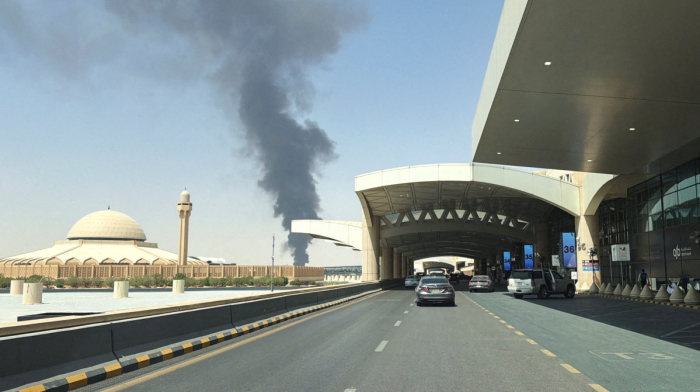
A powerful explosion has been reported at King Khalid International Airport in Riyadh, raising fresh concerns over aviation security in Saudi Arabia as tensions across the region continue to escalate.
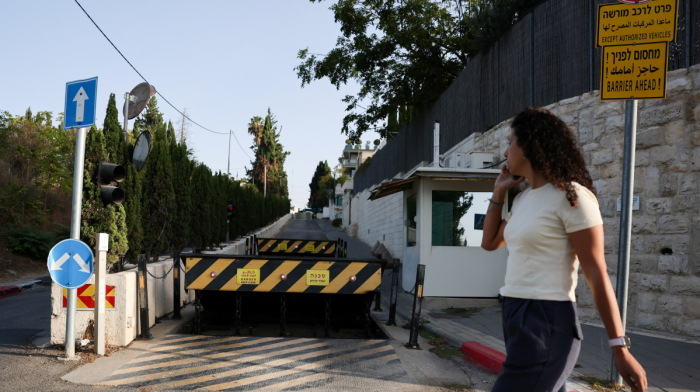
Britain and Israel have reached a temporary compromise over the future of the British Consulate General in East Jerusalem, easing a diplomatic dispute that had threatened to further strain relations between the two countries.
South African judge Navanethem “Navi” Pillay won the Nobel Peace Prize on Friday “for her efforts to promote peace and international law,” the Norwegian Nobel Committee said.
The U.S. has imposed sanctions on the International Criminal Court (ICC) on Friday (9 October) escalating tensions with European allies and potentially targeting companies that provide services to the tribunal. The move came hours after former ICC judge Navi Pillay won the Nobel Peace Prize.
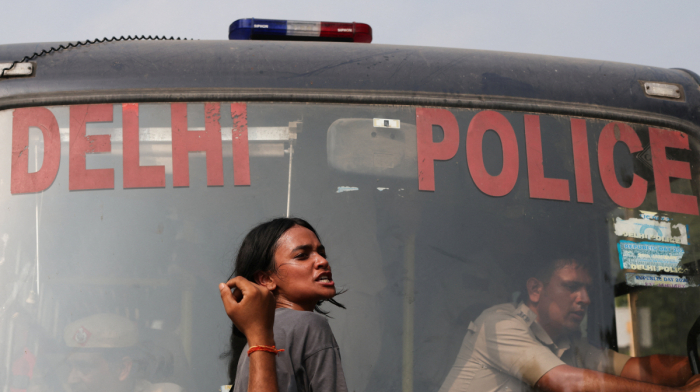
Indian police detained more than 2,000 protesters in Delhi on Saturday as authorities blocked a planned demonstration calling for the resignation of Chief Election Commissioner Gyanesh Kumar over disputed changes to voter lists.
At least 12 people, including three children, have been killed in a Russian attack on the Ukrainian city of Zaporizhzhia, a day after U.S. President Donald Trump announced a deal to ease sanctions on Russian diesel.
Ukrainian President Volodymyr Zelenskyy has criticised U.S. President Donald Trump’s decision to ease sanctions on Russian diesel exports, questioning why Moscow was granted an economic benefit without an apparent concession towards ending the war in Ukraine.
Russian President Vladimir Putin expressed surprise after Donald Trump mediated the Armenia-Azerbaijan peace agreement in 2025, the U.S. President said at a rally in New York state on Friday.
The United Nations has condemned a sharp rise in attacks on civilians in Ukraine, reporting that more than 100 people were killed and at least 429 injured in a single week as Russian strikes hit residential areas, passenger buses and critical infrastructure.
Download the AnewZ app
You can download the AnewZ application from Play Store and the App Store.












What is your opinion on this topic?
Leave the first comment