Five Azerbaijani citizens killed, 3 injured in Sea of Azov vessel attacks
Five Azerbaijani citizens have been killed and three others injured following drone attacks on two cargo vessels in the Sea of Azov, Azerbaijan's Fore...
Pakistan has indicated its openness to forming a regional bloc with Bangladesh without including India. The statement from Islamabad follows comments by Bangladesh’s top foreign affairs adviser, Md Touhid Hossain, that such an arrangement is strategically possible without India.
Hossain told the state-run Bangladesh Sangbad Sangstha that “it is strategically possible for Bangladesh to join a regional grouping with Pakistan excluding India.”
Responding to Hossain’s remarks, Pakistan Foreign Office spokesman Tahir Hussain Andrabi said Islamabad “believes in multilateralism” and that any proposal from Bangladesh would be considered in the same spirit.
Hossain added that while such a grouping is strategically feasible for Bangladesh, it would not be possible for Nepal or Bhutan to form a similar arrangement with Pakistan excluding India.
Last week, Pakistani Foreign Minister Ishaq Dar said a new trilateral initiative involving Bangladesh, China and Pakistan has begun and could expand to include other countries within and beyond the region.
Dar noted that “earlier this year, Bangladesh, China and Pakistan established a trilateral mechanism to foster cooperation in areas of common interest. There could be groups with variable geometry on issues ranging from economy to technology to connectivity.”
The first trilateral meeting was hosted by China in June in Kunming, with Chinese Vice Foreign Minister Sun Weidong representing Beijing. Bangladesh was represented by acting Foreign Secretary Ruhul Alam Siddique, while Pakistan was represented by Additional Secretary Imran Ahmed Siddiqui.
According to a joint statement, the three sides agreed to advance cooperation across multiple sectors and committed to the principles of “good-neighbourliness, equality and mutual trust, openness and inclusiveness, common development and win-win cooperation.” The framework is rooted in “true multilateralism and open regionalism” and is “not directed at any third party.”
China and Pakistan are described as “all-weather strategic cooperative partners,” and Beijing’s ties with Bangladesh have strengthened in recent years. Last year, bilateral trade between China and both Pakistan and Bangladesh was around $23 billion.

Iran’s Revolutionary Guards (IRGC) said in a statement that its Aerospace Force did not strike the Kuwait Airport passenger terminal on Wednesday, and that the destruction was instead caused by a failed U.S. Patriot missile.
Israel and Lebanon have agreed to implement a ceasefire after U.S.-backed talks in Washington. The deal requires Hezbollah to halt attacks and withdraw from southern Lebanon, while both sides will resume direct talks later this month aimed at reaching a broader agreement.
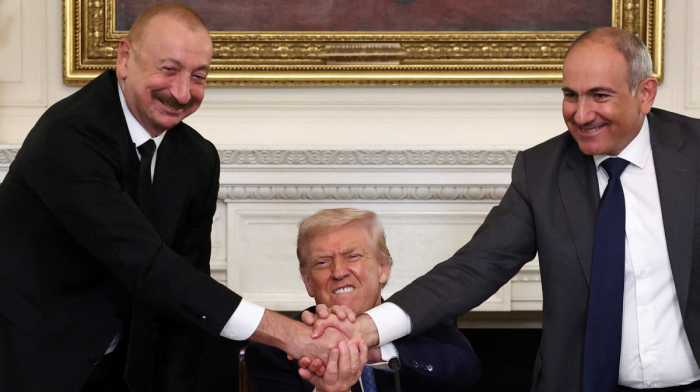
As Armenia heads toward parliamentary elections on 7 June, the country's relationship with Azerbaijan is emerging as one of the defining issues of the campaign, with analysts and international observers highlighting the role of regional politics in shaping voters’ mindsets.
The United Kingdom has begun using SpaceX's Starshield satellite network for military operations, according to people familiar with the matter, marking one of the first known deployments of the secure government-focused system outside the U.S.
All 27 European Union (EU) member countries have agreed to begin the first set of talks with Ukraine and Moldova about joining the political and economic bloc.
Chinese President Xi Jinping will visit North Korea on 8-9 June, marking his first trip to the country in nearly seven years as Beijing seeks to strengthen relations with its long-time ally.
A blaze at a popular market in northeast Thailand sent vendors fleeing and left five people in hospital, with police investigating a suspected electrical short circuit.
Ukrainian President Volodymyr Zelenskyy has publicly invited Russian President Vladimir Putin to meet for direct talks aimed at ending the war between their countries, saying Ukraine remains ready for peace but will continue fighting if no agreement can be reached.
Start your day informed with the AnewZ Morning Brief. Here are the top stories for the 5 June, covering the latest developments you need to know.
The U.S. House of Representatives has approved legislation that would provide new aid to Ukraine and impose additional sanctions on Russia, marking the latest instance of Republican lawmakers breaking ranks with President Donald Trump and party leaders.
You can download the AnewZ application from Play Store and the App Store.
What is your opinion on this topic?
Leave the first comment