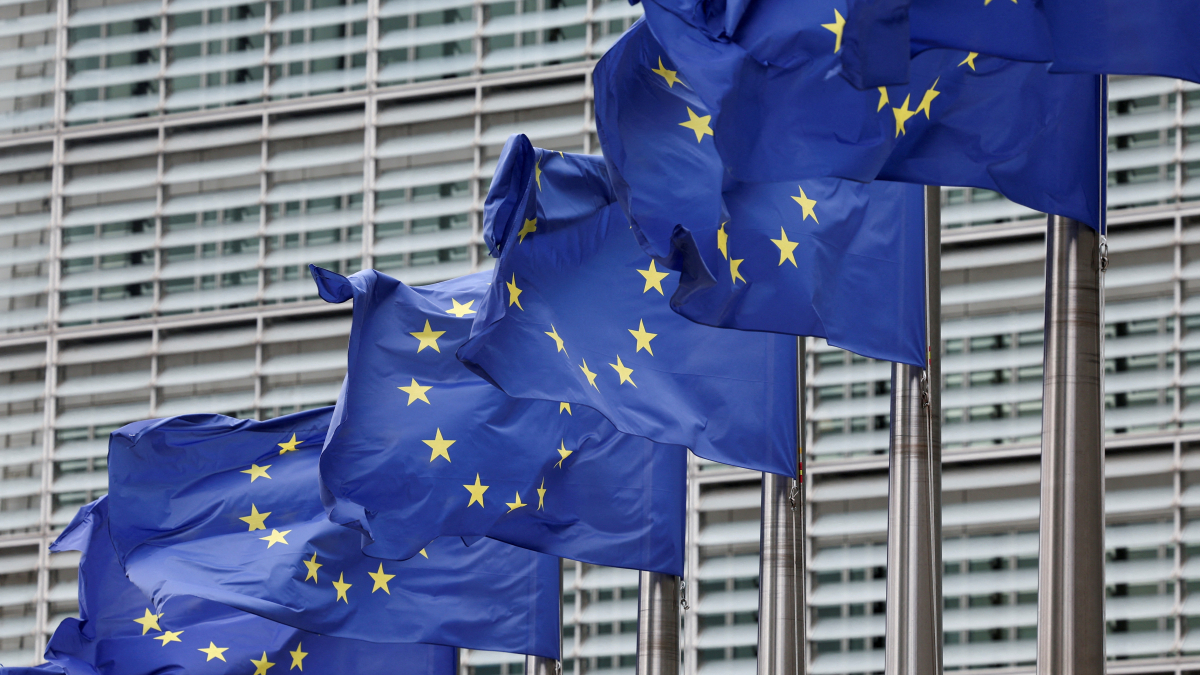
The European Council on Thursday adopted new sanctions against Iran in response to "serious human rights violations" and Tehran's ongoing support for Russia in its war in Ukraine.
The EU Council said the measures target 15 additional individuals and six entities. Those sanctioned include Iranian Interior Minister Eskandar Momeni, members of the judicial system including Prosecutor General Mohammad Movahedi-Azad and presiding judge Iman Afshari, as well as commanders of the Islamic Revolutionary Guard Corps (IRGC) and senior officers of the police and Law Enforcement Force (LEF).
Several entities are also listed, including the Iranian Audio-Visual Media Regulatory Authority (SATRA), Seraj Cyberspace Organisation, the Working Group for Determining Instances of Criminal Content (WGDICC), and multiple software companies.
“Restrictive measures related to human rights violations in Iran now apply to a total of 247 individuals and 50 entities,” the EU Council said.
In addition, the sanctions target four Iranians and six entities under the EU’s dedicated sanctions regime for supporting Russia, with a specific focus on Iran’s state-sponsored UAV programme, Khojir Missile Development and Production, and Sahara Thunder, an import-export company acting as a front for the Iranian Ministry of Defence and Armed Forces Logistics.
The sanctions coincide with the EU’s designation of the IRGC as a terrorist organisation, a step described by EU foreign policy chief Kaja Kallas as a “decisive action to ensure that repression cannot go unanswered.” Kallas noted that the IRGC is now placed on the same level as jihadist groups such as al-Qaeda and ISIS.
The unrest in Iran has left at least 6,126 dead, with 41,880 arrests and 11,009 serious injuries reported by HRANA as of the 30th day of protests. Demonstrations began in late December over economic hardship, including the sharp devaluation of the rial, and spread across multiple cities. Authorities in Yazd have arrested more than 150 people for allegedly coordinating unrest. Officials have also accused foreign actors, including the U.S. and Israel, of backing what they call “armed rioters.”
The EU’s latest sanctions build on measures adopted last year, which were the first targeting Iran’s military and security apparatus over human rights violations. Read previous coverage here.
In response to the ongoing crisis, U.S. President Donald Trump warned that Washington would act against killings of protesters while noting Iran had reportedly cancelled hundreds of planned executions. The USS Abraham Lincoln Carrier Strike Group has been deployed to the region to “promote regional security and stability.”
Human rights groups continue to criticise the IRGC for orchestrating the repression, while EU member states including France and Italy have voiced support for the sanctions. Tehran has warned that the designation could have “destructive consequences.”











What is your opinion on this topic?
Leave the first comment