The European Union has added Iran's Islamic Revolutionary Guard Corps (IRGC) to its list of terrorist organisations, citing the group’s role in recent deadly crackdowns on protesters. EU foreign policy chief Kaja Kallas called it a “decisive step” to ensure that “repression cannot go unanswered.”
Kallas noted that the designation places the IRGC on the same level as jihadist groups such as al-Qaeda and ISIS.
The death toll from nationwide protests in Iran has climbed to 6,126, according to the U.S.-based Human Rights Activists News Agency (HRANA).
HRANA said 41,880 people have been arrested as of the 30th day of the demonstrations, while at least 11,009 others have suffered serious injuries.
Iran has seen waves of protests since late December, beginning at Tehran’s Grand Bazaar over the sharp fall of the rial and worsening economic conditions. The unrest later spread to multiple cities across the country.
Tasnim News Agency in Iran says more than 150 people identified by Iranian authorities as organisers and key actors in recent unrest in Yazd have been arrested.
According to Tasnim’s account, the arrests centre on individuals described by officials as leading or coordinating recent unrest in the city.
Iranian authorities have accused the U.S. and Israel of backing what they describe as “armed rioters” responsible for attacks in public places.
France says it supports adding Iran’s Islamic Revolutionary Guard Corps to the European Union’s list of terrorist organisations, according to the Elysée. Human rights groups accuse the IRGC of orchestrating the deadly repression of protesters. Italy is expected to formally propose the move to other EU member states, while Tehran has warned of “destructive consequences” if the designation goes ahead.
U.S. President Donald Trump has repeatedly warned that Washington would “hit hard” if protesters were killed, but later praised Tehran for reportedly cancelling hundreds of planned executions.
The U.S. Central Command said the USS Abraham Lincoln Carrier Strike Group has been deployed to the region “to promote regional security and stability,” as Washington increases its presence amid heightened tensions.
U.S. force movements and Iran’s evolving internal landscape
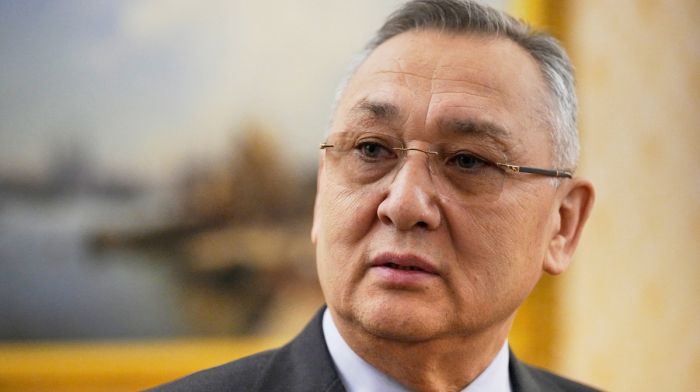
Speaking on AnewZ, Turkan Bozkurt, deputy director of the IPEK Research Centre, said Washington’s recent steps signal preparation rather than a confirmed decision to escalate.
“It is not clear that Washington has reached a definitive decision on whether to escalate military against Iran,” she said. “What does appear evident is a posture of contingency planning.”
She noted the arrival of the USS Abraham Lincoln, “a small American city or a base at sea,” as part of an effort “to enhance readiness and deterrence,” while stressing that Iran “retains substantial retaliatory capability” through missiles and drones able to strike U.S. positions. Bozkurt said the timing of the deployments indicates that the White House is keeping options open.
“This indicates that Donald Trump is serious about reaching some kind of agreement with Iran,” she said. “I do not believe it is likely that Donald Trump will start a war with Iran, given his pledge to avoid new Middle East conflicts.”
On domestic pressure inside Iran, she said protests have slowed but continue despite communication blockages. “Based on the estimates, we see that anywhere from 5,000 to 30,000 people are dead, but much of the information is still unclear,” she said.
She pointed to recent detentions in South Azerbaijani cities, describing them as measures to prevent renewed unrest if tensions with the U.S. escalate.
Bozkurt said uncertainty is already affecting regional states and travel.
“This is impacting everyone,” she said, warning that neither Washington nor neighbouring countries want a scenario that risks prolonged instability.









What is your opinion on this topic?
Leave the first comment