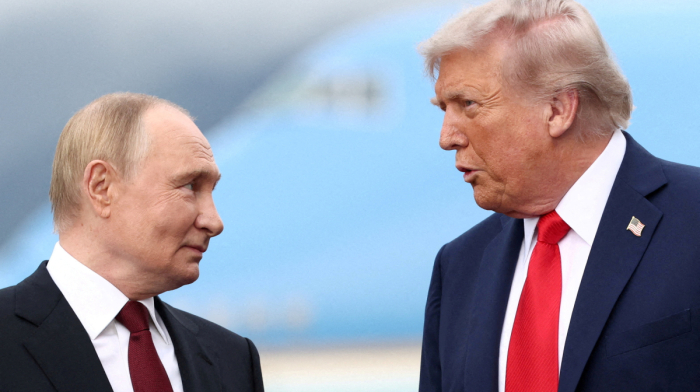
The red carpet had barely been rolled up after Donald Trump’s departure before Beijing was laying it out again. Vladimir Putin arrived in the Chinese capital on Wednesday for talks with Xi Jinping, just days after Trump’s own high-profile visit.
Vladimir Putin arrived in the Chinese capital on Wednesday for talks with Xi Jinping - the second major world leader to be received at the Great Hall of the People in less than a week, in a sequence that has drawn as much attention for its symbolism as for its substance.
The meeting began with considerable fanfare as Xi and Putin shook hands outside the Great Hall of the People after walking down a red carpet together, accompanied by a military band playing both national anthems. In their opening remarks, both leaders struck a warm and confident tone. Putin quoted a Chinese proverb in Russian, saying “not seeing you for one day feels like being apart for three autumns,” a gesture clearly appreciated by his host. Xi, for his part, said China and Russia should support each other’s development and strengthen coordination amid global challenges.
The two countries signalled a deepening partnership and jointly warned against a global return to what they described as “the law of the jungle” - a phrase aimed squarely at what both governments portray as Western unilateralism and the use of economic and military pressure to dictate the terms of international affairs.
The meeting also produced tangible outcomes. Xi and Putin signed a joint statement aimed at further enhancing comprehensive strategic coordination and deepening good-neighbourly and friendly cooperation between the two countries. The two sides also signed 20 separate agreements covering technological cooperation, sustainable trade, urban cooperation, anti-monopoly training, media cooperation, film intellectual property, talent development, scientific research and the establishment of a joint innovation institute.
Energy cooperation dominates the agenda
Energy was the dominant item on the agenda, and one Putin had been signalling for weeks. Putin said ahead of the visit that Moscow and Beijing had reached a substantial breakthrough in oil and gas cooperation, with practically all key issues agreed upon, and expressed hope that the remaining details could be finalised during the visit.
Russia has become China’s largest energy supplier since Western sanctions following the Ukraine invasion redirected much of Moscow’s oil and gas exports eastwards, and deepening that arrangement serves both sides - Russia needs the revenue and China needs the supply.
Beijing balances ties with Moscow and Washington
Moscow was also seeking reassurance that China had not drifted towards Washington following Trump’s momentous visit just days earlier. The Kremlin publicly denied any connection between the two trips, insisting Putin’s visit had been arranged months in advance.
Putin praised the bilateral relationship as a crucial balancing force in international relations, and Xi’s willingness to receive him with full ceremony so soon after Trump underlines Beijing’s consistent position: it is not choosing sides. Putin also invited Xi to visit Russia next year during their smaller bilateral meeting, an invitation Xi is widely expected to accept.
China positions itself at the centre of global diplomacy
For Xi, the optics of the past week are striking. Hosting the leaders of the U.S. and Russia in the same month - each with full ceremony and each leaving with agreements in hand - positions Beijing as the indispensable interlocutor of the current moment.
Whether that translates into genuine strategic influence, or simply reflects a world in which everyone needs something from China, is the question analysts will be debating long after both delegations have gone home.









What is your opinion on this topic?
Leave the first comment