European leaders meet in Dublin for security talks as Aliyev holds key bilateral meetings
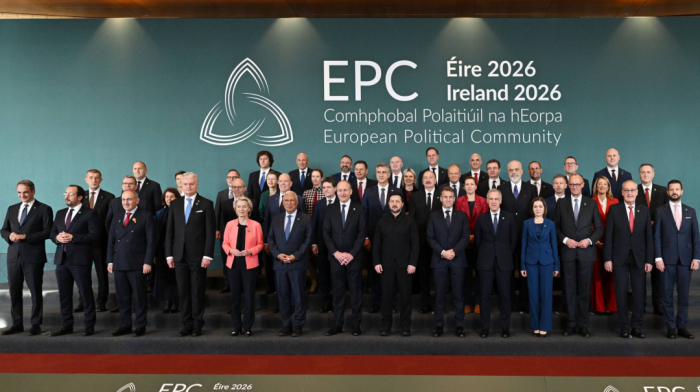
European leaders gathered in Dublin on Thursday, 12 November, for the ninth European Political Community (EPC) summit, with security, defence and e...
Europe's aviation sector hit - and may well have surpassed - a 2% mandate for green jet fuel use in 2025, a regulatory official and a source told Reuters, bolstering airlines' green credentials as the region seeks to cut reliance on hydrocarbons.
The achievement, previously unreported and due to be confirmed in a report later this year, marks a sharp turnaround from a year earlier when uptake was just 0.6%. Airlines had repeatedly warned that targets would be missed.
"We believe we will be at or even above the 2% in 2025," Florian Guillermet, Director of the European Union Aviation Safety Agency (EASA) which monitors implementation of the targets, told Reuters in an interview in Cologne.
EASA will publish official data on last year's sustainable jet fuel (SAF) use in Europe after the summer. Jet fuel use has been thrust further into the spotlight as the Iran war lifts oil prices and disrupts supplies.
A senior European Union official, who asked not to be named, separately said the region had likely exceeded the threshold.
"We will end at above 2% in Europe for 2025. We see a clear supply response to the mandate," the person said.
The EU required 2% of fuel made available at regional airports to be SAF in 2025, rising to 6% in 2030. Synthetic SAF (eSAF) must account for 1.2% of the total from 2030, rising to 5% in 2035.
Airlines for Europe (A4E) - whose members include Ryanair, Lufthansa and British Airways-owner IAG has urged regulators to scale back the eSAF requirement, arguing that supply is limited and costs are high.
The European Commission has since said it has no intention of rolling back the eSAF mandate, though it acknowledges more must be done to make the fuel affordable and accessible.
"The mandate is a mandate, so it is in place. Personally, I don't see any reason why it should change," Guillermet said, echoing comments from the EU transport commissioner last week.
The EU official agreed: "It is very important to stick to the mandates. We have proven so far that we were right."
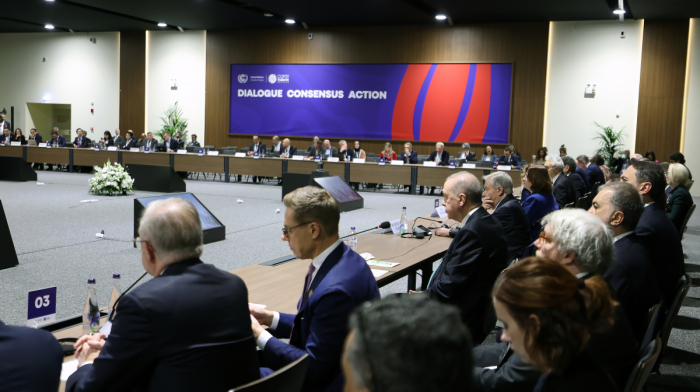
UN Secretary-General António Guterres delivered a stark warning at this year's COP31 summit, saying the climate crisis iss advancing faster than governments' efforts to contain it.
European leaders gathered in Dublin on Thursday, 12 November, for the ninth European Political Community (EPC) summit, with security, defence and energy high on the agenda. Azerbaijani President Ilham Aliyev held talks focused on peace, trade and regional cooperation.
Here's your AnewZ Daily Brief for 11 November. Today, we cover Russia-Ukraine peace talks, political tensions in Washington, strikes in Spain, espionage allegations involving Nvidia's CEO, and climate negotiations at COP31 in Türkiye.
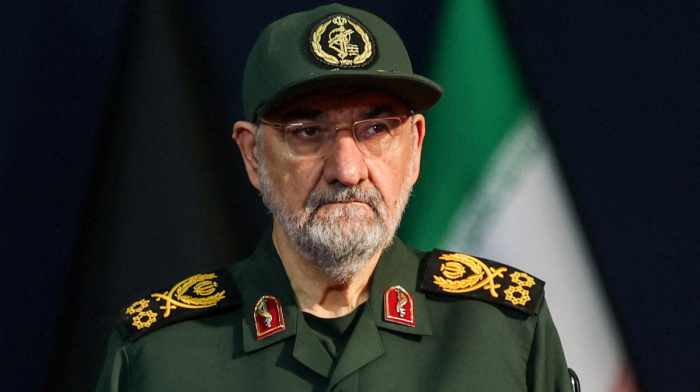
Iran will not let a single particle of its enriched nuclear material leave the country, and any new U.S. attack would be met with strikes on distant American bases, Iranian security chief Mohsen Rezaei has said.
Four million workers across Spain joined a general strike on Wednesday over the country’s deepening housing crisis, unions said, bringing disruption to factories, ports, shops and public transport just weeks before a snap general election.
Lahore, the capital of Pakistan’s eastern Punjab province, has topped global rankings of the most polluted major cities as hazardous smog continues to blanket the region.
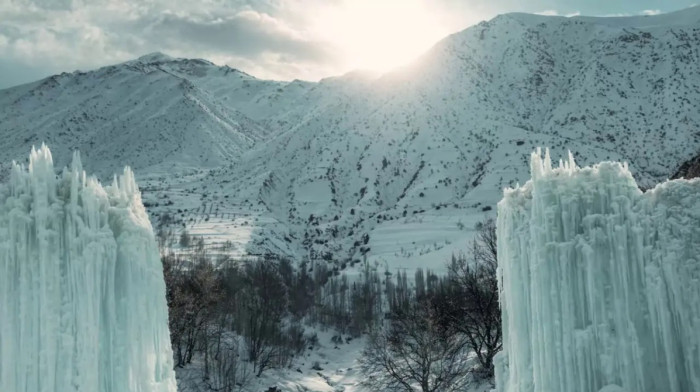
Uzbekistan has showcased its first artificial glacier project at the COP31 climate summit in Antalya, Türkiye, highlighting an innovative way to store winter water for use in warmer months as Central Asia grapples with worsening water shortages.
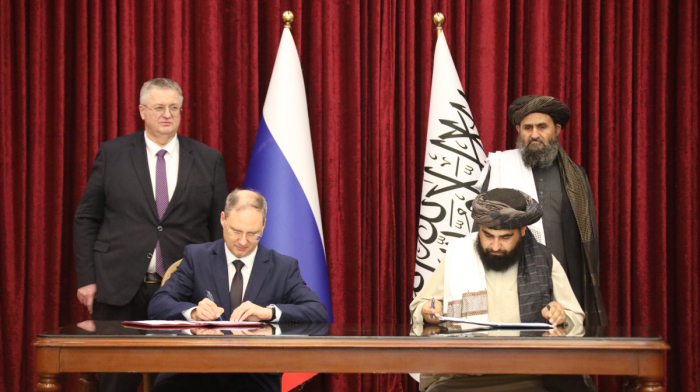
Uzbek President Shavkat Mirziyoyev has allocated $10 million to reinforce the Afghan banks of the Amu Darya River, where erosion threatens farmland and homes, the Afghanistan Chamber of Commerce and Investment (ACCI) said after talks in Balkh on Tuesday.
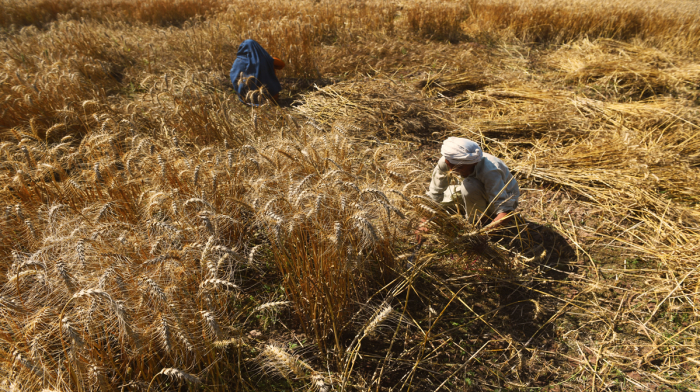
Extreme heat is threatening agricultural production and food security in Pakistan's eastern Punjab province, where increasingly frequent and severe heatwaves are disrupting farming, damaging livestock and reducing household incomes.
Global temperatures are projected to rise by up to 2.8°C above pre-industrial levels by 2100 under current climate policies, according to a United Nations report published on 21 October, raising concerns about the world's ability to meet international climate targets.
You can download the AnewZ application from Play Store and the App Store.
What is your opinion on this topic?
Leave the first comment