President Donald Trump said on Thursday that the United States has an "armada" heading toward Iran but hoped he would not have to use it, as he renewed warnings to Tehran against killing protesters or restarting its nuclear programme.
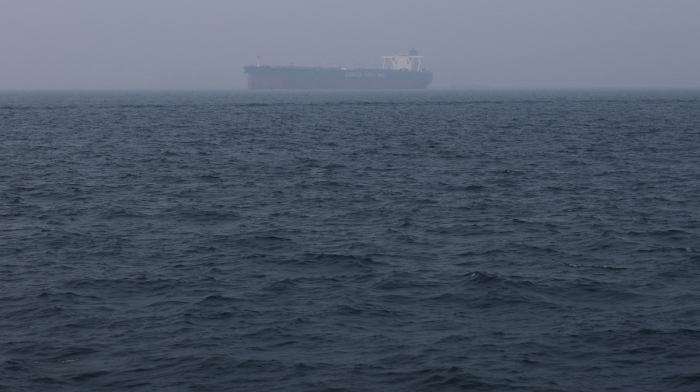
U.S. officials, speaking on condition of anonymity, say the aircraft carrier USS Abraham Lincoln and several guided-missile destroyers will arrive in the Middle East in the coming days.
One official said additional air-defense systems were also being eyed for the Middle East, which could be critical to guard against any Iranian strike on U.S. bases in the region.
The deployments expand the options available to Trump, both to better defend U.S. forces throughout the region at a moment of tensions and to take any additional military action after striking Iranian nuclear sites in June.
"We have a lot of ships going that direction, just in case …I'd rather not see anything happen, but we're watching them very closely," Trump told reporters aboard Air Force One on his way back to the United States after speaking to world leaders in Davos, Switzerland.
At another point, he said, "We have an armada ... heading in that direction, and maybe we won't have to use it."
The warships started moving from the Asia-Pacific last week as tensions between Iran and the United States soared following a severe crackdown on protests across Iran in recent months.
Trump had repeatedly threatened to intervene against Iran over the recent killings of protesters there but protests dwindled last week. The president backed away from his toughest rhetoric last week, claiming he had stopped executions of prisoners.
He repeated that claim on Thursday, saying Iran canceled nearly 840 hangings after his threats.
"I said, 'If you hang those people, you're going to be hit harder than you've ever been hit. It'll make what we did to your Iran nuclear (program) look like peanuts,'" Trump said.
"At an hour before this horrible thing was going to take place, they canceled it," he said, calling it "a good sign."
The U.S. military has in the past periodically surged forces to the Middle East at times of heightened tensions, moves that were often defensive.
Iran's nuclear programme
However, the U.S. military staged a major buildup last year ahead of its June strikes against Iran's nuclear programme which lasted 12 days on key sites. He said the United States would act if Tehran resumed its nuclear programme.
“They can’t do the nuclear,” Trump said in an interview with CNBC in Davos on Wednesday. “If they do it, it’s going to happen again.”
"If they try to do it again, they have to go to another area. We'll hit them there too, just as easily," he said on Thursday.
Iran must report to the United Nations nuclear watchdog, the International Atomic Energy Agency (IAEA), on what happened to sites struck by the United States and the nuclear material thought to be there. That includes an estimated 440.9 kg of uranium enriched up to 60% purity which, if enriched sufficiently, could be enough for 10 nuclear bombs, according to an IAEA yardstick.
The agency has not verified Iran's stock of highly enriched uranium for at least seven months, which the watchdog advises should be done monthly.
Trump also said the United States would impose tougher economic penalties on companies doing business with Iran.
“If you do business with Iran, you’re going to have a tariff of 45%,” he said.
Iran protests
It is unclear whether protests in Iran could surge again. The protests began on 28 December as modest demonstrations in Tehran’s Grand Bazaar over economic hardship and quickly spread nationwide.
The U.S.-based HRANA rights group said it has so far verified 4,519 unrest-linked deaths, including 4,251 protesters, and has 9,049 additional deaths under review.
An Iranian official told Reuters the confirmed death toll until Sunday was more than 5,000, including 500 members of the security forces.
Asked how many protesters were killed, Trump said: "Nobody knows... I mean, it's a lot, no matter what."
Trump’s rhetoric on Iran has eased somewhat in recent days as protests appeared to diminish, and he has said he hopes further military action can be avoided.
On Wednesday, he said the United States would not act unless Iran resumed its nuclear programme.
However, analysts note that Washington’s decision to move major naval assets into the region echoes the military buildup that preceded last year’s strikes, underscoring the fragile nature of the current standoff.









What is your opinion on this topic?
Leave the first comment