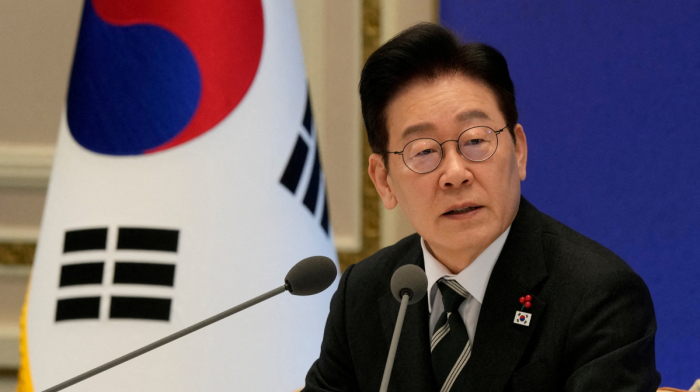
South Korea is close to finalising an agreement to import crude oil from Kazakhstan, according to Industry Minister Kim Jung-kwan, as the country seeks to diversify its energy supplies amid disruptions in the Middle East, he said on Sunday, 12 April, according to Reuters.
The minister told the South Korean broadcaster KBS that negotiations had reached a “significant level of progress”, adding that detailed volumes and terms could be announced as early as next week. His remarks come as Seoul reassesses the resilience of its energy supply chains, which remain heavily exposed to geopolitical risks in key transit regions.
At the beginning of the month, Chief of Staff to the Presidential Office Kang Hoon-sik, together with the Minister of Industry, visited Kazakhstan for talks focused on securing supplies of crude oil and naphtha. The visit came as part of efforts to mitigate risks linked to disruptions in shipping through the Strait of Hormuz, one of the world’s most critical energy transit routes.
Kim noted that while Kazakhstan may appear geographically distant from South Korea’s traditional suppliers, delivery times are broadly comparable to shipments from the United States, averaging around 50-60 days. The visit, he said, was aimed not at short-term fixes but at establishing a longer-term framework for the diversification of crude oil imports.
South Korea remains almost entirely dependent on imported energy, with roughly 70% of its crude oil imports traditionally sourced from the Middle East. In recent months, Seoul has also strengthened its supply ties with Gulf producers, including a commitment from the United Arab Emirates to supply 24 million barrels of crude oil.
The renewed focus on alternative suppliers is also being shaped by regulatory and geopolitical developments around the Strait of Hormuz. Iran has introduced a classification system for transit rights through the waterway, dividing countries into “neutral”, “friendly” and “hostile” categories, with the latter potentially facing restrictions on passage. The Strait has historically carried around 20% of global oil trade, making it a critical pressure point for international energy markets.
Iran’s measures have heightened concerns among energy importers, prompting broader reassessments of supply routes not only in Seoul but also in other major Asian economies.
Japan, which sources more than 90% of its oil imports from the Middle East, is also exploring alternative supply configurations. Japanese energy company INPEX is reportedly considering redirecting part of its crude flows from Kazakhstan and Azerbaijan towards the domestic market, reflecting similar strategic calculations in Tokyo.
However, rerouting shipments away from traditional Middle Eastern corridors comes with logistical and financial costs. For Japan, such adjustments around the Strait of Hormuz can extend delivery times to as much as 55-60 days compared with around 20 days under standard routes, adding pressure on supply chains and contributing to broader volatility in global energy markets.
Read more












What is your opinion on this topic?
Leave the first comment