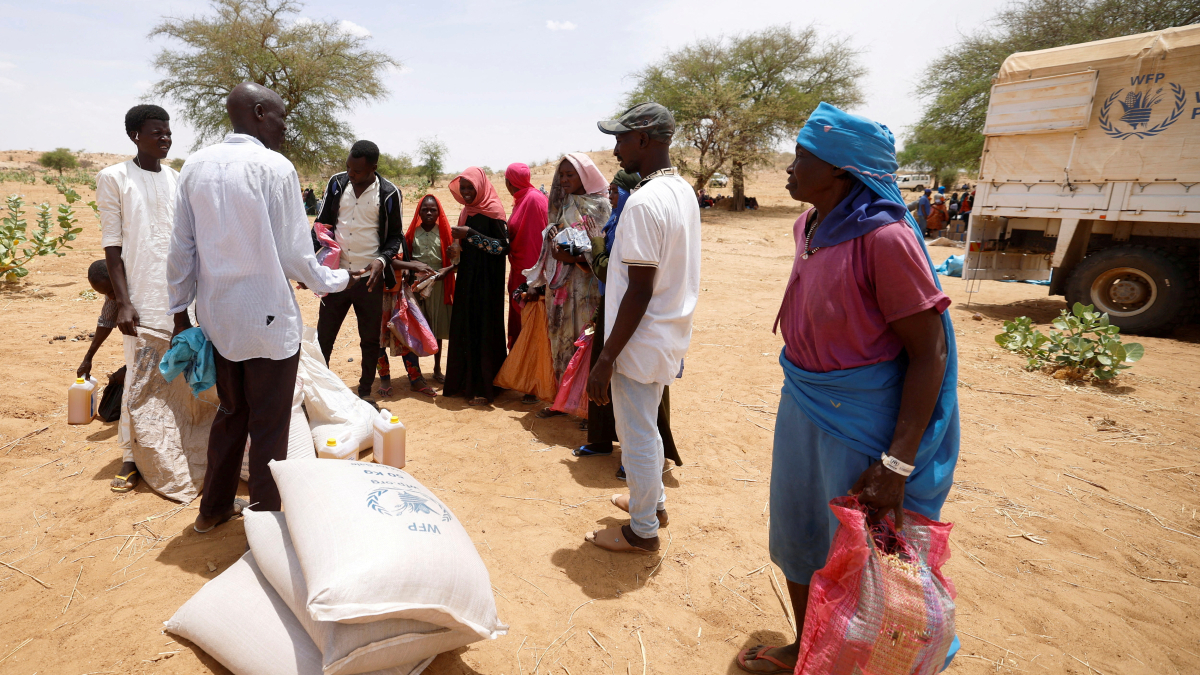
Millions of people in Sudan are surviving on just one meal a day as the country’s worsening hunger crisis pushes communities closer to famine, humanitarian organisations have warned.
A report published on Monday (13 April) by a coalition of aid agencies – including Action Against Hunger, CARE International, the International Rescue Committee, Mercy Corps and the Norwegian Refugee Council – says the situation is especially severe in conflict-hit regions such as North Darfur and South Kordofan.
In these areas, families are increasingly unable to secure enough food, with many going entire days without eating. Some have been forced to rely on leaves and animal feed simply to survive, according to findings based on interviews with farmers, traders and aid workers.
Millions displaced
The crisis comes as Sudan’s civil war, now approaching its third year, continues to devastate the country. Fighting between the Sudanese army and the paramilitary Rapid Support Forces has displaced millions and destroyed vital infrastructure, including farms, markets and supply routes.
Aid groups say the conflict has not only disrupted food production but, in some cases, deliberately worsened shortages, contributing to what they describe as one of the world’s most severe humanitarian emergencies.
Communal kitchens set up to feed vulnerable communities are also struggling to keep up with rising demand as supplies run low.
The report warns that around 28.9 million people - more than 60% of Sudan’s population - are experiencing acute food insecurity. Humanitarian funding cuts have further weakened the response, leaving aid agencies stretched.
Confirmed famine
The United Nations has previously confirmed famine conditions in parts of the country, including Al-Fashir and Kadugli, while warning that other areas are nearing similar thresholds.
In some regions, child malnutrition rates have already exceeded famine levels.
Women and girls are said to be disproportionately affected, facing heightened risks of violence when travelling to access food, water or markets. Female-headed households are also significantly more likely to experience severe food shortages.
Despite mounting evidence from international agencies, Sudan’s army-aligned government has denied the existence of famine, while the Rapid Support Forces have rejected responsibility for conditions in areas under their control.
Aid organisations warn that without urgent intervention, the crisis risks deepening further, pushing already vulnerable communities beyond breaking point.















What is your opinion on this topic?
Leave the first comment