More than a million Sudanese refugees now face drastic cuts to life-saving aid, including food and water, after major funding shortfalls have left humanitarian agencies struggling to cope.
On Thursday, the World Food Programme (WFP) and the UN refugee agency said that, without an additional $428 million, assistance will be scaled back further in the coming months.
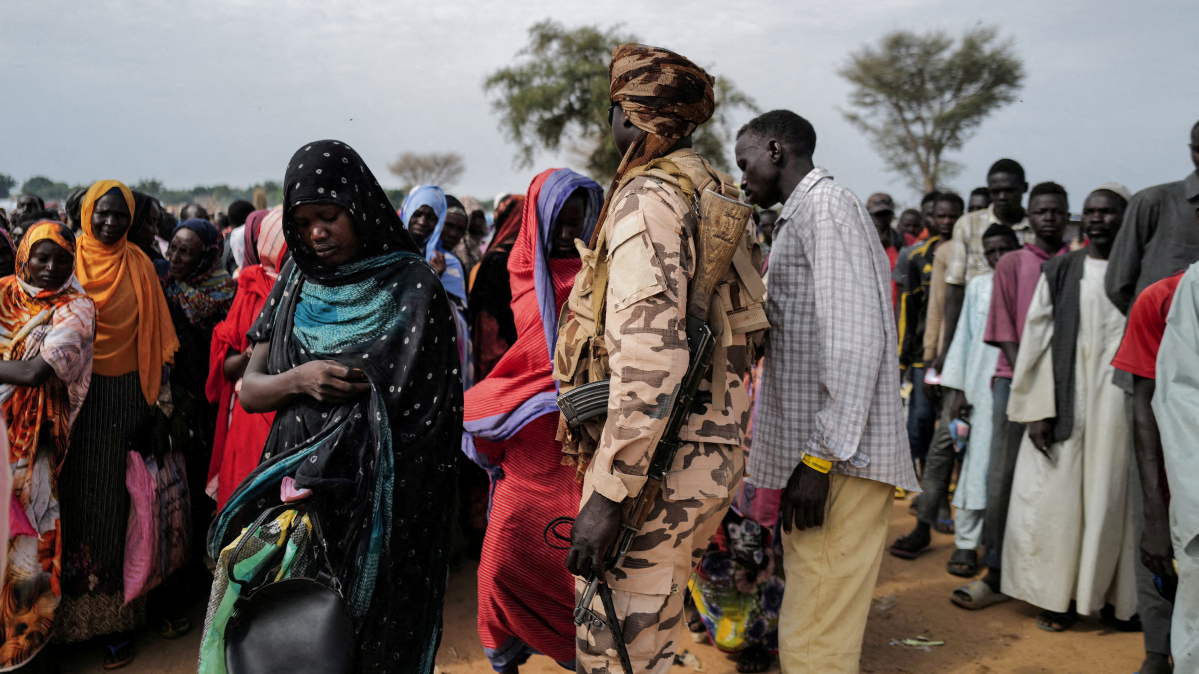
The warning applies most urgently to Chad, which is hosting more than 1.3 million Sudanese refugees, most of whom have arrived since the war between the Sudanese army and the Rapid Support Forces (RSF) began in April 2023. Many are survivors of mass killings, famine and ethnic violence in Darfur.
“With less than half the resources we require, we cannot deliver sufficient food to the people who need it most,” said WFP Chad Country Director Sarah Gordon-Gibson, warning that families are being forced into devastating coping strategies that put lives at risk.
A shrinking humanitarian response
Aid agencies say the impact of underfunding is already being felt. The United Nations High Commissioner for Refugees (UNHCR) said it is currently able to assist only four out of every ten refugees in Chad, leaving many without shelter.
While the UN has not publicly named donors responsible for the shortfall, aid agencies have previously pointed to cuts in Western foreign aid, including from the U.S. and Europe, as governments divert funds towards defence.
The situation inside Sudan
Inside Sudan, the crisis is even more severe. The country is now the world’s largest hunger emergency, with famine confirmed in El Fasher and Kadugli, and the risk of famine spreading to another 20 areas across Greater Darfur and Greater Kordofan.
The World Food Programme estimates that 21.2 million people - 41% of the population - are facing acute food insecurity, according to the latest international assessments. Sudan is also the world’s largest displacement crisis, with more than 12 million people forced from their homes.
The WFP warns that, from February 2026, hunger is expected to worsen again as food stocks run out and fighting continues. The agency urgently needs $700 million to continue operations through mid-2026.
Doctors under fire: a hospital on the brink
The collapse of Sudan’s health system is captured in the testimony of Dr Mohamed, a doctor at the Saudi Hospital in El Fasher, which was attacked in October 2025 after the RSF seized the city. More than 460 patients and companions were reportedly killed.
“You see a patient bleeding in front of you and cannot help because there is no blood,” he said. “People cannot donate blood when they cannot find anything to eat.” With supplies exhausted, staff used mosquito nets and bed sheets as bandages and relied on expired medicines tested by pharmacists.
Humanitarian workers under attack
Sudan is now one of the most dangerous places in the world for healthcare and aid workers. Between 15 April 2023 and 9 December 2025, at least 173 health workers have been killed and 83 have been arrested, according to the WHO.
Despite the danger and lack of resources, doctors like Dr Mohamed continue working. “None of us are sane anymore,” he said. “Psychologically, we are all sick, but we push through.”
Without sustained funding, humanitarian access and an end to hostilities, Sudan’s forgotten war risks becoming even deadlier, with millions more lives hanging in the balance - largely unseen and unresolved.
READ MORE










What is your opinion on this topic?
Leave the first comment