South Korea has welcomed a rare conciliatory response from North Korea, calling it a “meaningful step” towards easing military tensions on the Korean peninsula.
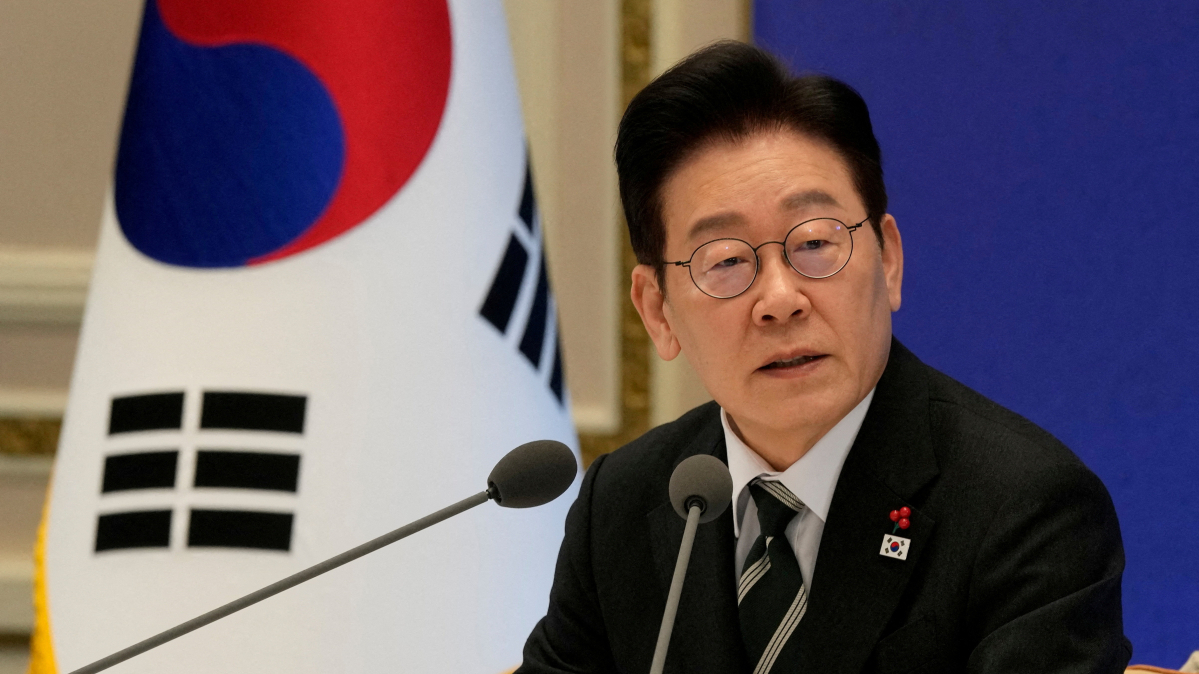
The South’s Unification Ministry said on Tuesday that Pyongyang’s reaction to President Lee Jae Myung’s apology over drone incursions into North Korean airspace earlier this year showed progress after years of sharp rhetoric between the neighbours.
President Lee expressed regret on Monday for the incidents, which were carried out by civilians acting against government policy. An investigation revealed the involvement of a National Intelligence Service employee and an active-duty military officer, actions the president described as violations of South Korea’s constitution.
"Although this was not an act by our government, I express regret to the North Korean side over the unnecessary military tension caused by such reckless behaviour," he said.
The comments were delivered by Kim Yo Jong, the influential sister of North Korean leader Kim Jong Un, and marked a noticeable shift in tone.
"Our government appreciated it as a very fortunate and wise behavior," Kim Yo Jong, said in a statement issued on the state-run Korean Central News Agency (KCNA).
However, she also warned Seoul to avoid any attempts at direct contact.
Seoul "should be mindful that it will be forced to pay a price too much for it, as already warned, if such a provocation as violating the inalienable sovereignty of our state occurs again," she added.
Despite the cautious approval, experts stress the broader picture remains tense. Lim Eul-chul, a professor at Kyungnam University, said North Korea’s response was “a controlled acceptance” of Lee’s remarks, with the South still viewed as a hostile state.
Any easing of tensions, he suggested, is aimed at managing conflict rather than softening Pyongyang’s rigid stance.
The South’s Unification Ministry said Seoul would continue its policy of peaceful coexistence and refrain from any hostile acts, underlining its commitment to managing, rather than escalating, the delicate situation.
Presidential Chief of Staff Kang Hoon-sik added that the apology reflected President Lee’s determination to restore trust and reduce the risk of future military tensions.
Relations between the two Koreas have been fraught since the 1950-53 Korean War, which ended in an armistice agreement rather than a formal peace treaty.
In recent years, Pyongyang has labelled South Korea its “most hostile state” and abandoned reunification talks, framing the peninsula as two separate and adversarial nations.














What is your opinion on this topic?
Leave the first comment