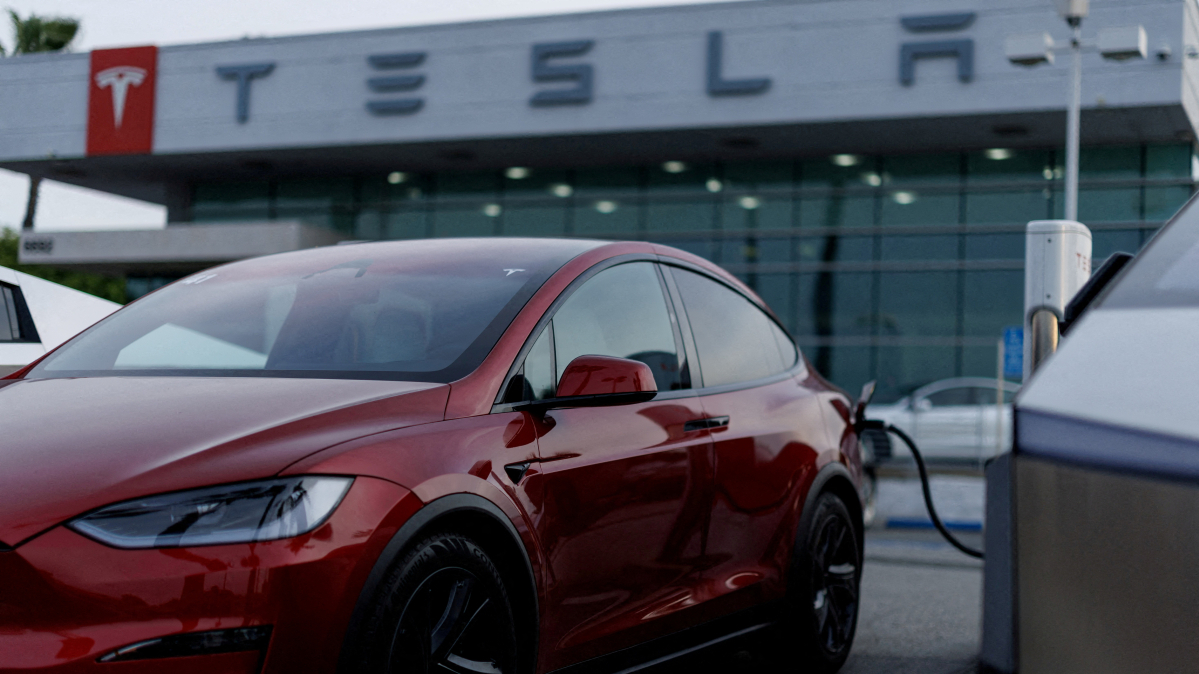
After many years, reams of regulatory paperwork and a well-timed presidential visit, Tesla has finally launched its Full Self-Driving (FSD) system in China, the world’s largest electric vehicle market and one in which competitors have been rapidly advancing their autonomous driving capabilities.
Tesla announced on Thursday that its FSD Supervised system had launched across multiple countries and regions worldwide, with China included in the rollout alongside markets across North America, Asia-Pacific and Europe. The announcement came just one week after Elon Musk travelled to Beijing as part of Donald Trump’s state visit to China. Whatever role that trip may have played in clearing the final regulatory hurdles, the result is the same: Tesla’s most advanced driver-assistance technology is now available to Chinese customers for the first time.
Tesla loses ground in China’s EV market
The road to this point has not been smooth. After years of regulatory delays, Tesla’s Chinese rivals had long since rolled out their own proprietary self-driving technologies, leaving the American company playing catch-up in a market it once dominated.
Tesla’s market share in China slipped to 6% in 2025, down from a peak of 16% in 2020, as domestic competition intensified. In April 2026 alone, Tesla sold just 25,956 vehicles in China, down 9.7% year on year and 53.7% month on month. The company had already fallen out of the top 10 EV makers in the Chinese domestic market.
FSD is Tesla’s attempt to claw back lost ground, not only as a sales tool but also as a new revenue stream. In China, the system is currently available as a one-time purchase for 64,000 yuan, roughly 9,400 U.S. dollars, with no monthly subscription option yet introduced for Chinese users.
Only 12% of Tesla customers globally had subscribed to FSD by the third quarter of 2025, a figure the company hopes to improve significantly now that it has access to China’s vast pool of driving data for local training.
Chinese rivals push ahead in autonomous driving
The competition Tesla is entering, however, is formidable. Chinese EV brands including BYD, Li Auto and Xpeng have made advanced driver-assistance features standard rather than optional, bundling them into the purchase price instead of selling them as expensive add-ons.
Xpeng and Li Auto, among others, have demonstrated stronger localisation in practical city-navigation scenarios. That local knowledge matters enormously. China’s roads, dense urban intersections, unmarked rural lanes and chaotic delivery traffic present challenges that a system trained predominantly on American driving conditions must learn from scratch.
Xpeng raises the stakes with robotaxis
Xpeng, in particular, is not waiting to be disrupted. The Guangzhou-based EV maker has begun mass production of autonomous robotaxis powered by its self-developed Turing AI chips, featuring Level 4 self-driving capabilities — a step above Tesla’s supervised system, which still requires a human driver to remain attentive at all times.
Xpeng plans to launch pilot robotaxi operations in the second half of 2026 to test technical viability, user acceptance and the strength of its wider business model. The service will run in partnership with Amap, giving it immediate access to one of China’s most comprehensive navigation datasets.
Performance comparisons intensify competition
The performance gap between the two systems has already been tested. In a comparison between Xpeng’s new vision-language-action AI model and Tesla’s FSD on the same route, Tesla’s system required seven disengagements in 54 minutes, while Xpeng’s needed only one human intervention and completed the route five minutes faster.
It is only a single data point, and one produced by a party with an obvious interest in the outcome, but it reflects a broader competitive reality: Chinese AI and autonomous driving development has moved rapidly, and Tesla is no longer the assumed technological leader in the market.
Can Tesla regain momentum?
What Tesla does still bring is strong brand recognition, a global software development track record and now access to real-world Chinese driving data that its systems urgently need.
Analysts say FSD’s entry into China will increase competition and accelerate innovation across the country’s autonomous driving sector, potentially benefiting consumers more than any individual company.
Whether it benefits Tesla enough to reverse its declining market share remains the key question Musk must answer — and the China launch may be his best opportunity yet to begin doing so.















What is your opinion on this topic?
Leave the first comment