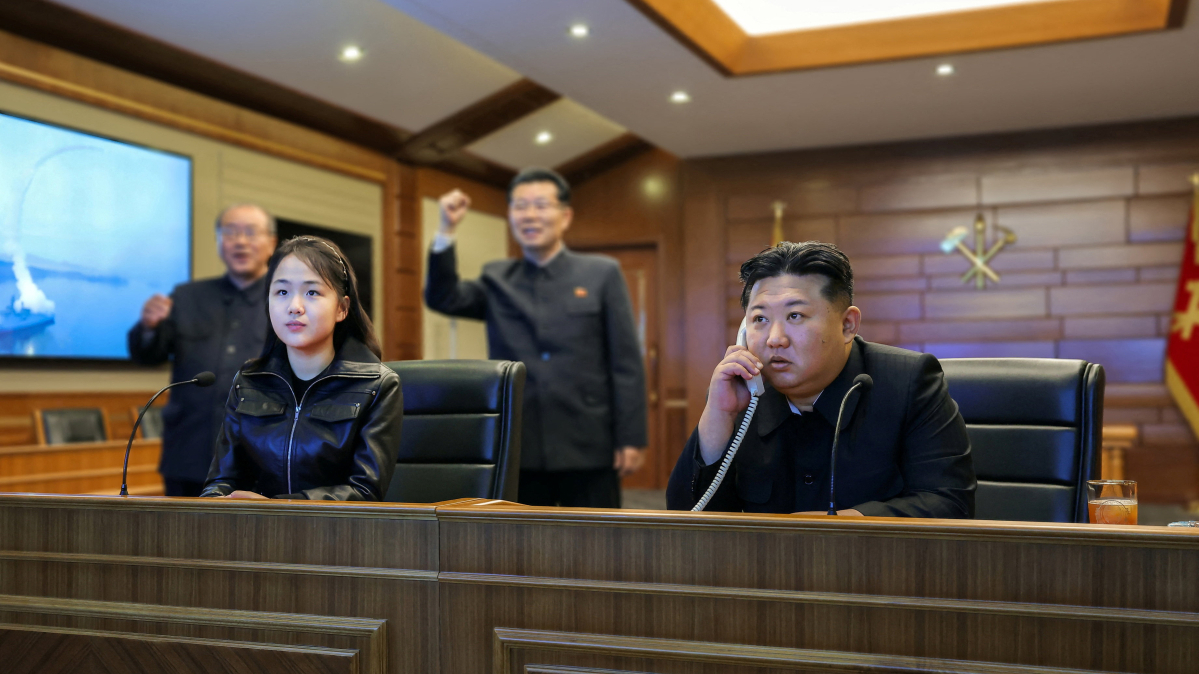
North Korea fired multiple ballistic missiles towards its east coast on Wednesday (8 April), South Korea’s military said, in a fresh show of force that underscored rising tensions despite brief signs of a possible thaw between the two sides.
South Korea’s Joint Chiefs of Staff said several short-range missiles were launched from near Wonsan at around 8:50 AM, flying approximately 700 kilometres. The launches followed a separate suspected ballistic missile fired a day earlier from near Pyongyang.
Officials in Seoul and Washington are conducting a detailed analysis, while South Korea convened an emergency National Security Council meeting, condemning the tests as a violation of United Nations Security Council resolutions.
Japan also reacted cautiously, with Chief Cabinet Secretary Minoru Kihara confirming the missiles did not enter Japanese waters or cause damage, but warning they posed a threat to regional security.
The launches mark North Korea’s fourth and fifth ballistic missile tests this year, continuing a pattern of weapons development that Pyongyang insists is part of its sovereign right to self-defence, despite international sanctions.
Mixed signals from Pyongyang
A day earlier, North Korea appeared to strike a softer tone, describing South Korean President Lee Jae Myung as “wise” for expressing regret over earlier drone incursions.
However, that perception quickly shifted. Senior Foreign Ministry official Jang Kum Chol dismissed any notion of improved ties, stating that South Korea would remain an “enemy state”.
“The identity of the ROK… can never change,” he said, reinforcing Pyongyang’s long-standing position.
Seoul responds
In response, South Korea’s presidential Blue House said hostile rhetoric did “nothing to promote peace and stability” on the Korean peninsula, adding that it would continue pursuing dialogue and coexistence.
Analysts say the rapid shift in Pyongyang's approach highlights a deliberate strategy.
Yang Moo-jin, a professor at the University of North Korean Studies in Seoul, said North Korea moved swiftly to shut down “overly optimistic” interpretations while continuing missile launches to reinforce its deterrence.
The two Koreas remain technically at war, as the 1950-1953 conflict ended in an armistice agreement rather than a peace treaty.
















What is your opinion on this topic?
Leave the first comment