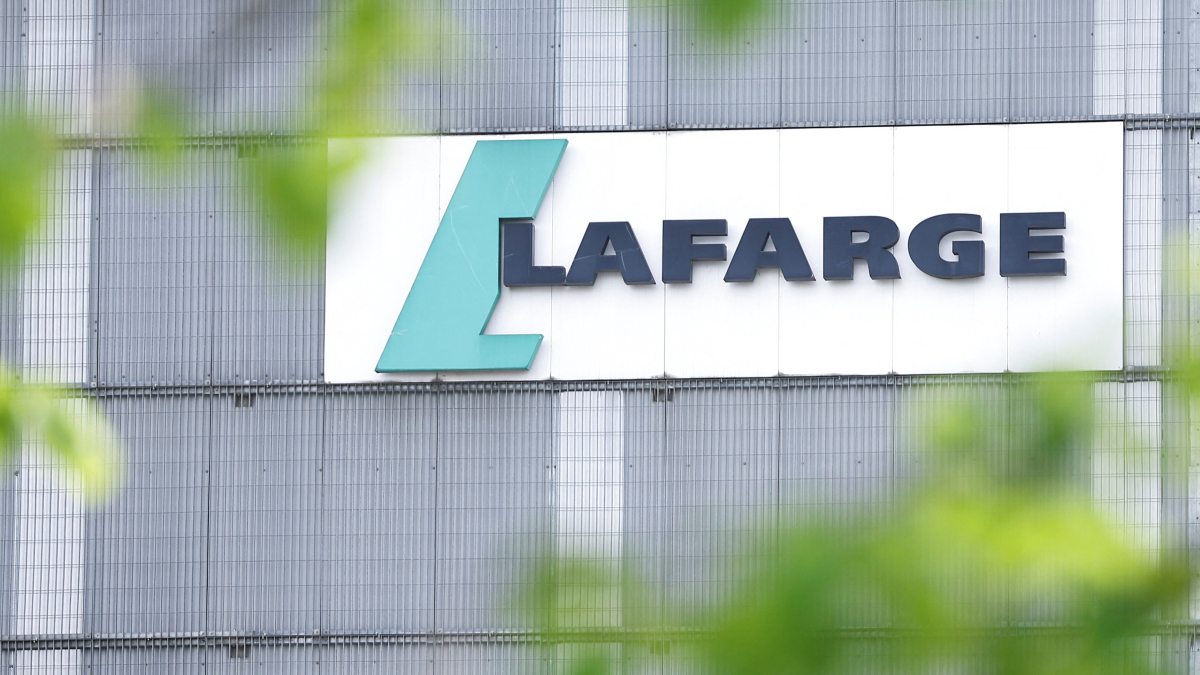
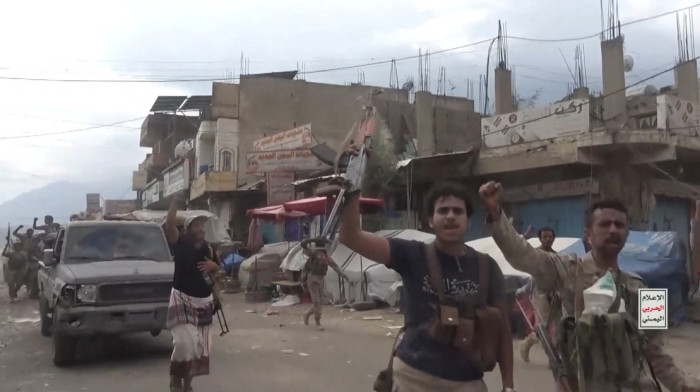
Cement maker Lafarge was found guilty by a French court on Monday (13 April) of paying millions to jihadist groups, including ISIS, to keep a plant running during the Syrian civil war.
Judges ruled that Lafarge paid €5.593 million ($6.53 million) to terrorist organisations such as ISIS and the al-Qaeda-affiliated Nusra Front between 2013 and 2014.
Eight former employees of the company, which has since been acquired by Swiss cement giant Holcim, were also found guilty of financing terrorism.
Payments to secure operations in Syria
The court in Paris found that Lafarge’s Syrian subsidiary, Lafarge Cement Syria (LCS), breached European sanctions to keep the plant operating near Jalabiya in northern Syria.
The plant was bought by Lafarge in 2008 for $680 million and began operations in 2010, months before the start of the Syrian uprising in early 2011.
Prosecutors said employees were housed in the nearby town of Manbij and had to cross the Euphrates River to access the facility. The court found that more than €800,000 ($935,348) was paid to terrorist groups to secure safe passage.
Another €1.6 million ($1.9 million) was used to purchase materials from quarries under ISIS control, the court said.
Landmark case in France
The case was the first time a company in France was tried for financing terrorism.
Judge Isabelle Prévost-Desprez said the payments made by Lafarge helped strengthen jihadist groups responsible for deadly attacks in Syria and beyond.
"It is clear to the court that the sole purpose of the funding of a terrorist organisation was to keep the Syrian plant running for economic reasons. Payments to terrorist entities enabled Lafarge to continue its operations," Prévost-Desprez said.
"These payments took the form of a genuine commercial partnership with the Islamic State," she added.
Sentencing and previous U.S. case
Prosecutors sought a €1.13 million fine ($1.32 million) and the confiscation of assets worth €30 million ($35 million), the maximum penalty available for a company. The court has not yet handed down its sentence.
There was no immediate reaction from Lafarge or Holcim.
The trial followed an eight-and-a-half-year inquiry into Lafarge’s activities in Syria and began in November 2025.
Lafarge and its Syrian subsidiary previously pleaded guilty in the U.S. to conspiring to provide ISIS and the Nusra Front with material support and resources. They were ordered to pay $777.78 million by a U.S. judge in 2022.
According to U.S. court documents, Lafarge paid ISIS and the Nusra Front in exchange for permission to operate a cement plant in Syria from 2013 to 2014, enabling LCS to generate approximately $70.3 million in revenue.












What is your opinion on this topic?
Leave the first comment