The U.S. and Iran have agreed to hold talks in Oman on Friday (5 February), even as they remained at odds over Washington's insistence that negotiations include Tehran's missile arsenal and Iran's vow to discuss only its nuclear programme.
The delicate diplomatic effort comes amid heightened tensions as the U.S. builds up forces in the Middle East and regional players seek to avoid a military confrontation that many fear could escalate into a wider war.
Differences in recent days over the scope and venue for the talks have raised doubts whether the meeting would take place, leaving open the possibility that U.S. President Donald Trump could carry out his threat to strike Iran.
Asked on Wednesday whether Iran's Supreme Leader Ayatollah Ali Khamenei should be worried, Trump told NBC News, "I would say he should be very worried. Yeah, he should be." He added that "they're negotiating with us" but did not elaborate.
After Trump spoke, U.S. and Iranian officials said the two sides had agreed to shift the talks' location to Oman after initially accepting Istanbul.
But there was no indication they had found common ground on the agenda.
Iran has pushed to restrict the negotiations to discussing its long-running nuclear dispute with Western countries.
But U.S. Secretary of State Marco Rubio presented a different view on Wednesday. "If the Iranians want to meet, we're ready," Rubio told reporters.
A senior Iranian official said, however, that Iran's missile programme was "off the table."
A second senior Iranian official said Tehran would welcome negotiations over the nuclear dispute but that U.S. insistence on dealing with non-nuclear issues could jeopardise the talks.
While the talks were originally for Türkiye, Iran wanted the meeting to take place in Oman as a continuation of previous talks held in the Gulf Arab country that had focused strictly on Tehran's nuclear programme, a regional official said.
Iran says its nuclear activities are meant for peaceful, not military purposes, while the U.S. and Israel have accused it of past efforts to develop nuclear weapons.
A Gulf official said the talks could be mediated by several countries, though Iran has indicated that it wants a two-way format limited to Washington and Tehran.
The diplomatic efforts follow Trump's threats of military action against Iran during its bloody crackdown on protesters last month and the deployment of more naval power to the Gulf.
The U.S. has sent thousands of troops to the Middle East since Trump threatened Iran last month - including an aircraft carrier, other warships, fighter jets, spy planes and air refuelling tankers.
Nuclear dispute
Trump has warned that "bad things" would probably happen if a deal could not be reached, ratcheting up pressure on the Islamic Republic in a standoff that has led to mutual threats of airstrikes.
Iran’s leadership is increasingly worried a U.S. strike could break its grip on power by driving an already enraged public back onto the streets, according to six current and former Iranian officials.
Trump, who stopped short of carrying out threats to intervene during last month's crackdown, has since demanded nuclear concessions from Iran, sending a flotilla to its coast.
Iran also hopes for an agreement that could help lift Western sanctions over its nuclear programme that have ravaged its economy - a major driver of last month's unrest.
Ballistic missile stockpile
Iranian sources told Reuters last week that Trump had demanded three conditions for the resumption of talks: zero enrichment of uranium in Iran, limits on Tehran's ballistic missile programme and an end to its support for regional proxies.
Iran has long said all three demands are unacceptable infringements of its sovereignty, but two Iranian officials told Reuters its clerical rulers saw the ballistic missile programme, rather than uranium enrichment, as the bigger obstacle.
An Iranian official said there should not be preconditions for talks and that Iran was ready to show flexibility on uranium enrichment, which it says is for peaceful, not military purposes.
Since the U.S. strikes in June, Tehran has said its uranium enrichment work has stopped.
Iran said it replenished its missile stockpile after the war with Israel last year, warning it would unleash its missiles if its security is under threat.
British police are facing a national backlash over their handling of the fatal stabbing of 18-year-old student Henry Nowak, who was handcuffed while d...
International organisations, investors, environmental experts and business representatives gathered in Samarkand for the opening of Eco Expo Central A...
China is sending doctors, medical teams and emergency supplies to help combat a growing Ebola outbreak in Central Africa, joining an international eff...
Armenian Prime Minister Nikol Pashinyan has said Yerevan remains committed to normalising relations with Azerbaijan and Türkiye, expressing confidenc...
U.S. envoy Steve Witkoff and Iranian Foreign Minister Abbas Araghchi are expected to meet in Istanbul on Friday for renewed discussions on Iran’s nuclear programme, according to reporting by Axios.
Ukrainian President Volodymyr Zelenskyy said on Tuesday that he is awaiting the results of a meeting between U.S. President Donald Trump’s special envoy Steve Witkoff and Russian President Vladimir Putin, as efforts continue to find a path toward ending the war in Ukraine.
U.S. President Donald Trump’s Middle East Special Envoy, Steve Witkoff, met with Ukrainian officials in New York on Wednesday to discuss the ongoing peace process with Russia, sources said.
U.S. special envoy Steve Witkoff landed in Moscow on Wednesday for talks that could include President Vladimir Putin, as Washington warns it will impose fresh sanctions if Russia fails to accept a Ukraine ceasefire by Friday.
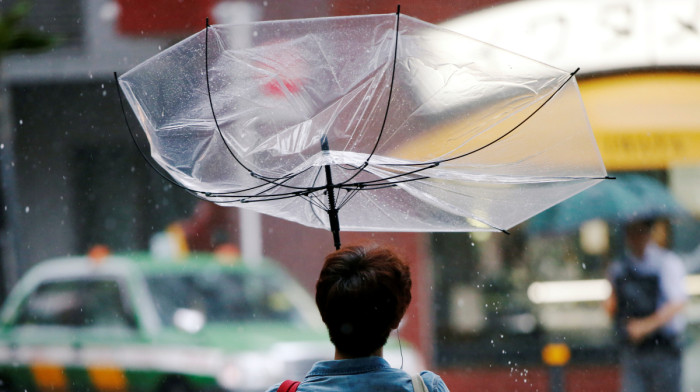
Okinawa lost transport links and suffered widespread power outages on Monday (1 June) as Severe Tropical Storm Jangmi brought destructive winds and heavy rain to Japan's south-western islands.
Competing narratives continue to shape perceptions of the war in Ukraine, with Russian leadership suggesting a possible end phase while Ukrainian officials warn of renewed large-scale attacks and ongoing escalation risks.
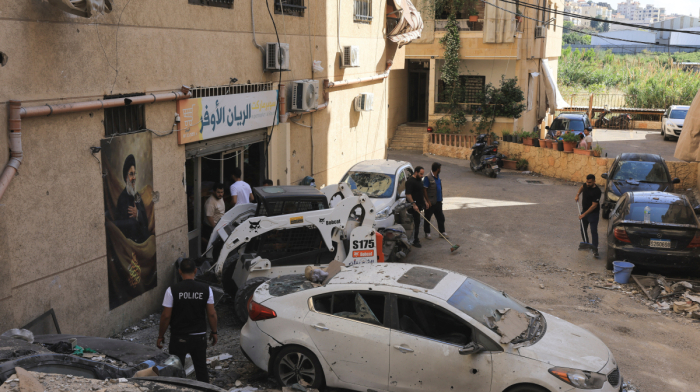
U.S. Secretary of State Marco Rubio has held talks with Lebanese President and Israeli Prime Minister on efforts to ease tensions between Israel and Lebanon. According to a U.S. official, Washington has proposed a plan aimed at achieving a gradual de-escalation of hostilities.
When Armenians vote on 7 June, they will be voting in an election shaped by months of political change and a rapidly deepening relationship with the European Union. The result may not only determine who governs Armenia but also the future direction of the country's geopolitical alignment.
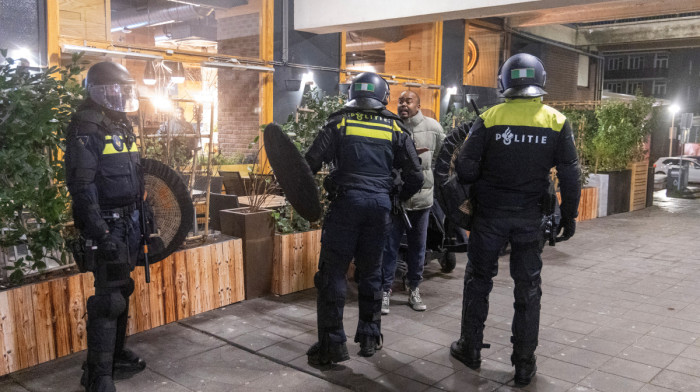
Dutch police have launched an investigation into the use of force against a pregnant woman at an asylum seekers' centre in Zeist after videos of the incident circulated widely on social media.
China’s Special Envoy for Afghanistan, Yue Xiaoyong, has met Pakistan’s Special Representative for Afghanistan, Mohammad Sadiq, in Islamabad to discuss the China-facilitated Urumqi Process and regional security concerns.
International organisations, investors, environmental experts and business representatives gathered in Samarkand for the opening of Eco Expo Central Asia 2026, one of the region's largest environmental events focused on green growth, climate resilience and sustainable development.
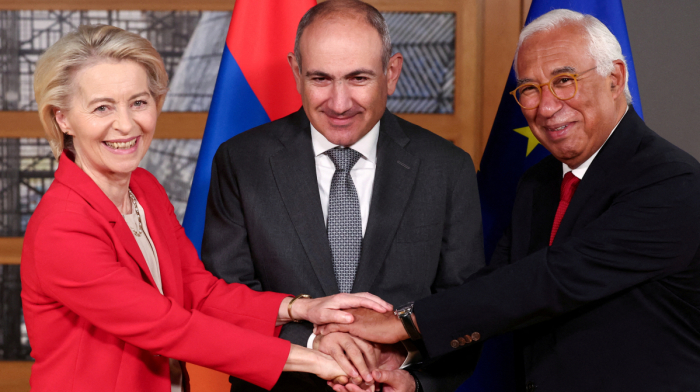
Armenian Prime Minister Nikol Pashinyan has said Yerevan remains committed to normalising relations with Azerbaijan and Türkiye, expressing confidence that decades of regional hostility will eventually give way to lasting stability.
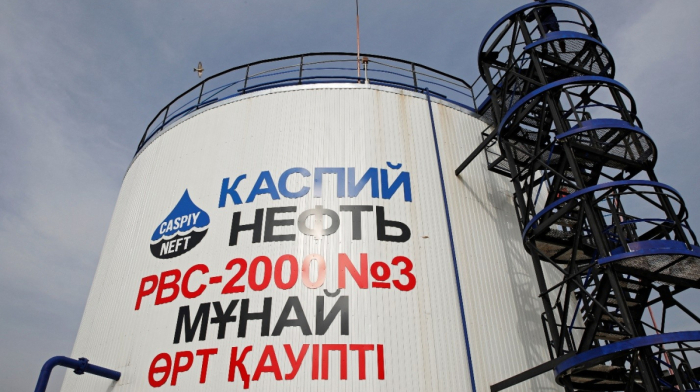
Kazakhstan has restored oil production after an accident at the Tengiz oil field briefly disrupted output last week, while also signalling its readiness to increase crude shipments through the Baku–Tbilisi–Ceyhan (BTC) pipeline.
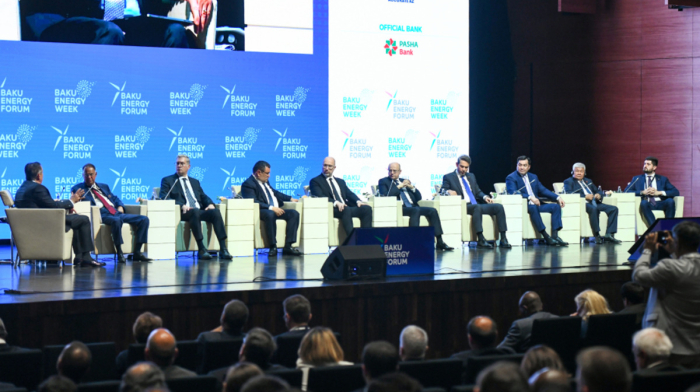
Baku has once again become a focal point for international energy diplomacy, investment and strategic cooperation, as Baku Energy Week brings together policymakers, industry leaders and investors from around the world.








What is your opinion on this topic?
Leave the first comment