The U.S. and Iran have agreed to hold talks in Oman on Friday (5 February), even as they remained at odds over Washington's insistence that negotiations include Tehran's missile arsenal and Iran's vow to discuss only its nuclear programme.
The delicate diplomatic effort comes amid heightened tensions as the U.S. builds up forces in the Middle East and regional players seek to avoid a military confrontation that many fear could escalate into a wider war.
Differences in recent days over the scope and venue for the talks have raised doubts whether the meeting would take place, leaving open the possibility that U.S. President Donald Trump could carry out his threat to strike Iran.
Asked on Wednesday whether Iran's Supreme Leader Ayatollah Ali Khamenei should be worried, Trump told NBC News, "I would say he should be very worried. Yeah, he should be." He added that "they're negotiating with us" but did not elaborate.
After Trump spoke, U.S. and Iranian officials said the two sides had agreed to shift the talks' location to Oman after initially accepting Istanbul.
But there was no indication they had found common ground on the agenda.
Iran has pushed to restrict the negotiations to discussing its long-running nuclear dispute with Western countries.
But U.S. Secretary of State Marco Rubio presented a different view on Wednesday. "If the Iranians want to meet, we're ready," Rubio told reporters.
A senior Iranian official said, however, that Iran's missile programme was "off the table."
A second senior Iranian official said Tehran would welcome negotiations over the nuclear dispute but that U.S. insistence on dealing with non-nuclear issues could jeopardise the talks.
While the talks were originally for Türkiye, Iran wanted the meeting to take place in Oman as a continuation of previous talks held in the Gulf Arab country that had focused strictly on Tehran's nuclear programme, a regional official said.
Iran says its nuclear activities are meant for peaceful, not military purposes, while the U.S. and Israel have accused it of past efforts to develop nuclear weapons.
A Gulf official said the talks could be mediated by several countries, though Iran has indicated that it wants a two-way format limited to Washington and Tehran.
The diplomatic efforts follow Trump's threats of military action against Iran during its bloody crackdown on protesters last month and the deployment of more naval power to the Gulf.
The U.S. has sent thousands of troops to the Middle East since Trump threatened Iran last month - including an aircraft carrier, other warships, fighter jets, spy planes and air refuelling tankers.
Nuclear dispute
Trump has warned that "bad things" would probably happen if a deal could not be reached, ratcheting up pressure on the Islamic Republic in a standoff that has led to mutual threats of airstrikes.
Iran’s leadership is increasingly worried a U.S. strike could break its grip on power by driving an already enraged public back onto the streets, according to six current and former Iranian officials.
Trump, who stopped short of carrying out threats to intervene during last month's crackdown, has since demanded nuclear concessions from Iran, sending a flotilla to its coast.
Iran also hopes for an agreement that could help lift Western sanctions over its nuclear programme that have ravaged its economy - a major driver of last month's unrest.
Ballistic missile stockpile
Iranian sources told Reuters last week that Trump had demanded three conditions for the resumption of talks: zero enrichment of uranium in Iran, limits on Tehran's ballistic missile programme and an end to its support for regional proxies.
Iran has long said all three demands are unacceptable infringements of its sovereignty, but two Iranian officials told Reuters its clerical rulers saw the ballistic missile programme, rather than uranium enrichment, as the bigger obstacle.
An Iranian official said there should not be preconditions for talks and that Iran was ready to show flexibility on uranium enrichment, which it says is for peaceful, not military purposes.
Since the U.S. strikes in June, Tehran has said its uranium enrichment work has stopped.
Iran said it replenished its missile stockpile after the war with Israel last year, warning it would unleash its missiles if its security is under threat.
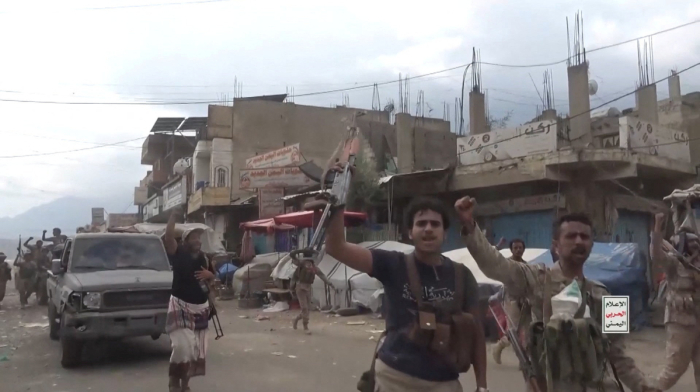
The Saudi-led coalition in Yemen said late Monday that it intercepted and destroyed two ballistic missiles launched by the Houthi group toward Khamis Mushait in southwestern Saudi Arabia.
Yemen’s Houthis have claimed responsibility for the recent drone and missile strikes on Saudi Aramco facilities in Dhahran and Riyadh and at King Khalid International Airport in Saudi Arabia, vowing to carry out more attacks in the coming days.
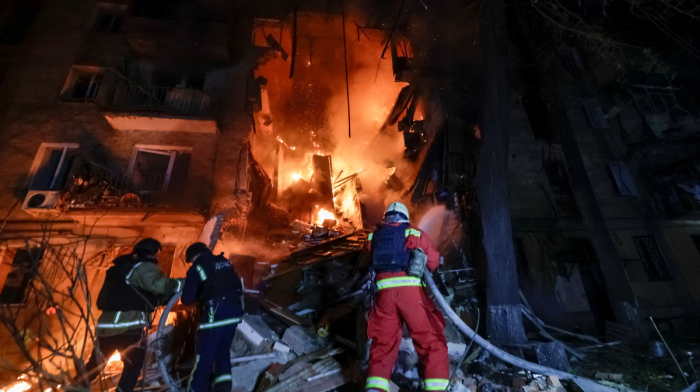
Ukrainian President Volodymyr Zelenskyy says Russia hit at least six energy targets in deadly strikes across Ukraine, showing Moscow is unwilling to accept the energy ceasefire announced by U.S. President Donald Trump.
Thousands of young Georgians leave the country each year in search of better economic opportunities, with many moving west.As questions grow over Georgia’s European path, AnewZ spoke to people who have emigrated about what it would take for them to return.
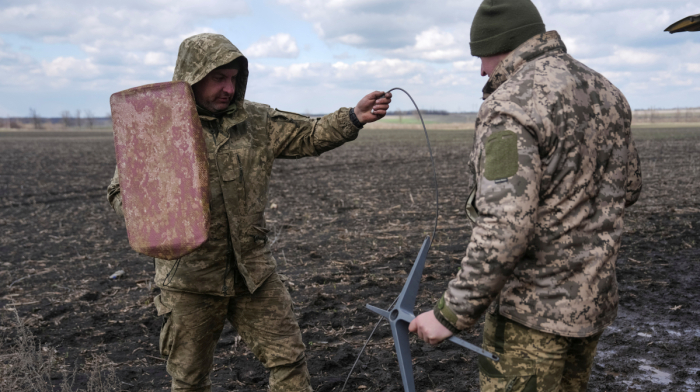
Ukraine's soldiers have had their access to Starlink satellite internet restricted. Kyiv's troops use the terminals, made by Elon Musk's SpaceX, to pilot drones. A source in Ukraine's Defence Ministry said the restrictions would make it harder for Kyiv's army to down Russian drones.
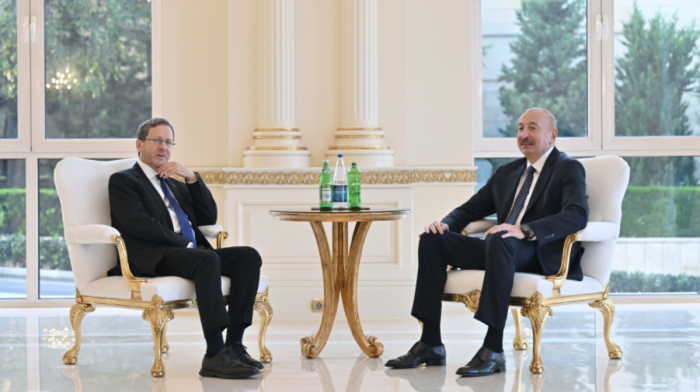
Azerbaijani President Ilham Aliyev and his Israeli counterpart, Isaac Herzog, met on 14 October to discuss bilateral ties and key regional and international issues.
Afghan authorities suspended BBC FM radio broadcasts nationwide on Tuesday (13 October), citing repeated but unspecified violations. The BBC said it was working with officials to restore the service.
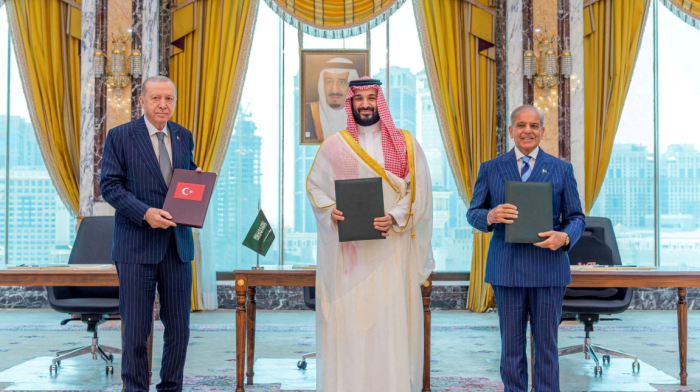
Turkish President Recep Tayyip Erdoğan has reaffirmed his support for Saudi Arabia following Houthi attacks, as U.S. President Donald Trump considers involving Türkiye in the Yemen conflict.
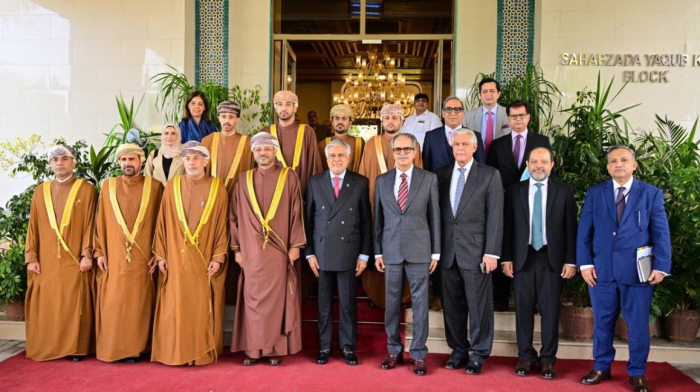
Pakistan and Oman called for restraint and diplomacy on Wednesday as they discussed the U.S.-Iran conflict, Houthi attacks on Saudi Arabia and threats to vital Gulf shipping routes, with Muscat praising Islamabad’s mediation efforts.
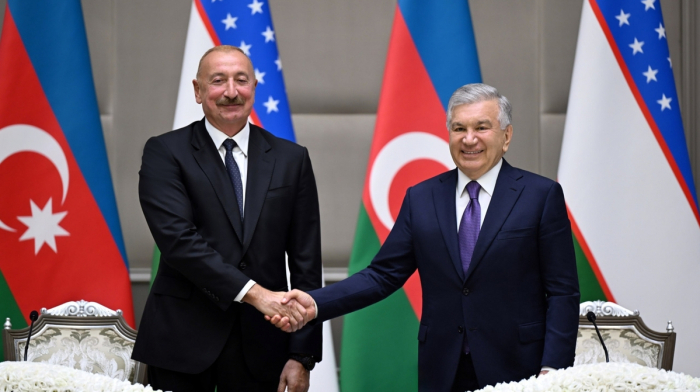
Uzbek President Shavkat Mirziyoyev is in Baku for the seventh Conference on Interaction and Confidence Building Measures in Asia (CICA) Summit on 14–15 October, as Uzbekistan and Azerbaijan seek to turn stronger political ties into deeper economic cooperation.
Download the AnewZ app
You can download the AnewZ application from Play Store and the App Store.









What is your opinion on this topic?
Leave the first comment