Talks with the U.S. should be pursued to secure national interests as long as "threats and unreasonable expectations" are avoided, President Masoud Pezeshkian posted on X on Tuesday (3 February).
“Taking into account demands from friendly regional countries to respond to the U.S. President's suggestion for talks, I instructed the foreign minister to prepare the ground for equitable and fair negotiations, should an atmosphere free of threats and unreasonable expectations arise,” Pezeshkian said.
The comments come amid mounting regional concern that a renewed confrontation between the United States and Iran could destabilise the Middle East.
Speaking at a panel during the World Governments Summit in Dubai, Anwar Gargash, diplomatic adviser to the president of the United Arab Emirates, said the region did not need another crisis and stressed the importance of a diplomatic solution.
“I think the region has gone through various calamitous confrontations. I don’t think we need another one,” Gargash said.
Against this backdrop, U.S. Special Envoy Steve Witkoff and Iranian Foreign Minister Abbas Araqchi will meet in Istanbul on Friday (6 February) to revive diplomacy over Iran’s long-running nuclear dispute.
A regional diplomat said representatives from countries such as Saudi Arabia and Egypt will also take part, amid fears of a new regional war.
Tensions have been increasing amid a U.S. naval buildup near Iran, following a violent crackdown against anti-government demonstrations last month, the deadliest domestic unrest in Iran since its 1979 revolution.
Trump, who stopped short of carrying out threats to intervene during the crackdown, has since demanded Tehran make nuclear concessions and sent a flotilla to its coast.
He said last week Iran was "seriously talking", while Tehran's top security official Ali Larijani said arrangements for negotiations were under way.
Asked on Monday (1 February) about the prospect of a deal, Trump told reporters at the White House talks were happening.
"We have ships heading to Iran right now, big ones - the biggest and the best - and we have talks going on with Iran and we'll see how it all works out ... if we can work something out, that would be great and if we can't, probably bad things would happen."
Iranian sources told Reuters last week that Trump had demanded three conditions for resumption of talks: Zero enrichment of uranium in Iran, limits on Tehran's ballistic missile programme and ending its support for regional proxies.
Iran has long rejected all three demands as unacceptable infringements of its sovereignty, but two Iranian officials told Reuters its clerical rulers saw the ballistic missile programme, rather than uranium enrichment, as the bigger obstacle.
Preparations for potential U.S.-Iran talks
Iranian Foreign Ministry spokesperson Esmaeil Baghaei said Tehran was considering "the various dimensions and aspects of the talks", adding that "time is of the essence for Iran as it wants the lifting of unjust sanctions sooner".
Türkiye and other regional allies have sought de-escalation.
"Qatar, Saudi Arabia, UAE and Egypt, as well as some other countries, will attend the Istanbul meeting. There will be bilateral, trilateral and other meetings," the diplomat said.
A Turkish ruling-party official told Reuters that Tehran and Washington had agreed to re-focus on diplomacy and possible talks this week, in a potential reprieve for potential U.S. strikes.
Ball in Trump’s court
The Iranian official said diplomacy is ongoing and stressed that talks should resume without preconditions. Iran is ready to show flexibility on uranium enrichment, including handing over 400 kg of highly enriched uranium and accepting zero enrichment under a consortium arrangement.
However, he added, for the start of talks, Tehran wanted U.S. military assets moved away from Iran.
"Now the ball is in Trump's court," he said.
Some repair work at Iranian sites
Tehran's regional sway has been weakened by Israel's attacks on its proxies from Hamas in Gaza to Hezbollah in Lebanon, the Houthis in Yemen and militias in Iraq, as well as by the ousting of Iran's close ally, former Syrian President Bashar al-Assad.
In June last year the United States struck Iranian nuclear targets, joining in at the close of a 12-day Israeli bombing campaign. Since then, Tehran has said its uranium enrichment work has stopped.
Recent satellite imagery of two of the targeted sites, Isfahan and Natanz, appears to show some repair work since December, with new roofing over two previously destroyed buildings.
No other rebuilding was visible, according to the imagery provided by Planet Labs and reviewed by Reuters.
Washington-based think tank ISIS said satellite images from late January showed construction work on tunnel entrances at Isfahan that could "indicate a preparation for additional military strikes" as was seen ahead of last year's U.S. strikes.
It could also signal the movement of assets from other facilities, it added.
Nuclear talks standoff
The United Nations nuclear watchdog, the International Atomic Energy Agency (IAEA), said it has called on Iran repeatedly to find out what happened to the highly enriched uranium stock since the June attacks.
Western countries fear Iran's uranium enrichment could yield material for a warhead. Iran says its nuclear programme is only for electricity generation and other civilian uses.
The Iranian sources said Tehran could ship its highly enriched uranium abroad and pause enrichment in a deal that should also include the lifting of economic sanctions.
The explosion at King Khalid International Airport in Riyadh on Saturday afternoon killed at least 12 people and injured a further 309, according to Saudi Arabia’s Civil Aviation Authority. The airport remains closed until further notice.
Yemen's Houthis renewed warning to airlines, airport workers, and travellers against using Saudi airports, saying the warning should be taken seriously and that the kingdom “bore responsibility for failed interceptions”, a day after an attack on Riyadh's international airport that killed 12 people.
One person was killed and nearly a dozen hurt in a new attack Riyadh's international airport on Sunday, Saudi authorities reported, a day after a strike claimed by Yemen's Houthis that killed 13 people and wounded more than 300.
Ukraine is ready to stop attacks on Russian oil refineries if Moscow also halts strikes on Ukrainian energy infrastructure, President Volodymyr Zelenskyy said on Sunday.
One person was killed and nearly a dozen hurt in a new attack Riyadh's international airport on Sunday, Saudi authorities reported, a day after a strike claimed by Yemen's Houthis that killed 13 people and wounded more than 300.
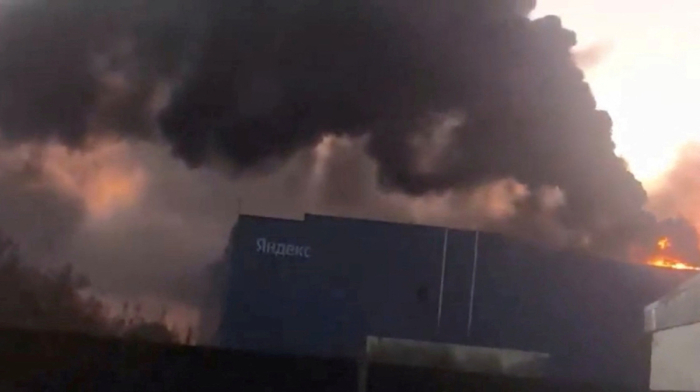
Russia's TASS news agency is reporting that Russia's defence and digital development ministries are in talks about how to protect data centres, after several Yandex centres were targeted in Ukrainian drone attacks.
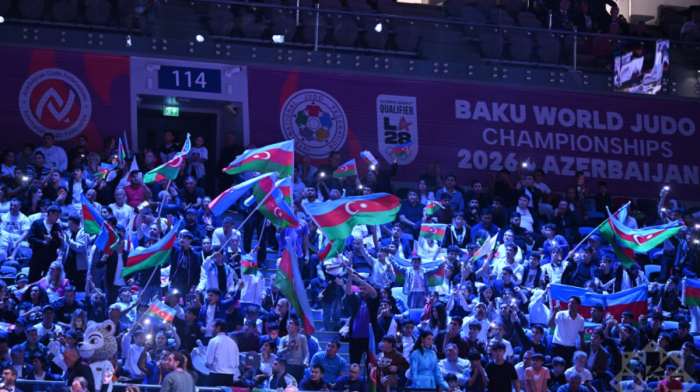
The 2026 Judo World Championships in Azerbaijan's capital came to a close with Japan claiming gold for the mixed team event of the competition, defeating Russia 4-1 in the final.
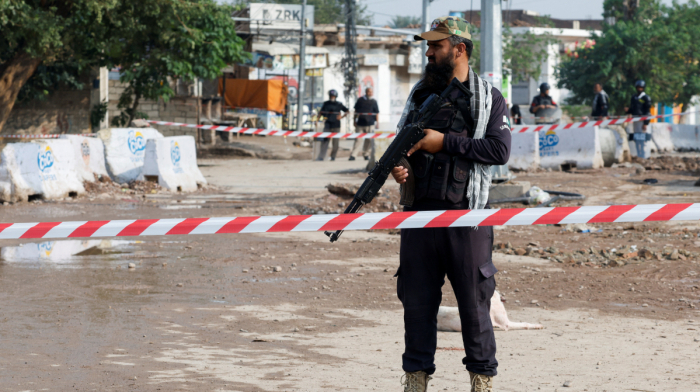
Pakistan has declared a state of emergency in Khyber Pakhtunkhwa, suspending the provincial government led by jailed former Prime Minister Imran Khan’s party. The move comes as tensions rise ahead of a planned protest calling for his release.
Yemen's Houthis renewed warning to airlines, airport workers, and travellers against using Saudi airports, saying the warning should be taken seriously and that the kingdom “bore responsibility for failed interceptions”, a day after an attack on Riyadh's international airport that killed 12 people.
Download the AnewZ app
You can download the AnewZ application from Play Store and the App Store.















What is your opinion on this topic?
Leave the first comment