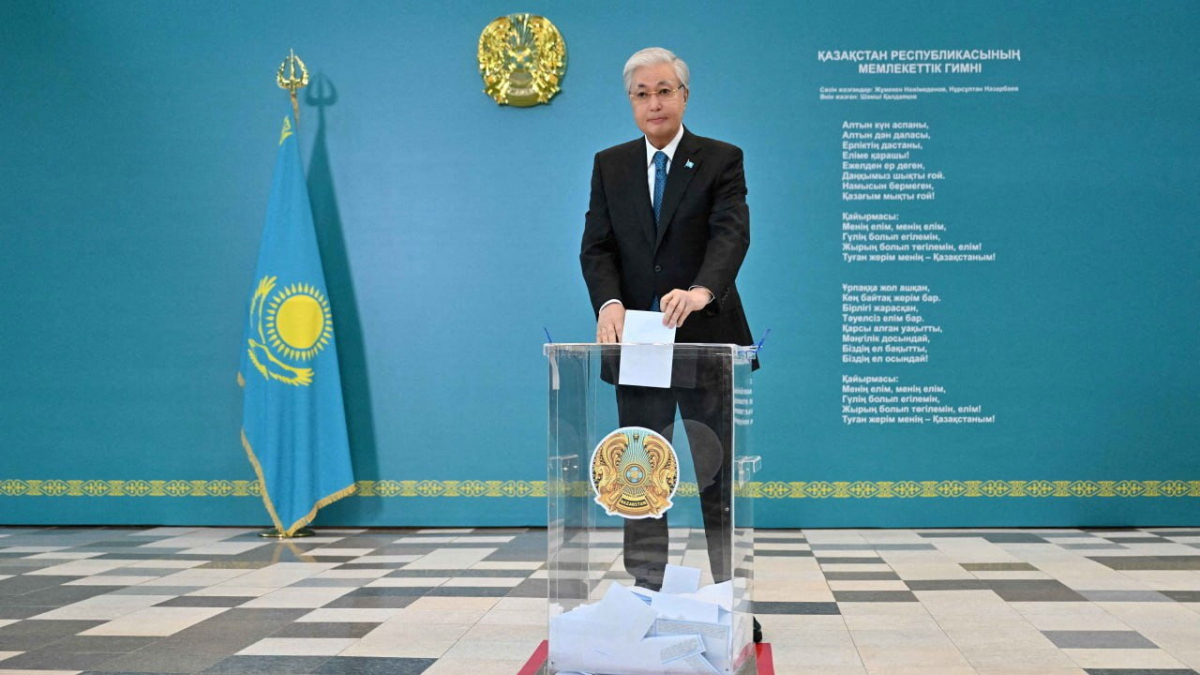
Kazakhstan is holding a nationwide referendum on a new draft Constitution on Sunday (15 March) that could significantly reshape the country’s political system. Polling stations have opened across the country, with nearly 12.5 million people eligible to take part.
In total, more than 10,000 polling stations are operating nationwide, and authorities say about $42 million has been allocated to organise the referendum.
The draft Constitution, published on 12 February 2026, proposes sweeping changes affecting nearly 40% of the Basic Law. Its core aim is to redistribute powers and redesign the structure of relations between the branches of government.
Under the new framework, the presidency will be limited to a single seven-year term with no possibility of re-election. The current bicameral parliament will be replaced by a unicameral Kurultai with 145 deputies, elected through party lists for five-year terms.
A new advisory body, the Khalyk Kenesi (People’s Council), will be established, meeting at least once a year and possessing legislative initiative powers. Additionally, the office of vice-president, absent for 30 years, will be restored, with the head of state proposing the candidate.
The draft also introduces a high-stakes impeachment mechanism: Kurultai deputies may initiate proceedings against the President, but if the Constitutional Court does not uphold the motion, the authors of the initiative will lose their parliamentary seats.
On matters of law, the Constitution enshrines its absolute supremacy over decisions of international organisations, while socially, marriage is defined as a voluntary union between a man and a woman.
Centralisation and governance
Observers say the reforms indicate a move toward a more centralised political system, though grounded in traditional structures.
The combination of a unicameral parliament and a presidentially appointed People’s Council strengthens executive authority, while the stringent impeachment clause appears designed to deter legislative challenges.
The emphasis on constitutional supremacy over international law also aligns Kazakhstan with a broader regional trend that prioritises national legal sovereignty.
President’s vision
President Kassym-Jomart Tokayev, who called for the referendum through a decree on 11 February, described the draft as incorporating “important progressive norms.”
He emphasised that its adoption “will give a powerful impetus to the development of Kazakhstan and will help realise the potential of every citizen.”
Tokayev further explained that the country is moving away from a “super-presidential form of government” toward a presidential republic with an influential and authoritative parliament.
The vote marks the fifth nationwide referendum in the history of independent Kazakhstan. According to the Central Referendum Commission, final results must be announced by 21 March, no later than seven days after the vote. If approved, the new Constitution could come into force on 1 July, and the current parliament would be dissolved.












What is your opinion on this topic?
Leave the first comment