Plans for sweeping constitutional changes in Kazakhstan have sparked controversy, with civil society representatives accusing the authorities of rushing reforms without sufficient transparency or a clear public mandate.
Kazakhstan proposes constitutional reform that could extend President's time in powerA public debate is now taking place over the proposals, beginning with an open letter addressed to President Kassym-Jomart Tokayev by representatives of civil society, the expert community and human rights groups.
The authors voice concern not so much about the substance of the proposed amendments as about the pace and format of the process, arguing that the durability of any constitutional reform depends on procedural legitimacy, transparency and a clearly articulated public mandate.
In their letter, the signatories say that the 2022 constitutional reform was introduced as a move towards a new system of government. It was supposed to protect key rules, such as presidential term limits and how the head of state is elected, from being changed too easily. They argue that these reforms have not yet been fully put into practice and need more time to take effect, which makes it too soon, in their opinion, to launch another major overhaul.
Against this backdrop, particular concern is raised by the transformation of what was initially framed as a parliamentary reform into preparations for a package of constitutional changes affecting more than 80% of the Basic Law.
Because of how wide-ranging it is, the proposal would effectively mean adopting an almost completely new constitution. The authors argue that this should require a clear and separate public mandate, along with an open explanation of why such major changes are needed. Without this, they warn, the Constitution could be seen as serving short-term political interests rather than acting as a stable agreement between the state and society.
The letter also highlights a difference between earlier public promises and the current speed of the process. In 2025, the president said there should be no rush and called for at least a year of detailed discussion with parliament and civil society, suggesting that a referendum should not be held before 2027. The quicker-than-expected creation of the Constitutional Commission, the widening of its powers and the lack of publicly available rules, timelines and draft texts are therefore seen by the signatories as reasons to question trust in the reform.
Doubts raised
Attention is also drawn to the composition of the commission itself. A significant number of its members took part in constitutional changes in 2011, 2017 and 2019, reforms which, according to the authors of the letter, contributed to a concentration of power. This, they argue, heightens the risk of reproducing earlier institutional patterns and raises doubts about a genuine break with past practices.
The signatories further caution that putting a wide range of complex amendments to a referendum as a single package deprives voters of the opportunity to express different views on key issues. Such an approach, they say, creates the risk of delayed delegitimisation after formal adoption. At the same time, they stress the importance of explicitly committing to the principle that constitutional guarantees of human rights and freedoms should not be weakened and may only be revised in the direction of stronger protection and closer alignment with international standards.
As an alternative, the authors suggest focusing for now only on reforming parliament. They say this should be done through a clear and orderly legislative process, without changing specific sectoral laws in advance and should include a full legal and public review. They also urge the authorities to keep their earlier promise of a year-long discussion, with public hearings held across all regions of the country. At Kazakhstan’s current stage of development, they argue, the Constitution should provide a stable basis for long-term political and legal agreement, rather than being reshaped to suit a particular political moment.
At the same time, sociological data suggest that critical voices within civil society do not represent the full spectrum of public opinion. According to the Kazakhstan Institute for Strategic Studies under the president, 79% of respondents consider the ongoing reforms timely, while 65% associate the proposed constitutional changes with potential improvements in their personal wellbeing and quality of life. Overall, 78% of those surveyed expressed support for the constitutional reform, a result the institute says points to broad public engagement and a substantial level of confidence in the process.
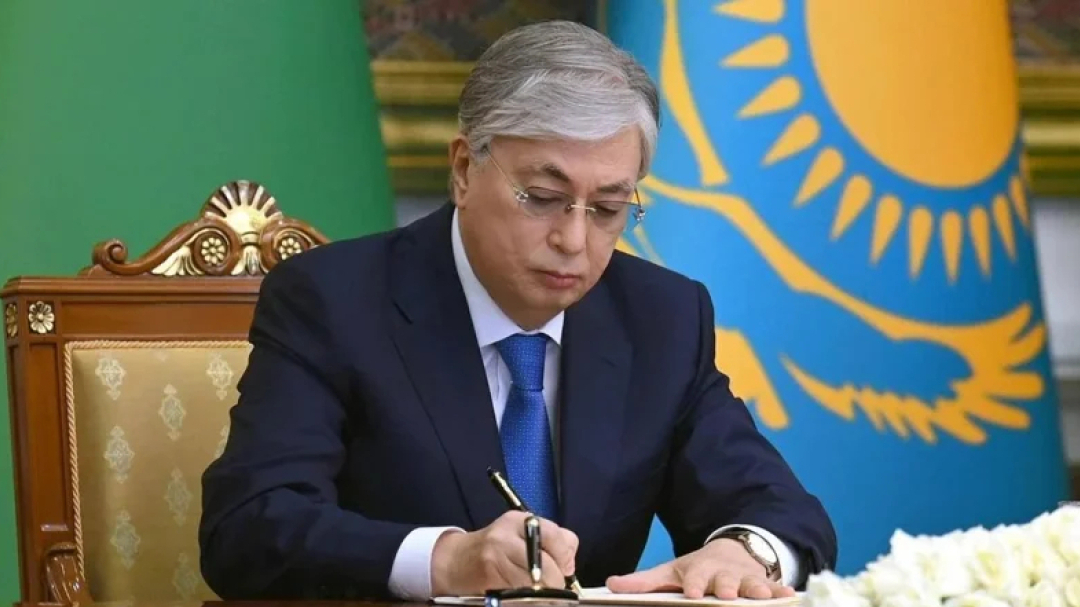
Meanwhile, the authorities have moved ahead with the formal procedure. Kazakhstan is preparing for a nationwide referendum on a new Constitution after President Tokayev signed a decree setting the vote for 15 March 2026. Voters will be asked whether they approve the draft basic law published on 12 February. The authorities describe the drafting process as inclusive, noting that a special constitutional commission worked for several months, held public hearings, consulted legal experts and reviewed more than 10,000 proposals submitted by citizens through online platforms.
Institutionalising the system
The scale of the proposed changes goes well beyond previous amendments to the Constitution since the late 1990s. The draft rewrites around 84% of the text, effectively establishing a new institutional framework. Key provisions include a shift from a bicameral parliament (two separate chambers) to a single-chamber legislature, the introduction of the post of vice-president and the formal assertion of the Constitution’s supremacy over international treaties.
The president says the overhaul is intended to redistribute powers, strengthen checks and balances and improve the stability of political institutions, while analysts view it as part of a broader effort to move away from personality-driven rule towards a more institutionalised system.
One of the most sensitive elements of the draft concerns language, a subject closely linked to Kazakhstan’s post-Soviet identity. The Constitution reaffirms Kazakh as the state language, while Russian continues to be officially used in state institutions. A recent wording change replaced a phrase stating that Russian is used “on equal footing” with Kazakh with a softer formulation saying it is used “along with” Kazakh. Officials describe the change as technical but for many it carries symbolic weight, reopening debates over identity, sovereignty and the country’s post-Soviet legacy.
If approved, the new Constitution would come into force on 1 July 2026, with the adoption date designated as a new national public holiday, marking another milestone in Kazakhstan’s ongoing political transformation.













What is your opinion on this topic?
Leave the first comment