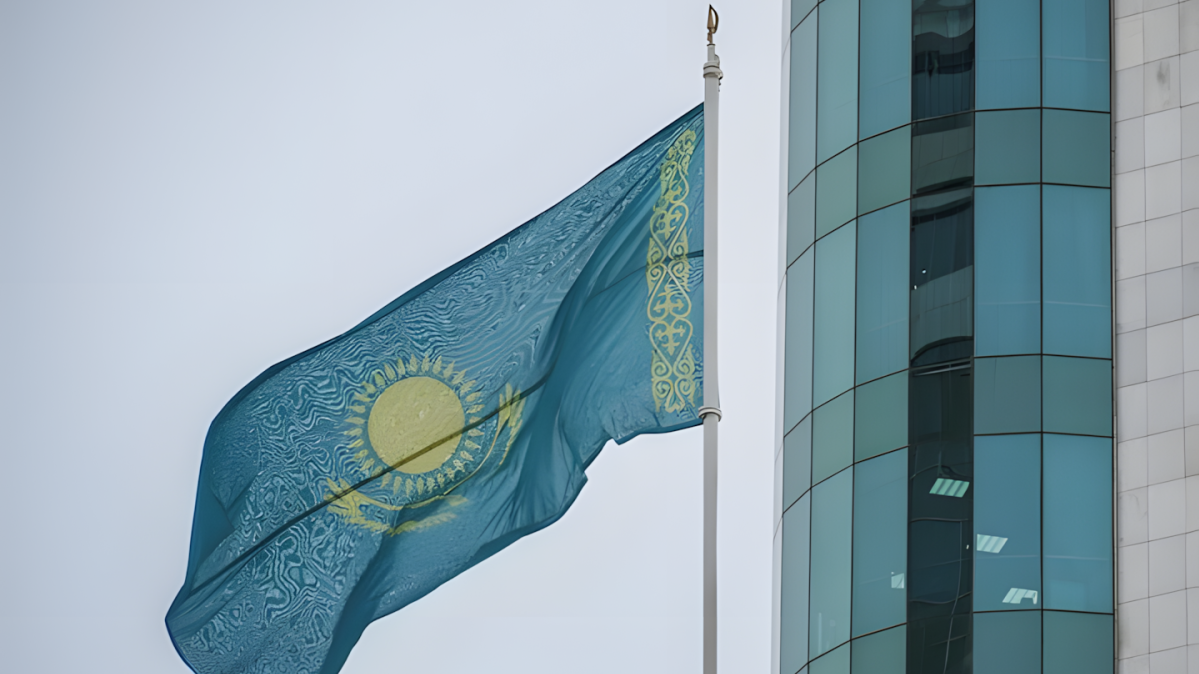
Kazakhstan has published a draft of a new Constitution that would mark the most extensive revision of the country’s law since independence. Among the topics up for discussion are an absolute ban on the death penalty and a potential extension of President Kassym-Jomart Tokayev's time in power.
Kazakhstan's Reform Commission published the draft Constitution, which is due to be voted on by the nation on 15 March. The proposal revises 77 of the existing 104 articles, meaning that around 84% of the Constitution would be rewritten. The draft consists of a preamble, 11 chapters and 95 articles and introduces a revised framework for the organisation of state power.
The proposed basic law could also allow President Kassym-Jomart Tokayev, who under current rules is barred from remaining in office beyond 2029, to stay in power in Central Asia’s largest economy.
The draft constitution would significantly reshape the country’s political system. It proposes streamlining parliament by replacing the current bicameral legislature with a single chamber and reducing the number of lawmakers. The reforms would also reinstate the position of vice president, an office that was abolished in 1996.
If approved in the referendum, the new constitution could enter into force on July 1, 2026.
Fundamental rights up for debate
Among the most consequential changes are amendments affecting fundamental rights. The draft proposes to enshrine an absolute ban on the death penalty and reaffirms the secular character of education, with an exception for religious institutions. At the same time, the grounds for restricting freedom of expression and the right to peaceful assembly are expanded, while the explicit reference to the right to strike is removed from the article on labour. Additional provisions introduce transparency requirements for non-governmental organisations receiving foreign funding and remove the explicit primacy of international treaties over domestic law.
The preamble may include references to the “Great Steppe”, a “Just Kazakhstan” and the principle of “Law and Order”. While symbolic in nature, these formulations frame a reform that is primarily institutional. Its central element is the replacement of the current bicameral parliament with a single legislative body, the Kurultai, composed of 145 deputies elected for five-year terms under a proportional representation system. The shift is presented as a way to simplify lawmaking and strengthen political parties, particularly in the context of economic and fiscal policy.
Powers extended
Under the draft, the Kurultai would receive broader powers. On the President’s nomination, it would elect and dismiss judges of the Supreme Court and approve the appointment of the Vice-President, the Prime Minister, judges of the Constitutional Court and members of several oversight bodies. If parliament were to reject presidential nominees twice, the President would gain the right to dissolve it, extending a mechanism that currently applies only to the appointment of the Prime Minister.
At the same time, the draft consolidates presidential authority in senior appointments. The President would be able to appoint and dismiss the heads of the Constitutional Court, the Supreme Court, the National Bank, the National Security Committee and the Prosecutor General without parliamentary consent, formally entrenching powers that already exist in ordinary legislation.
Possible Vice-President
A key institutional innovation is the introduction of the post of Vice-President, who would become the second-ranking official in the state. Appointed by the President with parliamentary approval, the Vice-President would be barred from party membership, business activities and holding other paid positions. In the event of the President’s resignation, incapacity or death, presidential powers would pass to the Vice-President or, if that is not possible, to the Speaker of the Kurultai and then to the Prime Minister. Any acting president would be prohibited from initiating constitutional amendments or dissolving parliament.
The draft also establishes a new consultative body, the People’s Council, replacing the Assembly of the People of Kazakhstan and the National Kurultai. It would include representatives of ethnic groups, civil society organisations and regional authorities. In addition to its advisory role, the body would gain the right of legislative initiative and the ability to propose nationwide referendums.
Referendum validity
Under the proposed framework, a nationwide referendum would become the sole mechanism for amending the Constitution. The decision to hold a vote would rest with the President, either on his own initiative or following proposals from parliament, the government or the People’s Council. A referendum would be deemed valid if more than 50% of eligible voters participated, while amendments would require majority support and approval in at least two thirds of the country’s regions.
President Kassym-Jomart Tokayev has previously stated that any constitutional changes should be adopted exclusively through referendums. He has described the current year as decisive for Kazakhstan’s future and has already announced that a constitutional referendum will be held.
Redistribution of responsibilities?
The proposed reforms represent a significant reconfiguration of Kazakhstan’s constitutional system. Analysts note that the changes focus less on symbolic elements of power and more on how responsibilities and risks are redistributed between the state and the individual. While the Constitution itself does not directly affect living standards, its real impact will depend on how consistently the new provisions are implemented in practice.











What is your opinion on this topic?
Leave the first comment