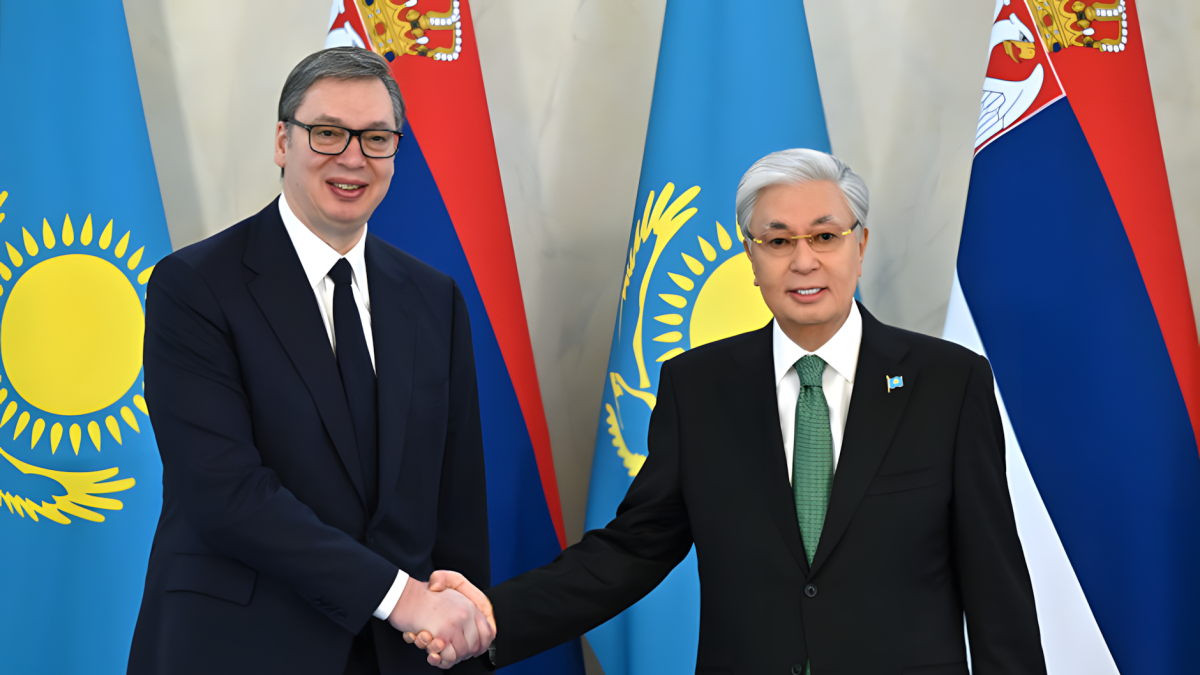
Kazakhstan and Serbia have agreed to deepen their strategic partnership following talks in Astana between Presidents Kassym-Jomart Tokayev and Aleksandar Vučić, signalling a shift from political dialogue towards more practical cooperation.
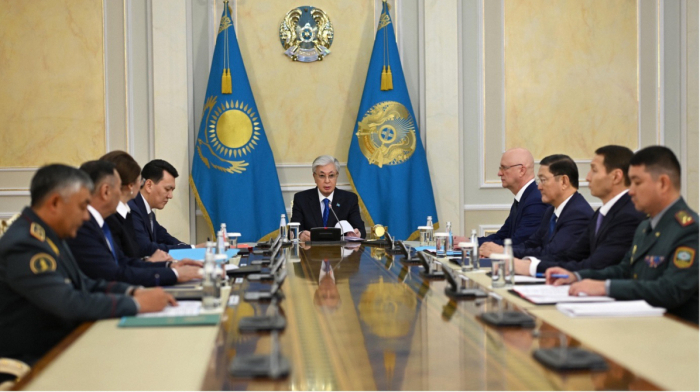
The agreement was reached during the Serbian president’s official visit to the Kazakh capital. After a formal welcome ceremony at the Akorda presidential residence, the two leaders held extended discussions, continuing a pattern of regular high-level contacts between the countries, whose diplomatic relations span more than 30 years.
Serbia remains one of Kazakhstan’s key partners in the Balkans. Economic ties have shown steady growth, with bilateral trade turnover exceeding $107 million last year, an increase of nearly 8 per cent. Although overall volumes remain modest, both sides see considerable scope for expansion. Kazakhstan estimates its export potential to the Serbian market at up to $250 million, subject to business demand and the effective use of existing free trade arrangements.
Military and agricultural ties
Talks focused in particular on applied areas of cooperation. Industrial and defence-related collaboration featured prominently, reflecting Serbia’s experience in the production, repair and modernisation of military equipment, armoured vehicles and ammunition. For Kazakhstan, where a significant share of equipment requires upgrading, such expertise is of clear practical interest. Agriculture also featured strongly, remaining a core component of bilateral trade and a priority sector for both economies.
Economic cooperation was further advanced during the first Kazakhstan–Serbia Business Council meeting in Astana. Around 10 memoranda were signed, covering information technology, food production and agriculture. Kazakhstan presented itself as a transit hub linking Asian and European markets, while Serbia highlighted its role as a logistical gateway to Europe. Serbian companies were also introduced to Kazakhstan’s digital investment platform, which lists more than 1,600 projects valued at over $120 billion.
Energy was another key area of discussion. Kazakhstan confirmed its readiness to supply up to one million tonnes of oil annually to Serbia, building on existing transit exports. In parallel, work is under way through Rompetrol’s regional network to arrange deliveries of specific Kazakh oil products to the Serbian market. Officials indicated that the remaining issues concern technical coordination rather than political agreement.
Beyond trade and energy, the two sides discussed cooperation in digital technologies, including artificial intelligence, as well as peaceful nuclear energy and broader energy security. These priorities were reflected in a joint statement and a package of intergovernmental agreements covering investment, security, healthcare, science, culture and agriculture.
The visit concluded with an invitation for a return visit by the Kazakh president to Serbia, underlining both sides’ intention to continue developing bilateral relations on a practical and sector-focused basis.











What is your opinion on this topic?
Leave the first comment