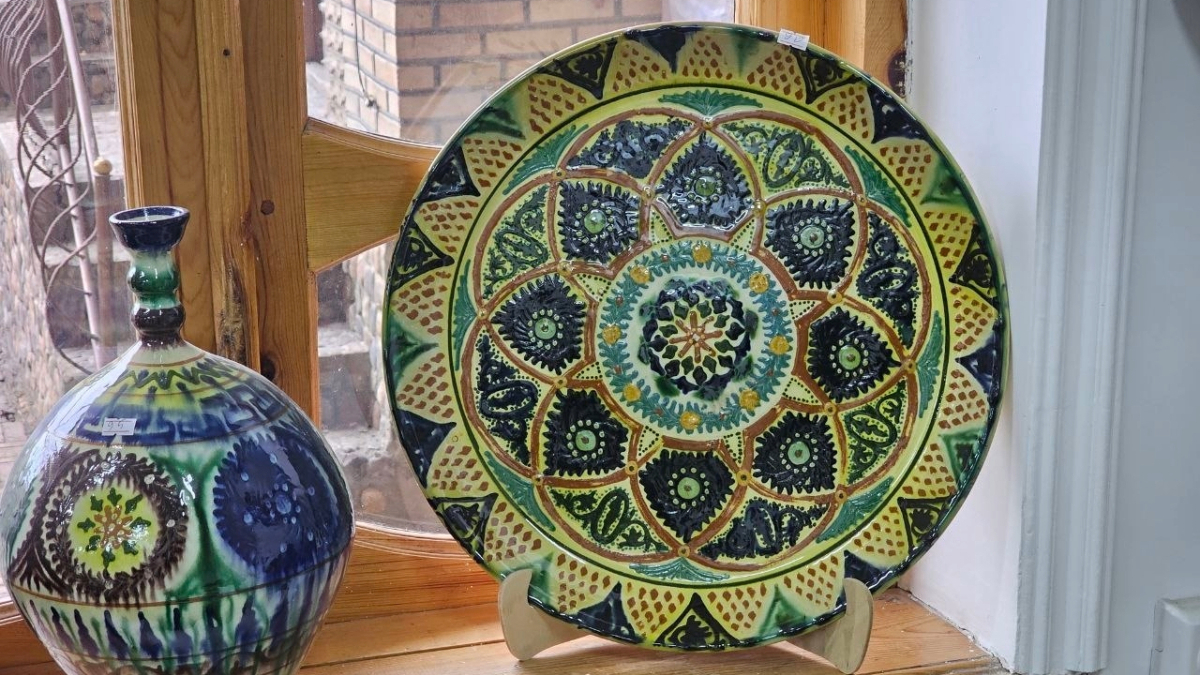
Traditional pottery from Gijduvan has officially received geographical indication status in Uzbekistan, recognising the centuries-old craft as a product closely linked to its region of origin and cultural heritage.
The Intellectual Property Centre under the Ministry of Justice announced the decision, noting that Gijduvan ceramics are distinguished by their unique production techniques, locally sourced coloured clay and natural dyes.
Centuries-old craft tradition
According to the Ministry of Justice, the Gijduvan pottery school dates back to the 18th century and remains one of Uzbekistan’s best-known ceramic traditions. The craft is preserved by the Narzullayev dynasty, widely regarded as the guardians of the school’s artistic heritage.
The school produces around 60 types of ceramic products and more than 300 traditional ornament compositions. Among the most recognisable patterns are “mehrobi”, “parragul”, “madoxil”, “lundagul” and “lolagul”.
What geographical indication means
A geographical indication confirms that a product originates from a specific location and possesses qualities, traditions or a reputation connected to that area.
Uzbekistan adopted its law on geographical indications in February 2022. Under the legislation, at least one stage of production must take place within the designated geographical area and significantly influence the product’s characteristics.
The status may be granted to individuals or companies operating within the region and producing goods with the same recognised qualities. The law also allows for international registration of geographical indications abroad.
Expanding list of protected Uzbek products
Gijduvan pottery joins a growing list of officially recognised Uzbek geographical indications. Other protected products include Gijduvan kebab, Sukok somsa, tukhum barak, Samarkand bread and Samarkand paper.
In April, the Ministry of Justice also added “Tashkent wedding plov” to the national register of geographical indications.














What is your opinion on this topic?
Leave the first comment