Israel has formally assumed planning and construction powers at one of the most sensitive religious sites in the West Bank, ending an arrangement that had been in place for nearly three decades.
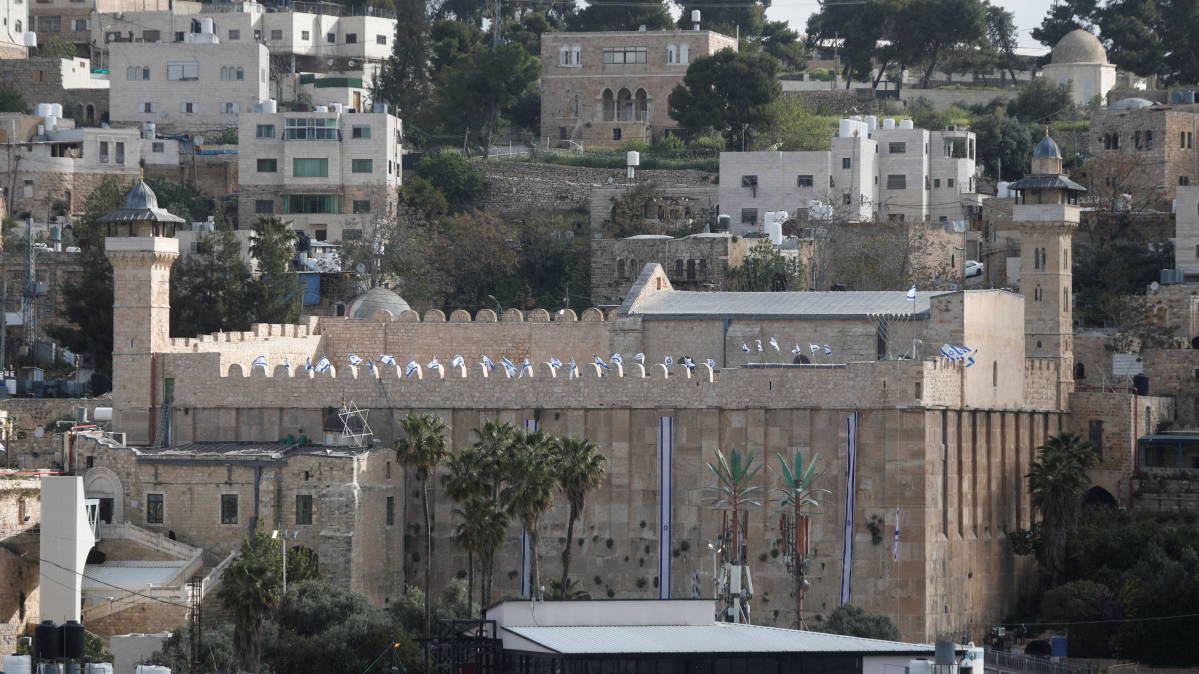
The move affects the Tomb of the Patriarchs, known to Muslims as the Ibrahimi Mosque, in the city of Hebron. The site is revered by both Jews and Muslims and has long stood at the centre of tensions between Israelis and Palestinians.
Israeli Finance Minister Bezalel Smotrich announced on Tuesday that he had approved the transfer of authority from the Palestinian Authority to Israeli officials.
Under the 1997 Hebron Agreement, planning and construction powers in the city, including around the shrine, were administered by the Palestinian Authority.
Palestinian condemnation
Smotrich described the decision as a "historic step" that would strengthen Israeli sovereignty in the West Bank. The far-right minister made the announcement during an event marking the establishment of a new Israeli settlement near Hebron.
The Palestinian Authority strongly condemned the move. The office of Palestinian President Mahmoud Abbas said it was an infringement on Hebron's political and legal status and a violation of international law.
For many Palestinians, the decision is another sign of growing Israeli control over territory they hope will form the core of a future independent state. Israel captured the West Bank during the 1967 Middle East war, but its claim to sovereignty over the territory is not recognised internationally.
Politics and settlements
The announcement comes at a sensitive time. Israel is expected to hold elections by the end of October, and Smotrich, a settler himself, has long advocated the annexation of the West Bank. His political support is closely tied to the settler movement, which views the territory as part of the Jewish biblical homeland.
The transfer of powers was originally approved by Prime Minister Benjamin Netanyahu's security cabinet in February. It forms part of a broader push to expand Israeli authority in the West Bank and make it easier for settlers to acquire land.
Settlement expansion has accelerated in recent years under Smotrich's influence. The growth has been accompanied by rising violence across the territory.
Hebron's long history of tension
Hebron remains one of the most divided and emotionally charged cities in the Israeli-Palestinian conflict. In 1994, a Jewish settler killed 29 Muslim worshippers at the Ibrahimi Mosque, an attack that continues to shape relations around the site.
The shrine remains sacred to both faiths and is viewed by many as a symbol of the wider struggle over land, identity and sovereignty in the West Bank.
International concerns
According to United Nations data, settlers have killed 13 Palestinians so far this year. Most countries and United Nations bodies consider Israeli settlements in the West Bank illegal under international law, a position Israel rejects, citing historical, religious and security arguments.
The latest move is likely to deepen concerns among international observers, who fear it could further complicate prospects for a negotiated two-state solution and increase tensions on the ground.












What is your opinion on this topic?
Leave the first comment