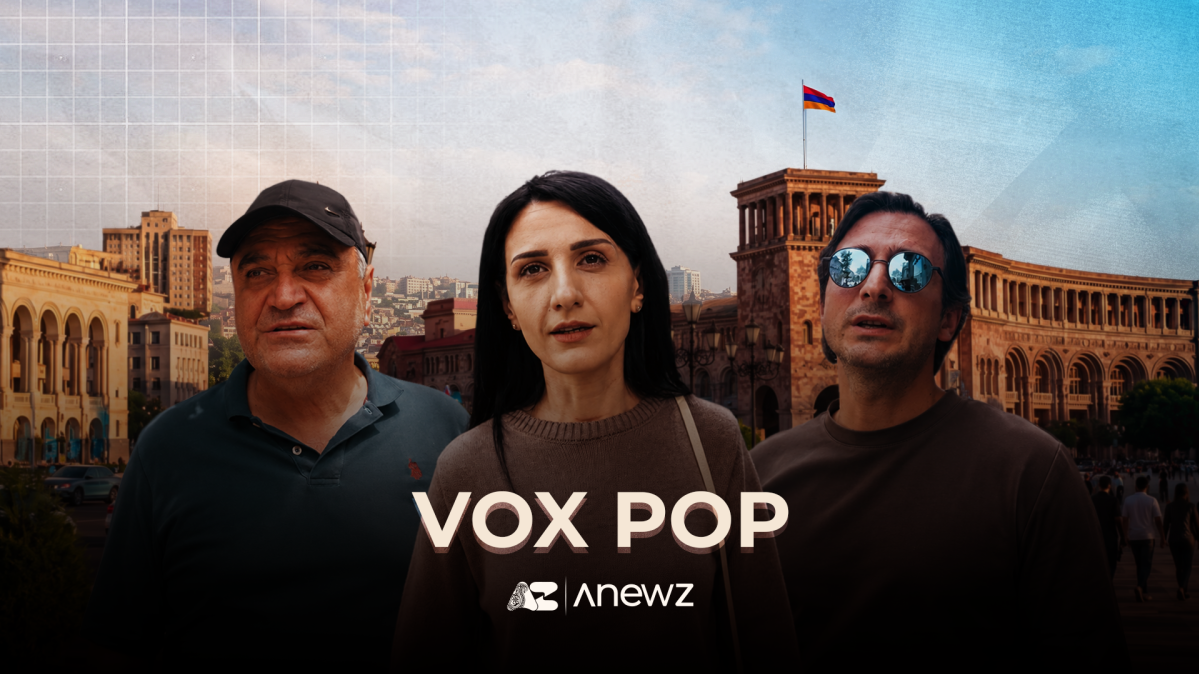
Following Armenia’s parliamentary vote, AnewZ spoke to people in Yerevan about the mood in the capital, relations with Azerbaijan and the country’s future.
YEREVAN, Armenia — In the days after Armenia’s parliamentary election, Yerevan offered no single mood.
On the surface, the city appeared calm. Streets were busy. Cafes were open. Tourists moved through the centre. Some residents described the atmosphere as warm, peaceful and hopeful.
But beneath that calm, the answers were more complicated.
AnewZ took to the streets of Yerevan to ask people how they felt after the vote — and where they thought Armenia was heading.
Some were optimistic.
“The mood is wonderful,” one woman said.
Another resident described Yerevan as a good place to live, saying he hoped tourism, public life and the city’s open atmosphere would continue.
Others were less certain.
One interviewee said the mood was “very tense”, adding that it was unclear what would happen after the elections. Another said some people were disappointed because their expectations had not been met.
What next for Armenia?
The election has left Armenia with more than a result. It has left a question: what comes next?
For many people AnewZ spoke to, the answer began with peace.
Several interviewees said the new parliament’s first priority should be to protect stability, preserve peace and address security concerns. Some linked that directly to relations with Azerbaijan.
Views on Azerbaijan remained deeply mixed.
Some respondents said relations were still difficult and emotionally charged. Others spoke of the need to move forward.
“I have nothing against the citizens of Azerbaijan,” one man said. “I want peace.”
Another resident said neighbours could not remain enemies forever.
“We must somehow find common ground,” he said. “The wound remains, it heals, but there must be peace.”
That contrast ran through many of the interviews.
There was hope. But not blind hope.
There was caution. But not complete rejection.
Europe or Russia?
The same divide appeared when people were asked about Armenia’s foreign policy direction.
Some said Armenia should move closer to Europe. Others argued that ties with Russia should not be damaged. Many rejected a simple choice between the two, saying Armenia should be guided first by its own national interests.
One resident said Armenia must cooperate with all countries, but always put “the interest of the Republic of Armenia” first.
Another said the country should develop relations with Europe while maintaining workable ties with Russia.
What the future holds
The answers reflected a country trying to balance memory, security and ambition.
Asked about the future, many people imagined a stronger Armenia — more developed, more secure and less dependent on old political divisions.
Some spoke of a democratic and modern country. Others focused on jobs, living standards and regional development beyond Yerevan.
One respondent said she wanted to see villages and other cities develop, so that life would not be concentrated only in the capital.
Another said Armenia should become “rich and independent”.
But there was also doubt. Some interviewees said the country needed new political figures and a break from familiar divisions before real change could happen.
The picture from Yerevan was not simple.
That is what made it important.
Post-election Armenia is not speaking in one voice. It is hopeful and cautious. It wants peace, but fears fragility. It looks towards Europe, but still weighs Russia. It wants change, but does not fully trust the path ahead.
AnewZ’s full vox-pop report from Yerevan premieres on Tuesday (16 June) at 22:30 AZT / 20:30 CET.
Read more:











What is your opinion on this topic?
Leave the first comment