Armenian Prime Minister Nikol Pashinyan’s expected election victory offers continuity for the country’s peace agenda, but significant political hurdles remain. Analysts say the result strengthens Yerevan’s push towards Europe while setting the stage for further tensions with Russia.
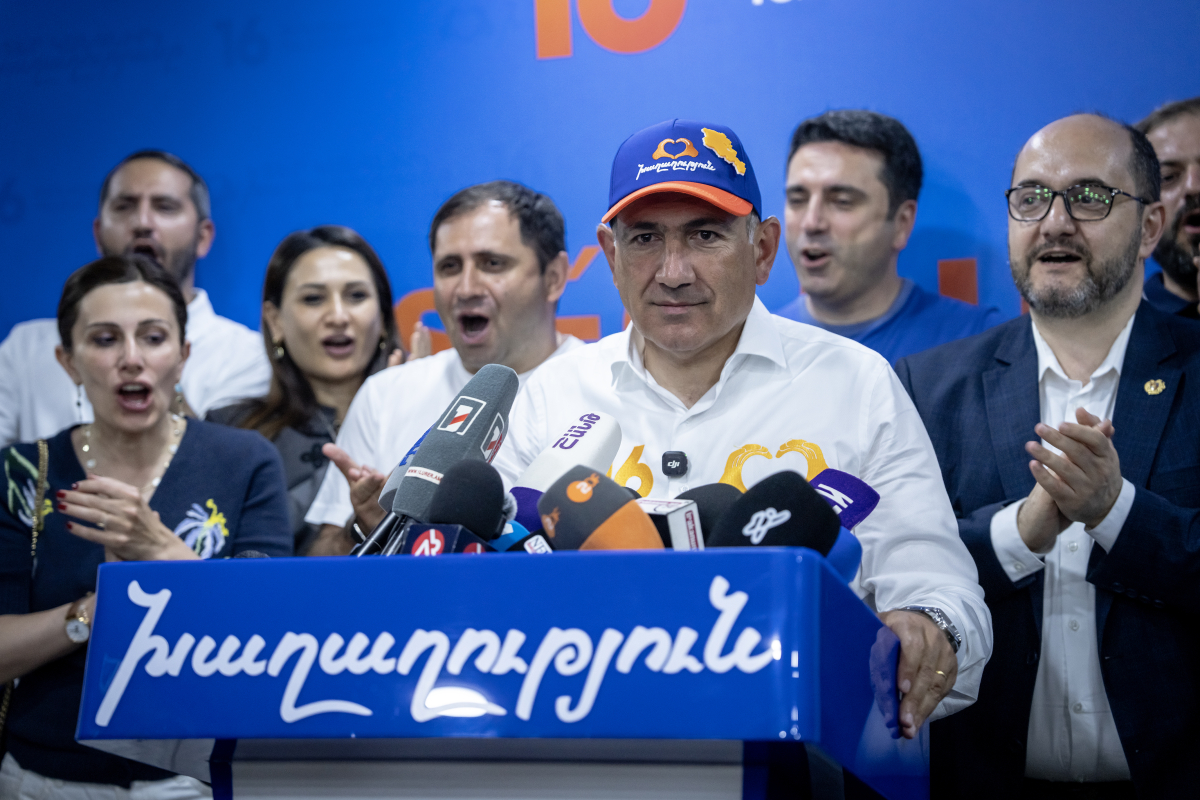
Armenia’s ruling Civil Contract party appears set to remain in power following the parliamentary election, with Prime Minister Nikol Pashinyan leading the vote count.
According to Vasif Huseynov, Head of Department at the Centre for Analysis of International Relations (AIR Centre), the result was broadly anticipated due to the incumbent’s popularity and a relatively weak opposition.
“Pashinyan’s victory was more or less expected because he is currently the most popular political figure in Armenia,” Huseynov said.
Peace agenda faces institutional constraints
While the election result is being viewed positively from the perspective of regional stability, Huseynov warned that Pashinyan’s government is unlikely to secure the constitutional majority needed to implement key reforms with ease.
Current projections suggest that, although the ruling party can form a government independently, it will lack the parliamentary strength required to pass constitutional amendments.
“Pashinyan’s victory is good news overall for the South Caucasus, but the situation in the Armenian parliament will very much complicate the process, including the peace process with Azerbaijan,” he said.
Azerbaijan has repeatedly stated that a peace agreement cannot be signed unless Armenia removes territorial claims from its constitution. Analysts say this condition could become one of the central challenges facing the next government.
EU alignment and Russia tensions deepen
Beyond regional peace efforts, the election result is expected to accelerate Armenia’s shift away from Russia and towards Western institutions.
Huseynov said this direction is likely to increase friction with Moscow, particularly as Armenia continues to distance itself from Russia-led structures.
“Pashinyan’s victory is going to bring lots of tension between Moscow and Yerevan,” Huseynov stated.
At the same time, he said Armenia’s foreign policy reorientation remains a key strategic priority for the country’s leadership.
Opposition reaction and political outlook
The opposition has already raised concerns about aspects of the vote count and criticised the early declaration of results. However, Huseynov believes these challenges are unlikely to significantly alter the political landscape.
“The reality is that Pashinyan’s peace agenda is very much supported by a significant part of the population,” he said.
He argued that previous attempts to mobilise mass protests against the government had failed to gain sustained public support.
Policy priorities ahead
Looking ahead, analysts expect Armenia to focus on advancing peace talks with Azerbaijan, normalising relations with Türkiye, and deepening integration with the European Union.
Huseynov also suggested that further steps could be be taken to reduce Armenia’s dependence on Russia, including potential moves away from Collective Security Treaty Organization (CSTO) commitments over time.











What is your opinion on this topic?
Leave the first comment