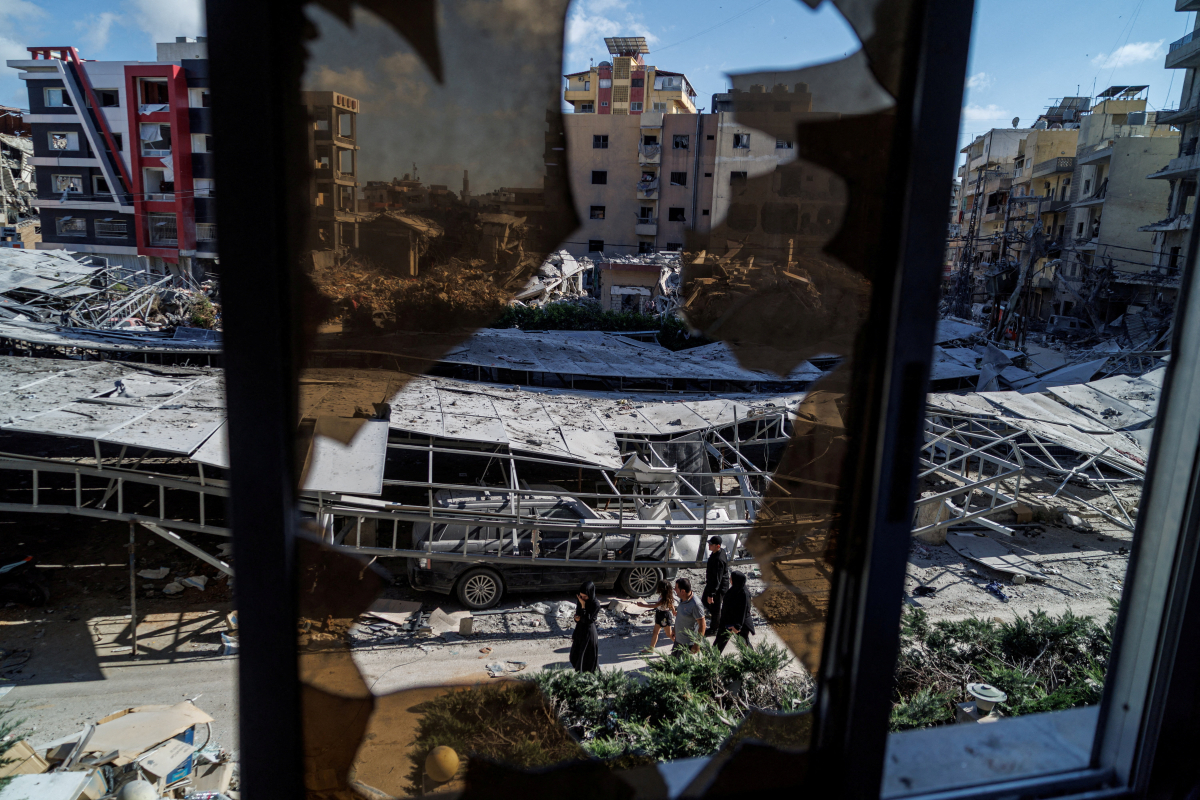
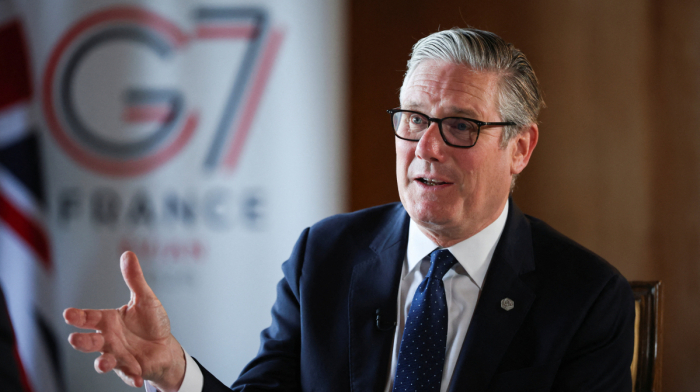
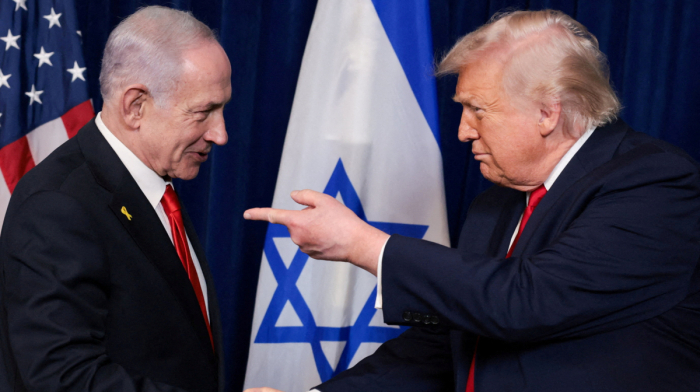
Donald Trump has said the U.S. will resume bombing Iran if Tehran doesn't "behave," at the sidelines of the G7 summit in France. Earlier, the U.S. President criticised Israel for its tactics against Hezbollah, saying it was unnecessary to bomb entire apartment buildings to tackle militants.
⦿ 00:46 GMT | UPDATE
IRNA releases images of Pezeshkian signing Iran-U.S. MoU
Reuters
Iran’s state news agency IRNA has published photos showing Iranian President Masoud Pezeshkian signing the Iran-U.S. memorandum of understanding.
The images follow reports citing a U.S. official who said both Pezeshkian and U.S. President Donald Trump signed the war-ending memorandum on Wednesday.
⦿ 23:34 GMT | UPDATE
Report says U.S.-Iran MoU to end war has been signed
Reuters
A U.S. official told Reuters that U.S. President Donald Trump and Iranian President Masoud Pezeshkian have signed a memorandum of understanding aimed at ending the war between the two countries.
According to the official, the memorandum had earlier been signed digitally on Sunday by U.S. Vice President JD Vance and Iran’s chief negotiator Mohammad Bagher Qalibaf, and was witnessed by Trump prior to the formal signing.
The report has not been independently verified, and neither Washington nor Tehran has publicly released the full text of the agreement.
⦿ 23:19 GMT | UPDATE
Iran says planned U.S. talks in Switzerland not confirmed
Reuters
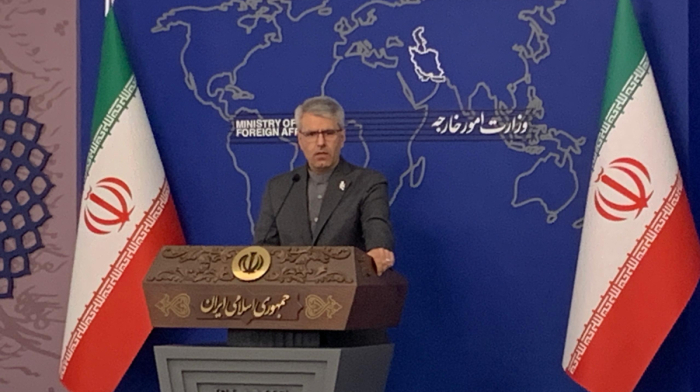
Iran’s Foreign Ministry spokesperson Esmaeil Baghaei said early on Thursday that planned Iran-U.S. talks in Switzerland on Friday have not yet been confirmed.
Baghaei said the meeting had previously been confirmed but was now being reconsidered after it was decided that the two sides would focus on signing an agreement at leadership level.
⦿ 21:32 GMT | UPDATE
Saudi FM says verification key to Iran nuclear talks with U.S.
Reuters
Saudi Arabia’s Foreign Minister Prince Faisal bin Farhan said the key issue in upcoming Iran-U.S. nuclear talks will be how Iran’s nuclear programme is verified and policed.
Speaking at a conference in Vienna hosted by the European Council on Foreign Relations, Prince Faisal said “the detail will matter.”
He stressed that robust verification mechanisms would be essential, particularly regarding uranium enrichment limits and the removal or downblending of nuclear materials.
⦿ 20:48 GMT | UPDATE
Trump praises China and Russia for neutrality during Iran conflict
Reuters
U.S. President Donald Trump said Chinese President Xi Jinping and Russian President Vladimir Putin have remained “neutral” during the war with Iran.
He added that their stance did not obstruct U.S. efforts to limit Tehran’s nuclear ambitions.
Speaking at a press conference at the Group of Seven summit in Evian-les-Bains, France, Trump said he appreciated both leaders for “staying out of the conflict.”
⦿ 20:24 GMT | UPDATE
Iran says maritime fees, $300bn package included in draft U.S. deal
Reuters
Iran’s top negotiator, Mohammad Bagher Qalibaf, said the Strait of Hormuz will not return to pre-war conditions under the emerging memorandum of understanding with the United States, while stressing that this does not imply any violation of international law or freedom of maritime navigation, according to Iranian state media.
Qalibaf also said Iran will “naturally” charge for services in the Strait of Hormuz, adding that maritime arrangements will be adjusted under the framework of the agreement.
He further stated that, under the MOU, $300 billion has been allocated for investment in Iran, part of which will be directed toward reconstruction efforts, as negotiations continue over the broader implementation of the deal.
⦿ 19:48 GMT | UPDATE
IRNA says U.S.-Iran MOU includes access to frozen Iranian assets
Reuters
Iran’s state news agency IRNA says the memorandum of understanding with the United States includes a U.S. commitment to grant Tehran access to its frozen assets as part of the implementation phase of the deal.
According to IRNA, both sides will also agree on a mechanism for the phased release of those funds during the negotiation process.
The reported provision aligns with broader draft terms previously disclosed by U.S. and international media, which mention the unfreezing of Iranian assets alongside sanctions waivers and economic reconstruction measures.
The White House has not publicly confirmed the specific mechanism or timeline for releasing the funds.
⦿ 19:43 GMT | UPDATE
IRNA publishes key terms of the U.S.-Iran memorandum
Reuters
Iran’s state news agency IRNA has published what it says are key details of the memorandum of understanding between Tehran and Washington, outlining a phased framework for de-escalation, sanctions relief and maritime normalisation.
According to the reported text, Iran’s stockpile of enriched nuclear material would be dissolved under mutual agreement and under the supervision of the International Atomic Energy Agency, while Tehran would maintain the current status of its nuclear programme until a final agreement is reached.
In return, the United States would refrain from imposing new sanctions or deploying additional military forces in the region during that period.
IRNA also says Washington has committed to ending all sanctions on Iran under an agreed timetable as part of a final settlement, beginning immediately with waivers for Iranian oil, petrochemical exports and related services.
Maritime issues
The reported text says the U.S. would begin lifting its naval blockade on Iran immediately after signing, with a full end to the blockade within 30 days. Commercial shipping through the Strait of Hormuz would gradually return to pre-war levels during that time, with mine clearance and technical preparations underway.
Iran would also work with Oman to determine the future administration and maritime services of the strait, while transit without fees would apply for an initial 60-day period.
The reported framework further includes a U.S.-backed economic reconstruction plan worth at least $300 billion, to be developed with regional partners, with implementation details to be finalised within 60 days as part of a broader final agreement.
Neither Washington nor independent international monitors have yet confirmed the authenticity or full scope of the reported document.
⦿ 18:57 GMT | UPDATE
U.S. has commited to end sanctions, Iranian spokesperson says
Reuters
The U.S. has committed to cancel all sanctions on Iran based on a schedule due to be discussed in upcoming talks, an Iranian Foreign Ministry Spokesperson has said.
⦿ 18:16 GMT | UPDATE
Sanctions on Iran could be lifted, Trump says
Reuters
Sanctions on Iran could be removed once "they behave," U.S. President Donald Trump has suggested.
"As far as sanctions are concerned, at some point, you know, we have sanctions which will never let them rebuild. They would have no money. They would be in poverty, the 91 million people would starve, so something will happen as soon as they behave," Trump said.
"When they behave, we're going to let that go. We're going to have to. I put sanctions on a lot of people, and then I let them go," he added.
⦿ 18:12 GMT | UPDATE
Ship off coast of Yemen is fired upon
Reuters
The United Kingdom Maritime Trade Operations (UKMTO), which communicates between the military and commercial shipping, has said it received a report of an incident 105 nautical miles northeast of Yemen's Aden, adding that the crew were safe.
"A vessel has been approached to within four metres and fired upon by two skiffs with an unknown number of armed persons on board. The vessel has deployed security team and returned fire. The suspect vessels have now disengaged", UKMTO said.
⦿ 18:06 GMT | UPDATE
Trump and Pezeshkian could sign deal in Switzerland, Iranian media reports
Reuters
U.S. President Donald Trump and Iran's President Masoud Pezeshkian could sign the memorandum of understanding in Switzerland, an Iranian Foreign Ministry Spokesperson has said.
The spokesperson told Iranian state media that the idea was still under review.
⦿ 18:00 GMT | UPDATE
'Nobody' purposefully struck Iranian school, Trump says
Reuters
"Nobody" purposefully attacked a girls' school in Iran in February, U.S. President Donald Trump has said, citing an investigation into the incident.
More than 175 children and teachers were killed in in the strike on the first day of the U.S.-Iran conflict on 28 February, Iranian officials said.
"That's under investigation," Trump said at a press conference on the sidelines of the G7 conference in Evian-les-Bains, France, adding that mistakes are made in war. "Nobody did that on purpose."
Trump initially claimed, without evidence, that Iran was responsible. He has since said he does not know enough about the strike, that an investigation is ongoing and that he will accept the results of the inquiry.
⦿ 17:54 GMT | UPDATE
U.S. and Iran can still walk away from deal, American official says
Reuters
Iran and the U.S. can still walk away from the memorandum of understanding they are set to sign on Friday, a senior U.S. official has said.
Speaking on condition of anonymity, the official read out the 14-point memorandum that is due to be formally signed in Switzerland. They said the upcoming meeting there will be "critical" for ensuring that the memorandum of understanding can evolve into a comprehensive agreement.
"I think the meeting in Switzerland will be quite critical in order to really see how we get to the next phase," the senior U.S. official said.
⦿ 16:50 GMT | UPDATE
Trump defends Iran deal, says he didn't want 'economic catastrophe'
Reuters
U.S. President Donald Trump has defended the U.S. deal with Iran in remarks at the close of a G7 summit in France, saying he did not want to see an economic disaster that could have been triggered by a continued war in the Middle East.
"So the one thing I didn't want to see is, I didn't want to see economic catastrophe. If you kept this going, that could have happened," Trump told reporters in the lakeside resort of Evian-les-Bains.
The war, began with U.S. and Israeli strikes on Iran on 28 February, which killed the country's Supreme Leader, before spiraling into a broader regional conflict.
Disruption to global trade triggered by the effective closure of the Strait of Hormuz increased energy prices sharply, and sparked concerns about a major food supply crisis in developing countries.
⦿ 16:38 GMT | UPDATE
Hezbollah rejects 'pilot zones' in U.S.-Iran deal
Reuters
Hezbollah Chief Naim Qassem has rejected so-called "pilot zones," agreed to in the U.S.-Iran deal. These are zones that the Lebanese army would excercise sole control over to the exclusion of non-state actors, such as Hezbollah.
These areas are intended to function as trial zones which the Lebanese state has the oppertunity to demonstrate authority over before the extension of the zones elsewhere.
In a televised address, Qassem said the "ceiling" to be reached in negotiations between Lebanon and Israel was a situation of "reciprocal security."
⦿ 15:08 GMT | UPDATE
Hezbollah drones injure five soldiers, Israeli military says
Reuters
Two drones detonated by Iran-backed Shia militant group Hezbollah have injured five Israeli soldiers in southern Lebanon, Israel's military has said.
⦿ 15:01 GMT | UPDATE
Trump spoke to Syria's President about tackling Hezbollah
Reuters
U.S. President Donald Trump has said he talked to Syria's leader about combatting Iran-backed Hezbollah in Lebanon, a day after criticising Israel for killing too many civilians and not getting the job done.
Asked at at the G7 summit in Evian-les-Bains, France, if he had talked to Syrian President Ahmed al-Sharaa about Hezbollah, Trump nodded and said "yes."
The remark came after Trump criticised Israel's tactics in fighting Hezbollah while praising Sharaa, who took power in Syria in 2025 after years of civil war.
"I consider that [Lebanon] the minor war, Iran’s a big one, but we have that little pinprick out there that constantly rears its head, and that's Hezbollah," Trump told reporters on Tuesday on the sidelines of the summit.
⦿ 12:52 GMT | UPDATE
Lebanese President says Beirut welcomes support from Iran to secure cesaefire
Reuters
Lebanese President Joseph Aoun has said that Beirut welcomed support from any country, including Iran, to help secure a ceasefire, marking a softer public tone towards Tehran after weeks of sharp criticism.
Earlier this month, Aoun accused Iran of using Lebanon as a bargaining chip in its negotiations with the United States and said Lebanese people were being killed to serve Iran's interests.
⦿ 12:15 GMT | UPDATE
Trump threatens to bomb Iran again if it doesn't 'behave'
Reuters
U.S President Donald Trump said on Wednesday that an interim accord with Iran was not final, and that he could resume a bombing campaign if he did not like it or if Tehran did not "behave".
"It's a memorandum of understanding. And if I don't like it, we'll go back to shooting at them, dropping bombs on their head. If I don't like it, if they don't behave, we'll go right back to dropping bombs right smack in the middle of their head, OK?" Trump said on the sidelines of a G7 summit in France.
Trump said the Iran memorandum of understanding did not include immediate sanctions relief for Iran.
Trump also heaped praise on the framework agreement that his administration had negotiated.
"That's a very strong deal. Nobody knows what it is, but it's very strong, and most people seem to be very happy,' he said.
⦿ 10:13 GMT | UPDATE
UAE plans to cut Strait of Hormuz dependency to ‘zero’
Anadolu
The United Arab Emirates is working on a major plan to eliminate its dependence on the Strait of Hormuz after the recent closure of the critical waterway exposed the vulnerability of Gulf trade and energy flows.
UAE Minister of Foreign Trade Thani Al Zeyoudi said the country is moving toward “zero Hormuz dependency,” according to a Bloomberg report.
The plan comes as global markets await the full reopening of the strait following an interim peace deal between Iran and the U.S.
⦿ 09:56 GMT | UPDATE
G7 leaders demand ceasefire in Lebanon, welcome Iran deal
Reuters
Leaders of the G7 countries demanded a ceasefire in Lebanon on Wednesday and said they will diversify energy supply routes to reduce dependence on the Strait of Hormuz in response to the war in Iran, as they welcomed an interim deal to end the conflict.
The leaders met for a summit in the French town of Évian-les-Bains on Lake Geneva, while details of the U.S.-Iran ceasefire agreement trickled out of Washington and Tehran ahead of its formal unveiling, expected on Friday across the nearby Swiss border.
The U.S.-Iran agreement is expected to launch negotiations towards a final settlement to end the war, which has killed more than 7,000 people, mostly in Iran and Lebanon.
⦿ 07:49 GMT | UPDATE
Türkiye, Egypt, Pakistan foreign ministers discuss peace process
Anadolu
The foreign ministers of Türkiye, Egypt and Pakistan discussed the peace process between the U.S. and Iran to end the war, Turkish Foreign Ministry sources said on Wednesday.
Turkish Foreign Minister Hakan Fidan held separate phone calls with Egyptian Foreign Minister Badr Abdelatty and Pakistani Foreign Minister Mohammad Ishaq Dar, the sources said.
The ministers exchanged views on upcoming follow-up negotiations aimed at establishing lasting peace between Iran and the U.S., the sources added.
⦿ 06:51 GMT | UPDATE
Pope Leo welcomes U.S.-Iran interim peace deal
Reuters
Pope Leo praised the interim deal between the United States and Iran to end the regional war in the Middle East, saying "thanks be to God" that the two powers are set to formalise their accord on Friday.
Leo, who drew the ire of U.S. President Donald Trump after criticising the Iran war, said he hoped the deal will end the conflict for good.
"There will still be several points to settle, but it is always better to do so through dialogue, through negotiations, and not by returning to war," he told journalists outside his residence in Castel Gandolfo, Italy.
⦿ 06:37 GMT | UPDATE
Iran and Oman discuss Islamabad MoU, regional cooperation in phone call
MFA/ IRNA
Iranian Foreign Minister Abbas Araghchi and Omani Foreign Minister Badr Al-Busaidi held a phone call and discussed the Islamabad Memorandum of Understanding as well as bilateral issues.
The two sides also emphasised the development and deepening of bilateral cooperation in various fields, based on the principles of good neighborliness and historical and cultural commonalities between the two countries.
They agreed to continue consultations and coordination in order to strengthen stability and cooperation in the region.
⦿ 05:57 GMT | UPDATE
Iran says no final U.S. deal reached
Iran’s President Masoud Pezeshkian said a final agreement with the U.S. has not been reached, while stressing that Tehran is prepared for all possible scenarios.
He added that the current understanding marks progress toward ending the war and opening negotiations, but no final deal has been concluded.
⦿ 04:27 GMT | UPDATE
Iran deal reportedly includes $300 billion fund
Reuters
A $300 billion private fund designed to trigger investment into Iran is outlined in the U.S.-Iran framework agreement and more than half that sum has already been committed, a source with direct knowledge of the deal told Reuters.
The fund is designed to give both sides an economic incentive to conclude a final deal to end the war, said the source, who spoke on condition of anonymity because the plan has not yet been announced as Washington and Tehran prepare to sign on Friday.
The fund's existence has been previously reported but Reuters is revealing for the first time that more than half of the amount has already been committed and that it will be comprised entirely of private-sector funds.
A senior Iranian source told Reuters that Tehran had originally sought $400 billion as compensation for war damages from the U.S. but Washington had said it would not provide it
⦿ 03:45 GMT | UPDATE
Canada's premier calls U.S.-Iran deal 'game changer'
Anadolu
Canada's Prime Minister Mark Carney on Tuesday said he saw the deal between the U.S. and Iran and called it a "game changer."
"I have to say it has exceeded my expectations. We're very pleased with the deal that's been struck," Carney told CNN on the sidelines of the G7 summit in France.
A memorandum of understanding (MOU) was signed between the U.S. and Iran electronically on Sunday, which includes an end to the military operations on all fronts and reopening the Hormuz while setting the stage for talks on Iran's nuclear program linked to sanctions relief.
The signing ceremony is scheduled for 19 June in Switzerland.
⦿ 02:45 GMT | UPDATE
Australia lowers Middle East travel warnings after the agreement
Reuters
Australia relaxed its travel advice for Bahrain, Israel, Kuwait, Qatar and the United Arab Emirates after the U.S. and Iran reached an interim deal to end the war in the Middle East.
Foreign Minister Penny Wong said the advisory moved to "reconsider your need to travel" from "do not travel," but added that Australians should continue to delay non-essential travel to the Gulf states.
"While the security situation across the Middle East could deteriorate rapidly with little warning, the (government) has assessed current conditions in Bahrain, Israel, Kuwait, Qatar and the UAE as appropriate to move to (the lower level)," Wong said.
⦿ 02:31 GMT | UPDATE
Israeli army signals longer stay in Lebanon
Anadolu
The Israeli army is preparing for a prolonged presence in Lebanon despite a U.S.-Iran agreement that ended the war across multiple fronts, Israeli media reported Tuesday.
The army is “ready to remain in Lebanon for a long period” if instructed to do so by Israel’s political leadership, Israel’s public broadcaster KAN reported, citing unnamed security sources.
The sources added that the army is prepared for “all scenarios in Lebanon,” even as Washington and Tehran move toward signing the agreement on Friday in Switzerland.










What is your opinion on this topic?
Leave the first comment