U.S. President Donald Trump sought a deal with Iran "out of deperation," Iranian Supreme Leader Mojtaba Khamenei has said, in a statement on social media. Khamenei added that he himself "held a different view," to Trump, but allowed the agreement after receiving assurances from Iran's President.
⦿ 22:20 GMT | UPDATE
Qalibaf says Supreme Leader tasked Iran to enforce all deal terms
Reuters
Iran’s top negotiator Mohammad Bagher Qalibaf warned that any breach of the agreement with the United States or any “excessive demands” during negotiations would be met with a strong response from Tehran, according to Iranian state media.
Qalibaf said Iran had “no doubt” about delivering a forceful reaction if the other side failed to honour its commitments, reiterating Tehran’s longstanding position that implementation must be reciprocal and based on tangible results.
His comments align with previous statements in which he warned against relying solely on U.S. assurances.
He added that the task assigned by Iran’s Supreme Leader is to ensure the full implementation of the terms and clauses of the memorandum of understanding, as negotiations move into a technical phase.
⦿ 21:45 GMT | UPDATE
Iraq to resume crude exports as Hormuz shipping stabilises
Reuters
Iraq’s oil minister Basim Mohammed said the country’s oilfields are ready to resume production, with output set to return gradually to normal levels after recent disruptions.
Speaking to Iraq’s state news agency, Basim said state oil marketer SOMO had contacted customers to nominate tankers for loading contracted Iraqi crude cargoes from southern ports, signalling preparations to restart exports.
He added that the resumption of shipments would depend on safe and smooth navigation through the Strait of Hormuz, a key route for regional oil exports.
⦿ 19:42 GMT | UPDATE
Iran FM backs Supreme Leader’s position on U.S.-Iran memorandum
Reuters
Iranian Foreign Minister Abbas Araqchi welcomed Thursday’s message from Supreme Leader Mojtaba Khamenei.
He said Iran’s foreign policy apparatus would use its “full capacity” to secure the country’s national interests, according to Iranian state media.
⦿ 18:55 GMT | UPDATE
Fees on ships passing through Hormuz waived for 60 days, Iran says
Reuters
No fees will be charged on ships passing through the Strait of Hormuz for 60 days based on the memorandum of understanding signed between Washington and Tehran, Iran's Supreme National Security Council has said, according to Iranian state media.
The Supreme National Security Council said fees would be covered by Iran during that period, adding that traffic in the Strait of Hormuz will be increased gradually.
⦿ 18:50 GMT | UPDATE
Lebanese officials sanctioned by U.S. for allegedly helping Hezbollah
Reuters
A number of Lebanese officals have been sanctioned by the U.S. for alleged connections to Iran-backed shia political and militant group, Hezbollah.
The U.S. government said it was sanctioning the individuals for obstructing Lebanon's peace process and delaying the disarmament of Hezbollah.
The U.S. Treasury Department said its Office of Foreign Assets Control was also designating individuals in Lebanon, Syria, Iraq, and Oman, who it said were raising funds and operating front companies to generate revenue for the group.
Hezbollah is designated a terrorist organisation by Washington and has been armed and financed by Tehran since it was founded by Iran's Revolutionary Guards in 1982.
U.S. Treasury Secretary Scott Bessent said Hezbollah must disarm in order for Lebanon to achieve a secure future.
"Treasury will continue to target Hezbollah's financial networks and hold accountable those who enable the group to undermine the Lebanese state and threaten prospects for lasting peace,” he said in a statement.
Among people and entities hit with sanctions were:
- Sleiman Antoine Frangie, leader of the Lebanese Marada Movement, who Treasury said had accepted financial support from Hezbollah in exchange for helping the group target the parliamentary seats of reformist and independent members of parliament in Lebanese parliamentary elections.
- Mahmoud Qamati, Deputy Head of Hezbollah’s political council, who Treasury said coordinated cash smuggling from Iran for Hezbollah.
- Globe SARL, the technical arm of a Hezbollah-linked Syria-based company Al-'Ahd Company for Trade and Investment, for its links to the sanctioned Alaa Hamieh business network.
- Al-Shafa Administrative Services Ltd and its CEO Wael Constanteen, for links to Alaa Hamieh.
⦿ 18:11 GMT | UPDATE
U.S. expects Lebanon, Hezbollah and Israel to abide by ceasefire, Trump says
Reuters
U.S. President Donald Trump has said the U.S. expects "a complete ceasefire on all fronts," including Lebanon, Hezbollah, and Israel.
"We encourage everyone in the Middle East region to maintain their commitment to allowing our negotiations to beautifully unfold," Trump wrote on Truth Social, one day after he signed a memorandum of understanding to end a nearly four-month conflict with Iran.
⦿ 17:47 GMT | UPDATE
Trump pushed for U.S.-Iran deal 'out of desperation,' Iranian Supreme Leader says
Mojataba Khamenei
U.S. President Donald Trump pushed for the U.S.-Iran agreement "out of desperation," Iran's Supreme Leader Mojtaba Khamenei has said in a statement published on social media.
"In the course of reaching this stage, the officials in charge, out of sincere concern and goodwill, made extensive efforts—and of course, it was the American president who, out of desperation, used all kinds of leverage to bring this about," Khamenei said.
The remarks are the first Iran's Supreme Leader has made about the deal between Washington and Tehran since it was signed on Wednesday.
Khamenei said that he "held a different view" to Trump, who wanted a deal. However, Khamenei said he granted "permission" for the agreement after receiving reassurances from Iranian President Masoud Pezeshkian that "the rights of the Iranian nation," would be protected.
Pezeshkian "explicitly stated that if the American side seeks to make excessive demands, they [he] will not submit to them," Khamenei added.
⦿ 17:12 GMT | UPDATE
White House sends copy of U.S.-Iran deal to Congress
Reuters
The White House has provided a copy of the interim deal between Tehran and Washington to the U.S. Congress, according to a copy of the document seen by Reuters.
It comes a day after U.S. President Donald Trump signed an interim deal with Iran to end the war. The terms listed in the document to Congress matched the details of the interim U.S.-Iran agreement read out by a U.S. official on Wednesday.
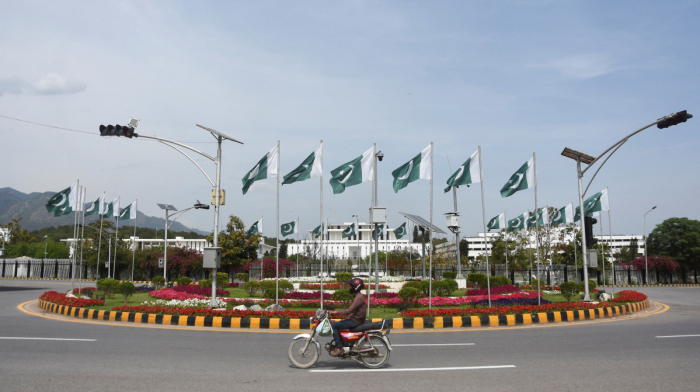
The document, titled "Islamabad Memorandum of Understanding between the Islamic Republic of Iran and the United States of America," begins with a declaration of an immediate and permanent end to military operations on all fronts, including in Lebanon.
The document also confirmed that the U.S. would fully end its naval blockade on Iranian ports within 30 days and Iran would ensure safe passage of commercial vessels at no charge in the Strait of Hormuz for 60 days.
The document bears signatures on behalf of Iran and the United States, with Pakistan signing as witness and mediator.
⦿ 17:02 GMT | UPDATE
U.S. ends Iran naval blockade, Central Command says
Reuters
Washington's naval blockade of Iran has ceased, U.S. Central Command has said, adding that ships would remain in the area to ensure that the U.S.-Iran agreement remained adhered to.
⦿ 15:50 GMT | UPDATE
Not yet there on questions of lifting Iran sanctions, EU's Kallas says
Reuters
The European Union's top diplomat Kaja Kallas has said that if there was an Iranian nuclear deal, then the issue of lifting sanctions could be addressed, but added that they were not there yet.
"Once the conditions allow, of course, member states will discuss whether the lifting of sanctions is (appropriate), but we are not there yet," Kallas told reporters ahead of a summit with leaders of EU countries.
⦿ 15:26 GMT | UPDATE
JD Vance criticises Israeli 'freakout' over Iran deal, NYT reports
Reuters
U.S. Vice President JD Vance has criticised Israel for a "weird panic" and "freakout" over the agreement struck between the U.S. and Iran, in an interview released on Thursday.
Israeli officials across the political spectrum, including some of Prime Minister Benjamin Netanyahu's allies, have criticised the agreement, saying it did not address their concerns over Iran’s nuclear and ballistic missile programs and would tie down Israel's military operations against the Iran-backed Hezbollah militia in Lebanon.
"There is this weird panic almost in the Israeli system that I’ve picked up on where they assume that everything that is contemplated that is good for Iran will happen — but that will happen without the Iranians changing any behavior," Vance said in an interview with the New York Times.
"That's not how the deal is written."
⦿ 15:09 GMT | UPDATE
'Israel should withdraw from southern Lebanon,' UK minister says
Reuters
Britain's International Development Minister Jenny Chapman has urged Israel to withdraw from southern Lebanon so that families displaced by thee months of war can return home.
"Chapman, who is on a trip to Lebanon, made the remarks during a visit to a school where displaced families were sheltering.
"Israel should withdraw from southern Lebanon, absolutely. Displacement we know anywhere in the world causes huge disruption," she said.
"That is why we want to get the conditions right so that people can return home and be secure, be safe and be confident they can stay in their homes for the long term."
⦿ 12:28 GMT | UPDATE
Israeli strikes kill three in Lebanon, Lebanese media says
Reuters
Three people have been killed in Israeli strikes in southern Lebanon, the Lebanese state news agency has reported.
⦿ 11:53 GMT | UPDATE
Iran calls for dialogue with Gulf states
Reuters
Iran’s Foreign Minister Abbas Araqchi has stressed the need for dialogue with Gulf Arab countries to ease tensions and strengthen ties.
Speaking in a call with Kuwait’s Foreign Minister Sheikh Jarrah Jaber Al‑Ahmad Al‑Sabah, Abbas Araqchi said the recent U.S.–Iran peace deal could help restore stability across the region.
⦿ 10:30 GMT | UPDATE
Israel says troops operating 10 km inside Lebanon
Reuters
The Israeli military said on Thursday that its forces were operating in a security zone extending about 10 km (6 miles) into southern Lebanon, despite a provision in the interim U.S.-Iran agreement calling for an immediate halt to military operations in Lebanon.
The military said the deployment was dictated by operational needs and that troops remained stationed in their designated area of operations.
⦿ 10:20 GMT | UPDATE
Hegseth warns on Iran compliance, says U.S. ready to act
Reuters
U.S. Defence Secretary Pete Hegseth says any changes to the American troop presence in the Middle East will depend on conditions on the ground.
He warned that the U.S. could reimpose a strict blockade if Iran fails to meet its commitments, adding Washington is prepared to resume military action if necessary.
Hegseth said the agreement with Iran was reached from a position of strength, and noted that some European countries are ready to step up efforts to secure shipping through the Strait of Hormuz.
⦿ 09:53 GMT | UPDATE
Tankers resume Hormuz transit after U.S.-Iran deal
Reuters
Three Saudi-flagged supertankers carrying around six million barrels of crude have sailed through the Strait of Hormuz, marking one of the largest movements of oil shipments in weeks after the U.S.–Iran agreement.
Ship tracking data shows a wider resumption of traffic through the waterway, with vessels once again visible after many had concealed movements during the recent conflict.
The tankers, managed by Saudi group Bahri, represent a significant shift, as Saudi Arabia had largely relied on Red Sea exports from Yanbu since the war disrupted Gulf shipments.
Other vessels, including an LNG tanker from QatarEnergy and oil tankers loaded in Abu Dhabi, also moved through the strait, signalling a gradual return to normal flows following the deal.
⦿ 08:21 GMT | UPDATE
IEA chief hails ceasefire and says reopening Hormuz is key
Reuters
The head of the International Energy Agency said on Thursday the interim agreement to end the U.S.-Iran war "made me and everyone happy" but the Strait of Hormuz must be reopened without conditions and negotiations must conclude in the next 60 days.
Speaking in İstanbul, Fatih Birol said several countries are reviewing their energy policies now that it is clear that Hormuz has been closed once and could potentially be closed again.
⦿ 07:41 GMT | UPDATE
China urges U.S., Iran to ‘uphold spirit’ of Islamabad MoU
Anadolu
China urged Washington and Tehran to “uphold the spirit” of the Islamabad Memorandum of Understanding.
The signing of the first-stage agreement between the U.S. and Iran has a “positive significance for easing tensions and consolidating the momentum for ceasefire,” China’s Foreign Ministry spokesman Lin Jian told reporters in Beijing.
According to Pakistan, which mediated between the two warring sides since 8 April, weeks after the U.S. and Israel initiated war on Iran, the Islamabad MoU has entered into force with “immediate effect” after Trump and Pezeshkian electronically signed it during the intervening night of Wednesday and Thursday.
⦿ 06:51 GMT | UPDATE
Switzerland says talks planned for Friday between Iran and U.S.
Reuters
Initial talks between the United States and Iran are planned at the Buergenstock mountaintop resort in Switzerland on Friday, following the signing of a ceasefire agreement between Tehran and Washington, the Swiss government said on Thursday.
"As things stand, the plan is still for the U.S. and Iran, along with mediators Pakistan and Qatar and other involved countries, to meet tomorrow at Buergenstock for initial negotiations about implementing the agreement.
"No further information is currently available regarding the schedule and details of this meeting," the Swiss foreign ministry said in a statement.
⦿ 06:13 GMT | UPDATE
Germany deploys ship to Red Sea for possible Hormuz mission
Reuters
Germany is deploying two ships to the Red Sea in preparation for a possible military mission in the Strait of Hormuz, Germany's Defence minister Boris Pistorius said on Thursday.
"As we speak, our minesweeper Fulda and the supply ship Mosel are sailing through the Suez Canal towards the Red Sea," he told reporters as he arrived for a meeting with his NATO counterparts in Brussels.
Pistorius said approval would be needed from Iran and Oman before any participation in a minesweeping operation, and added any mission would also depend on the developments in further talks between Iran and the United States.
⦿ 05:11 GMT | UPDATE
Ghalibaf says Iran-U.S. MoU based on reciprocity and 'action for action'
Iranian Parliament Speaker and chief negotiator Mohammad-Bagher Ghalibaf said in an interview on state IRIB TV that the Iran-U.S. memorandum of understanding is built on the principle of reciprocity.
“Every commitment we have made in the MoU is based on the principle of ‘action for action,’” he said, adding that Article 13 reflects this approach, “meaning that if the United States does not fulfill its commitments, we will not take any action either.”
Referring to regional tensions, Ghalibaf also said: “In the middle of the war, I tweeted and said that the Strait of Hormuz will never return to its previous (pre-war) condition, and that is the case today.”
He stressed that Iran’s actions remain within international law, adding: “Of course, this does not mean that we in the Strait of Hormuz want to act against international law and maritime regulations. Never. We act within the framework of international law.”
⦿ 05:03 GMT | UPDATE
Iran state media publishes 14-point Iran-U.S. ceasefire MoU
IRNA
Iran’s state news agency IRNA has published the full text of a 14-point Islamabad Memorandum of Understanding (MoU) between Iran and the U.S., outlining a 60-day ceasefire extension and a framework for negotiations toward a final peace agreement.
The document calls for the immediate termination of military operations, respect for sovereignty, and a commitment by both sides not to use force against each other.
It sets a 60-day timeline, extendable by mutual consent, to reach a final deal and includes provisions covering security arrangements, sanctions relief, economic cooperation, and nuclear-related issues.
Under the framework, the U.S. is expected to gradually lift sanctions, ease restrictions on Iranian oil exports, and release frozen Iranian assets, while Iran reaffirms it will not seek nuclear weapons and agrees to IAEA-supervised arrangements on nuclear material.
The memorandum also proposes the establishment of an implementation and monitoring mechanism, with the final agreement potentially to be endorsed by a UN Security Council resolution.
Read the full MoU text here:
https://en.irna.ir/news/86186085/Tehran-publishes-Islamabad-Memorandum-of-Understanding-between
⦿ 04:13 GMT | UPDATE
Iran war fuel spikes lift Europe's EV sales again
Rising fuel prices driven by the Iran war are boosting demand for new and used electric vehicles across Europe, industry data shared with Reuters shows, though some executives warn interest could fade if petrol costs fall.
Industry experts say improvements in charging infrastructure and a wave of more affordable models, including from Chinese automakers - are helping make EVs more mainstream, supporting demand.
The U.S. and Iran have agreed to an extended ceasefire, but shipping disruptions mean oil flows through the Strait of Hormuz may take weeks to normalise, with fuel prices likely to remain elevated for months.
⦿ 03:04 GMT | UPDATE
Trump threatens renewed strikes if Iran violates deal
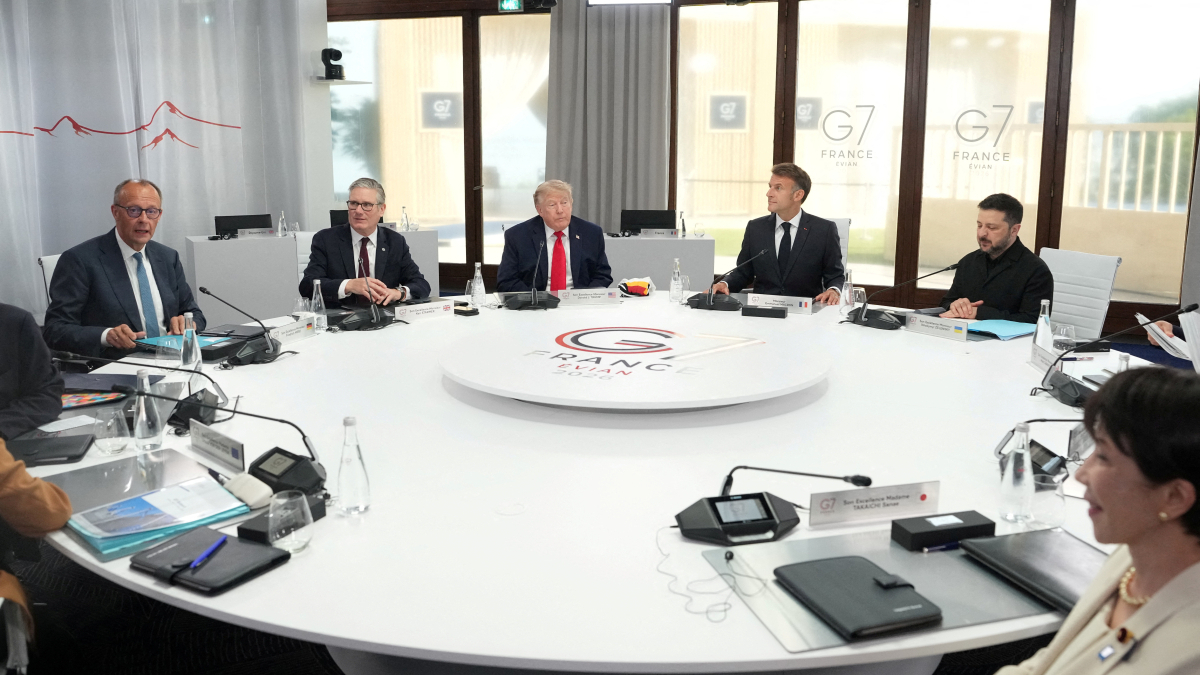
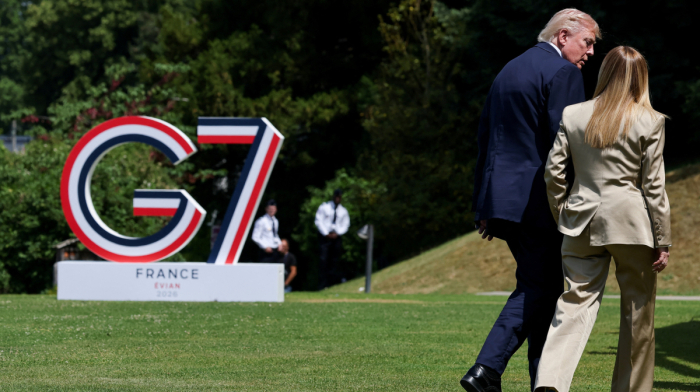
U.S. President Donald Trump, attending the G7 with other leaders in France, also withdrew at least one of his stated rationales for attacking Iran in the first place, saying it would be "unfair" for Tehran not to have ballistic missiles, having previously vowed to obliterate them.
"We're going to bomb the hell out of them if they violate the agreement," Trump said of Iran at a press conference. "I don't want them to. I want them to honor the agreement."
He also called Iranians "smart people" as U.S. and Iranian negotiators work on a permanent truce over the coming 60 days, which Trump said he hoped would usher in peace in the Middle East and lower oil prices.
Earlier, he had said: "If I don't like it, if they don't behave, we'll go right back to dropping bombs right smack in the middle of their head, OK?"
⦿ 03:02 GMT | UPDATE
Iran MOU was signed on Wednesday by Trump and Iran president
U.S. President Donald Trump and Iranian President Masoud Pezeshkian on Wednesday signed a memorandum of understanding aimed at ending the war with Iran, a U.S. official told Reuters.
The memo had been signed digitally on Sunday by Vice President JD Vance and Iran's chief negotiator Mohammad Baqer Qalibaf and witnessed by Trump, the official said.
⦿ 02:49 GMT | UPDATE
Iran-U.S. talks in Switzerland are not confirmed for now
Iran’s Foreign Ministry spokesperson Esmaeil Baghaei said Friday’s Iran-U.S. talks in Switzerland have not been confirmed, noting the meeting has been put on hold after plans shifted toward a presidential-level signing of a memorandum of understanding.
He said the idea of a face-to-face meeting was reconsidered after both sides agreed the MoU would be signed directly by the two presidents to increase the political consequences of any potential violation.
Baghaei added that an in-person ceremony was no longer considered necessary, following recent consultations.
He also said the next round of negotiations is expected to follow the signing, while the Swiss meeting remains under consideration pending further talks with mediators.














What is your opinion on this topic?
Leave the first comment