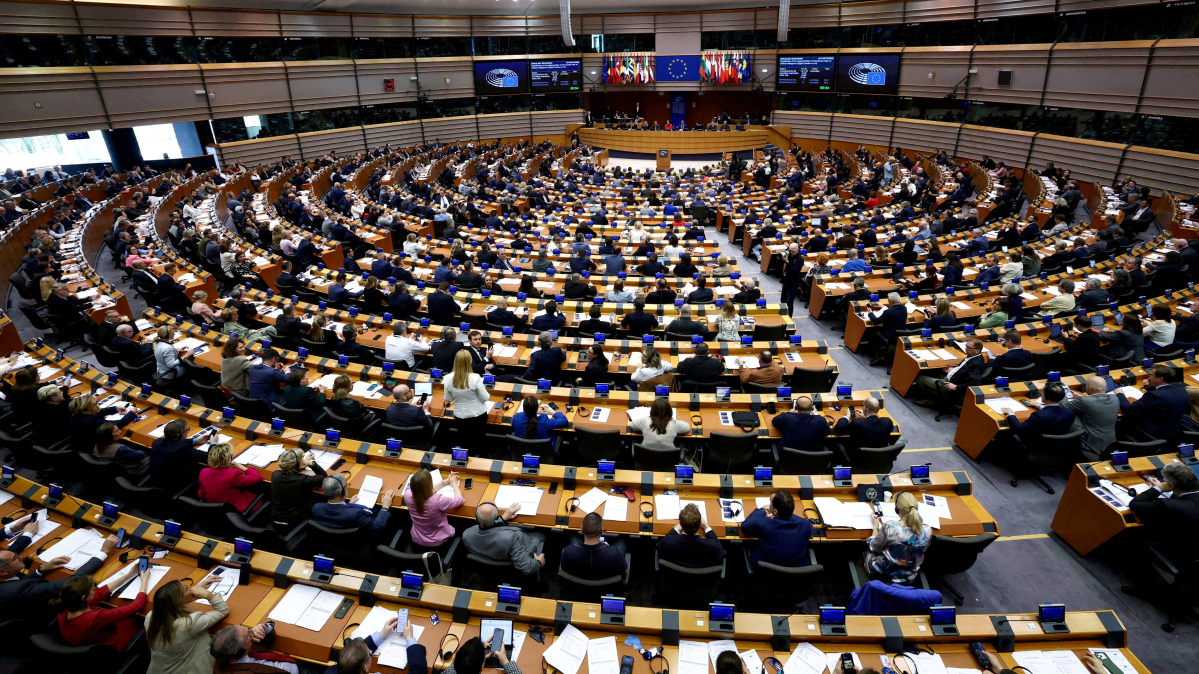
The European Parliament has adopted one of its strongest resolutions on Georgia to date, calling for the release of political prisoners, backing sanctions against senior officials and warning that continued democratic decline could jeopardise the country's EU ambitions and visa-free travel regime.
A sharply critical European Parliament resolution has placed Georgia's democratic trajectory, European aspirations and strategic partnerships under renewed scrutiny, highlighting growing tensions between Tbilisi and Brussels.
Approved by a large majority of MEPs, the resolution paints a bleak picture of Georgia's recent political developments, accusing the ruling Georgian Dream party of steering the country away from its European path while raising concerns over democratic standards, political freedoms and the rule of law.
Calls for release of political prisoners
At the centre of the document is a call for the immediate release of individuals the European Parliament describes as political prisoners, including former President Mikheil Saakashvili. Lawmakers argue that the existence of political prisoners is incompatible with Georgia's obligations as an EU candidate country and express concern over what they describe as the persecution of opposition figures and government critics.
The resolution also supports targeted sanctions against Bidzina Ivanishvili, senior Georgian Dream officials, judges, prosecutors and other individuals considered responsible for democratic backsliding and human rights violations.
Strategic importance and Anaklia concerns
Beyond domestic politics, the report highlights Georgia's growing importance as a strategic transit hub linking Europe and Asia. Lawmakers stress that Georgia remains a key part of the Middle Corridor, a trade route connecting Europe with Central Asia and beyond. However, they warn that the corridor's long-term success depends on adherence to democratic principles and the rule of law.
Particular attention is given to the Anaklia deep-sea port project. The European Parliament expresses concern over the involvement of Chinese state-owned companies in a project originally viewed as a major East-West connectivity initiative. The report suggests that growing Chinese and Russian influence over strategic infrastructure could undermine the project's broader geopolitical significance.
The document also raises concerns over what it describes as increasing Russian, Chinese and Iranian influence in Georgia. It criticises the country's declining alignment with EU foreign and security policy and points to concerns over sanctions enforcement.
Kulevi terminal under scrutiny
One of the most notable sections focuses on the Kulevi oil terminal and refinery on Georgia's Black Sea coast. MEPs say they are concerned by reports that Russian crude oil could be processed or transported through Georgian infrastructure in ways that might help circumvent international sanctions.
The resolution notes that the Kulevi terminal was ultimately left out of the European Union's 20th sanctions package against Russia after Georgian authorities and terminal operators reportedly provided assurances that EU sanctions would be fully respected.
However, lawmakers warn that the facility could be included in future sanctions packages if those commitments are not honoured.
Government rejects criticism
The report also reiterates concerns that continued divergence from EU policies could affect Georgia's accession prospects and eventually place its visa-free travel regime with the bloc under pressure.
Georgia's government has strongly rejected the resolution. Foreign Minister Maka Bochorishvili said European Parliament resolutions are not legally binding and argued that the document is based on false narratives designed to damage Georgia's national interests and reputation.
While acknowledging the European Parliament's role as an important EU institution, Bochorishvili insisted that the report does not reflect realities in Georgia and reaffirmed that integration with the European Union remains a strategic priority for the country.
The resolution underscores the widening gap between European institutions and Georgia's leadership at a time when the country's European future remains one of the most consequential issues in Georgian politics.












What is your opinion on this topic?
Leave the first comment