




11:16 CET
Nuclear security
Georgia arrests man over attempted $700,000 uranium sale
Georgia has detained a man ...
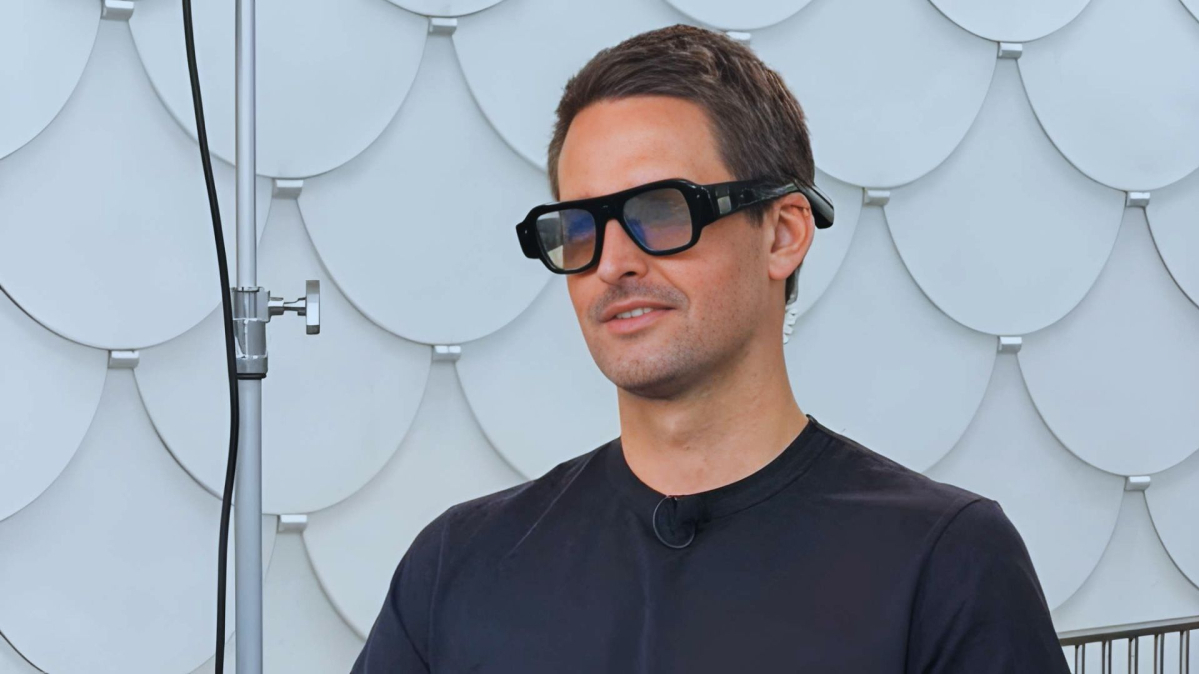


American technology company Snap has launched its first augmented-reality (AR) glasses for consumers, marking a major push into wearable computing as tech firms race to redefine personal devices in the AI era.
Unveiled at the Augmented World Expo in Long Beach, California, the new Specs glasses are priced at $2,195, positioning them as a premium device aimed at early adopters and developers rather than mass-market consumers.
The launch comes at a critical moment for Snap, whose advertising business faces pressure from larger rivals, while investors continue to question the long-term costs of its hardware ambitions. The company has invested more than $3.5 billion into its AR hardware and ecosystem over the years.
Snap CEO Evan Spiegel said the company aimed to build “a totally new type of computer,” designed to move core digital functions away from smartphones and into lightweight wearable devices.
The Specs glasses overlay digital content onto the real world, enabling functions such as navigation prompts, AI-assisted responses, virtual whiteboarding and content streaming. Developers have also created experiences ranging from an Apollo 11 simulation to sports training tools.
Snap’s entry comes amid a growing race in AR and smart glasses, as major technology companies explore alternatives to smartphones.
Meta has already seen early traction with its Ray-Ban smart glasses developed with EssilorLuxottica, while Apple is reportedly working on its own AR device following its mixed-reality Vision Pro headset. Google has also partnered with the consumer eyeglass company Warby Parker on AI-enabled glasses, and OpenAI-linked projects have explored similar wearable concepts.
Unlike Meta’s simpler camera-first glasses, Snap’s Specs aim to deliver full augmented reality capabilities, though analysts note the technology remains expensive and difficult to scale.

Snap is initially targeting developers, with “hundreds of thousands” already using its Lens Studio platform. It is also expanding tools to build AR applications through systems including Claude Code, Codex and Cursor integrations.
The device runs on dual Qualcomm processors and offers up to four hours of battery life, extended through a charging case. It is expected to ship in the US, UK and France this autumn, with wider availability dependent on demand.
While Specs undercut Apple’s $3,499 Vision Pro headset, they remain significantly more expensive than Meta’s $379–$799 smart glasses range, raising questions about mainstream adoption.
Analysts say the price reflects the complexity of building full AR glasses, but warn that consumer uptake may remain limited until costs fall further and software ecosystems mature.
Still, industry observers say Snap’s move places it among the earliest major players attempting to deliver true AR eyewear at scale, as competition in AI-driven wearable technology accelerates.

Georgia has detained a man ...

Azerbaijan and the five Central Asian states have signed two key documents at the 8th Consultative Meeting of Heads of State in Turkmenbashi, forma...

U.S. Vice President JD Vance told Reuters on Monday (5 October) that ...


Russia's health watchdog said on Tuesday that no cases of plague had been detected among anyone who had come into contact with a Siberian plague institute laboratory worker who died last week, and locals said their lives had barely been disrupted.

Russia struck Ukraine overnight in one of the biggest attacks of the conflict, killing at least 19 people, Kyiv's Foreign Ministry said on Wednesday. Around 70 missiles were fired at Ukraine during the attack, as well as drones, the Ministry said.

A large Ukrainian drone attack on Moscow and the surrounding region has killed two people, damaged homes and sparked a major fire at a key fuel facility, according to Russian officials and military bloggers.

The Saudi-led coalition says it has carried out a series of military operations against Houthi targets in Yemen after attacks on two Saudi airports left three people dead and dozens injured.
Azerbaijan and the five Central Asian states have signed two key documents at the 8th Consultative Meeting of Heads of State in Turkmenbashi, formalising a broader framework for regional cooperation in transport, trade, energy, digitalisation and security.

Picture three scenarios: a hospital that can spot a disease before the patient feels sick, a power grid that feeds thousands of data centres and a government network that is attacked daily. All three depend on artificial intelligence, and one question matters most: who is really in charge?
OpenAI and Anthropic told Australian parliament on Tuesday they would welcome laws requiring them to report data breaches carried out by their AI agents, acknowledging the decision to notify authorities was currently at their discretion.

Most people meet artificial intelligence (AI) through a phone. It suggests the next word, sorts the photos, flags the odd charge on a bank card. But the technology has been quietly moving into places where mistakes cost more: the systems that run banks, hospitals, businesses and government offices.

A four-person crew aboard SpaceX's Crew-13 mission, consisting of two U.S. astronauts, a Canadian astronaut and a Russian cosmonaut, arrived at the International Space Station (ISS) on Thursday (1 October), for a long-duration science mission focused on human health and performance in orbit.

The European Space Agency (ESA), Airbus and European partners have put a six-wheeled Mars rover prototype through its paces in Spain’s Tabernas desert, simulating conditions expected on a future mission to the Red Planet.
You can download the AnewZ application from Play Store and the App Store.




What is your opinion on this topic?
Leave the first comment