China is accelerating the transformation of its agricultural sector through artificial intelligence (AI), smart machinery and advanced breeding technologies, according to Agriculture and Rural Affairs Minister Han Jun.
Food security remains a national priority for China. As the country responds to geopolitical pressures, climate change and rising demand, AI is playing an increasingly important role in improving agricultural productivity and resilience.
The expansion of AI in farming also supports China's broader ambition to become a global leader in artificial intelligence, with agriculture emerging as one of the country's fastest-growing digital sectors.
Technology now contributes more than 64 per cent of China's agricultural productivity, reflecting a shift from resource-intensive farming towards innovation-led growth.
Growing use of smart farming
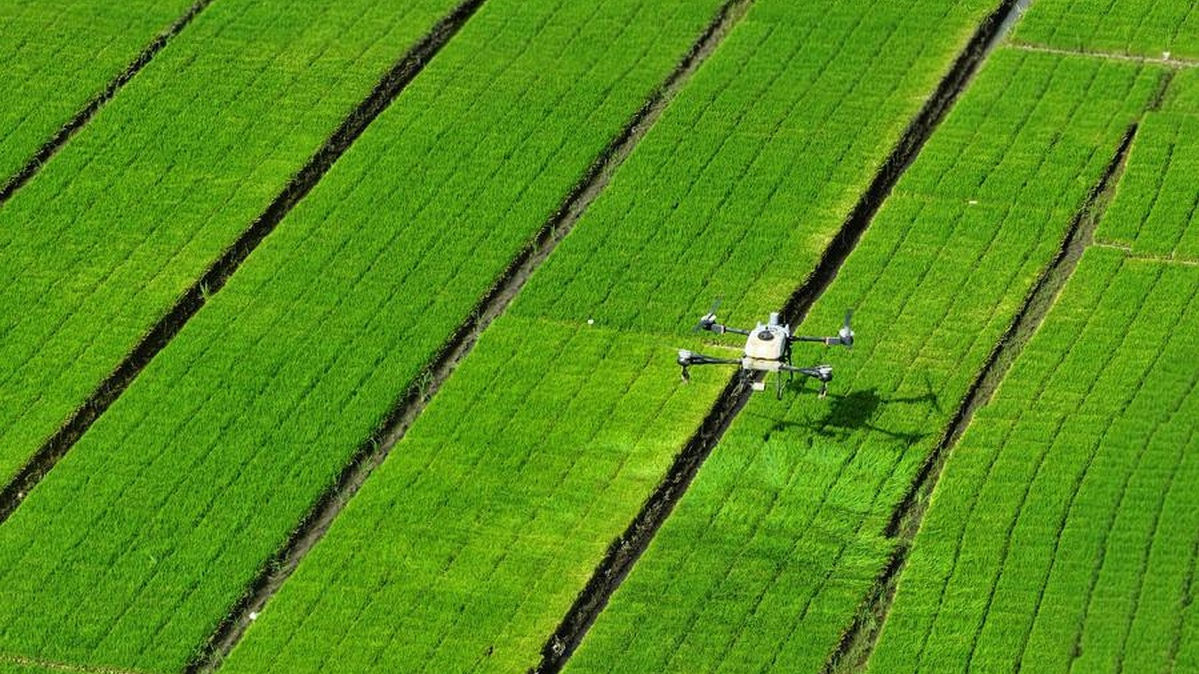
China now operates more than 300,000 agricultural drones — the largest fleet in the world. Once used mainly for crop spraying, they are now also deployed to monitor fields, collect agricultural data, and transport farming supplies and harvested crops.
The country is also expanding the use of AI, robotics and smart farming equipment, while the mechanisation rate for crop cultivation, planting and harvesting has reached 76.7 per cent.
Producing more with fewer resources
Compared with 2020, fertiliser use has declined by 5.3 per cent, while pesticide use has fallen by 1.5 per cent. At the same time, grain output and crop quality have continued to improve, demonstrating how precision agriculture can increase production while reducing chemical inputs.
Beyond traditional farmland
China is also expanding food production through modern greenhouses, intelligent aquaculture and biotechnology. Smart offshore fish farming systems are capable of producing up to 1,000 metric tonnes annually per cage, while investment continues in plant-based proteins and cultivated meat.
Global agricultural leader
China remains the world's largest producer of fruit and vegetables, accounting for around half of global apple production, more than 60 per cent of peaches and watermelons, about 70 per cent of lychees and pears, and roughly half of the world's farmed fish production.




















What is your opinion on this topic?
Leave the first comment