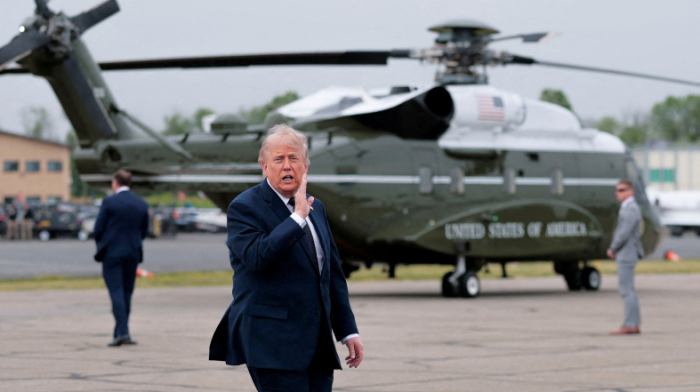
A peace agreement between Washington and Tehran is yet to materialise, with U.S. President Donald Trump saying that negotiations are incomplete and an Iranian Foreign Ministry Spokesman saying that a deal isn't imminent.
This live coverage of the Middle East conflict has ended.
We are wrapping up our live coverage for the evening. Here is a summary of today's key developments:
- U.S. President Donald Trump outlined the proposed pathways for dismantling Iran's nuclear stockpile.
- Israeli Prime Minister Benjamin Netanyahu said on Monday that Israel will intensify strikes against Hezbollah in Lebanon
- U.S. President Donald Trump said it should be “mandatory” for countries including Qatar, Pakistan, Egypt, Jordan and Türkiye to join the Abraham Accords as part of wider efforts to reach a deal with Iran.
Our main news desk will continue tracking updates. Read our full, detailed analysis of today's news on the Strait of Hormuz HERE.
Thank you for following along.
⦿ 10:57 GMT | UPDATE
Explosions reported near key Iranian port
Reuters
Explosions have been heard in Iran’s Bandar Abbas and nearby coastal areas by the Strait of Hormuz, according to Iranian media, with the cause not yet confirmed.
Mehr news agency said the situation in the port city was under control and there was no immediate cause for concern, adding that officials had yet to comment.
Tasnim reported three explosions in Bandar Abbas, while Fars said similar sounds were heard near Sirik and Jask, close to the strategic waterway.
⦿ 10:53 GMT | UPDATE
Trump Plan Sets Conditions for Transfer or Local Destruction of Iranian Uranium
TruthSocial/@realDonaldTrump
U.S. President Donald Trump outlined the proposed pathways for dismantling Iran's nuclear stockpile, stating that the country's enriched uranium, which he termed "nuclear dust," must be eliminated under strict international supervision.
According to Trump, the current framework allows for two main solutions: the immediate transfer of the material to the United States for destruction, or a "preferred" option to destroy the stockpile on-site or at an alternative approved location in direct coordination with Tehran.
Whichever path is selected, Trump emphasised that the Atomic Energy Commission or an equivalent international regulatory watchdog must formally verify the process.
⦿ 19:50 GMT | UPDATE
Netanyahu says Israel will intensify strikes against Hezbollah
Reuters
Israeli Prime Minister Benjamin Netanyahu said on Monday that Israel will intensify strikes against Hezbollah in Lebanon, warning that the military would not ease operations despite ongoing diplomatic efforts involving Iran and the United States.
In a video posted on Telegram, Netanyahu said, “We are at war with Hezbollah, and we will intensify our strikes,” adding that Israel was not taking its “foot off the gas.”
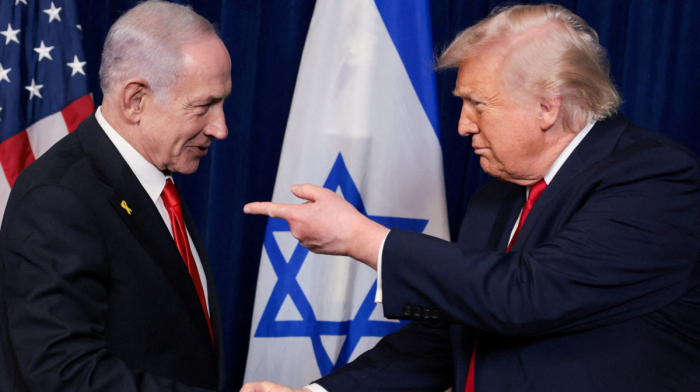
The comments came after Netanyahu said he and U.S. President Donald Trump agreed Israel retains the right to respond to threats on all fronts, including Lebanon.
⦿ 18:29 GMT | UPDATE
Iran says IRGC authorised 32 vessels through Hormuz
Reuters
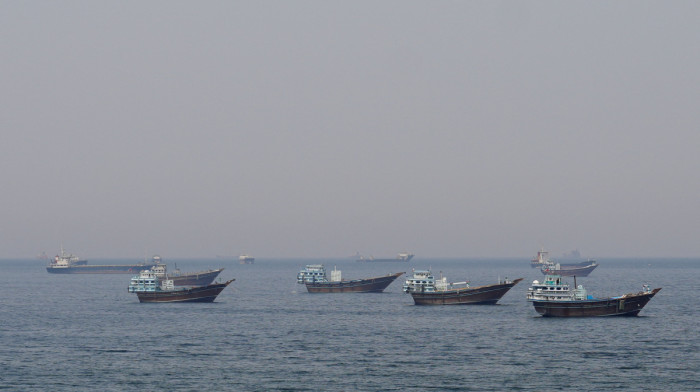
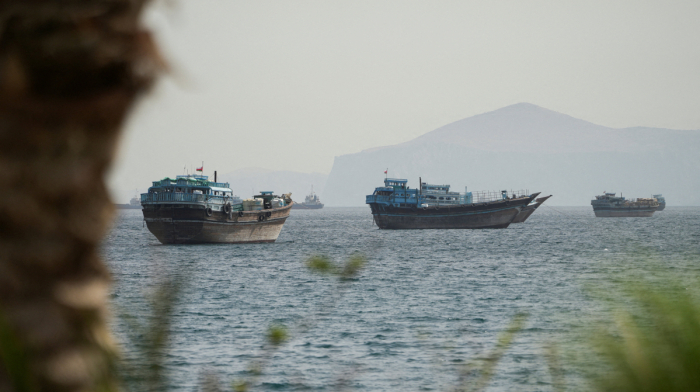
Iran’s Islamic Revolutionary Guard Corps (IRGC) said on Monday it had authorised 32 vessels to pass through the Strait of Hormuz over the past 24 hours, according to Iranian state-linked and regional media reports.
International maritime authorities have not publicly confirmed the reported number of crossings.
⦿ 17:37 GMT | UPDATE
Nikkei: U.S. and Iran discussing plan to reopen Strait of Hormuz
Reuters
The United States and Iran are discussing a plan to reopen the Strait of Hormuz around 30 days after reaching a deal to end hostilities, Japan’s Nikkei newspaper reported on Monday, citing a Middle East diplomatic source.
According to the report, Iran would begin clearing mines from the strait during a 30-day transition period following an agreement. Nikkei said ships from all countries would then be allowed to navigate freely and safely, while Iran would stop collecting transit fees.
The report also said the current ceasefire would be extended by 60 days to allow talks on Iran’s nuclear programme to continue during the pause in fighting.
Neither Washington nor Tehran immediately commented publicly on the report.
⦿ 13:32 GMT | UPDATE
Iran says it downed hostile drone over Gulf
Reuters
Iran said it downed a “hostile” drone over the Gulf using what state media described as a new domestically developed air defence system, according to Iranian news agencies.
Iranian outlets did not immediately specify the type or origin of the drone, and the claim could not be independently verified.
⦿ 12:57 GMT | UPDATE
Trump says countries should ‘mandatorily’ join Abraham Accords
Reuters
U.S. President Donald Trump said it should be “mandatory” for countries including Qatar, Pakistan, Egypt, Jordan and Türkiye to join the Abraham Accords as part of wider efforts to reach a deal with Iran.
In a Truth Social post on Monday, Trump said he discussed the issue over the weekend with leaders from those countries, as well as Bahrain and Saudi Arabia. He added that the countries involved would be “honored” to have Iran join the accords once an agreement to end the war is reached.
Trump also said negotiations with Tehran were “proceeding nicely” but gave no indication that a deal was imminent.
⦿ 11:52 GMT | UPDATE
Iranian envoys in Doha for U.S.-Iran talks
Reuters
Iranian top negotiator Mohammad Bagher Qalibaf and Foreign Minister Abbas Araghchi are in Doha for talks with Qatar's prime minister on a potential U.S.-Iran deal to end the conflict.
The discussions are focused primarily on the Strait of Hormuz and Iran's stockpile of highly enriched uranium.
Iran's central bank governor is also part of the delegation to discuss the potential release of frozen Iranian funds as part of a final agreement, according to the official.
⦿ 11:40 GMT | UPDATE
Iran will not accept 'excessive demands' in U.S. talk
Anadolu
Iranian President Masoud Pezeshkian said that Tehran will not accept "excessive demands" by the U.S. in the Pakistan-mediated talks, the state news agency IRNA reported.
"The negotiations have been planned in such a way that the rights of the Iranian nation are fully secured," Pezeshkian stated during a meeting with members of the Iran Chamber of Commerce, Industries, Mines and Agriculture.
"Although the enemy has shifted its focus to economic warfare after military failure, the government and the private sector, by working together with solidarity, empathy, and cooperation, will also get through this stage successfully," he asserted.
⦿ 11:00 GMT | UPDATE
Iran central bank chief heads to Qatar after frozen funds talks report
Reuters
Iran's Central Bank Chief Abdolnaser Hemmati travelled to Qatar, Iran's state media reported on Monday, saying the visit follows talks with a Qatari delegation in Tehran regarding Iran's frozen funds.
Iran has been pushing in negotiations for its frozen funds abroad, including in Qatar, to be released.
⦿ 10:32 GMT | UPDATE
Trump says Iran deal will be 'meaningful'
Reuters
U.S. President Donald Trump said that the deal with Iran will either be a great and meaningful deal or there will be no deal at all.
Iran and the United States have played down hopes for an imminent breakthrough in efforts to end their three old war on Monday, with the top U.S. diplomat saying Washington will either get a good agreement or deal with the country in "another way".
⦿ 09:14 GMT | UPDATE
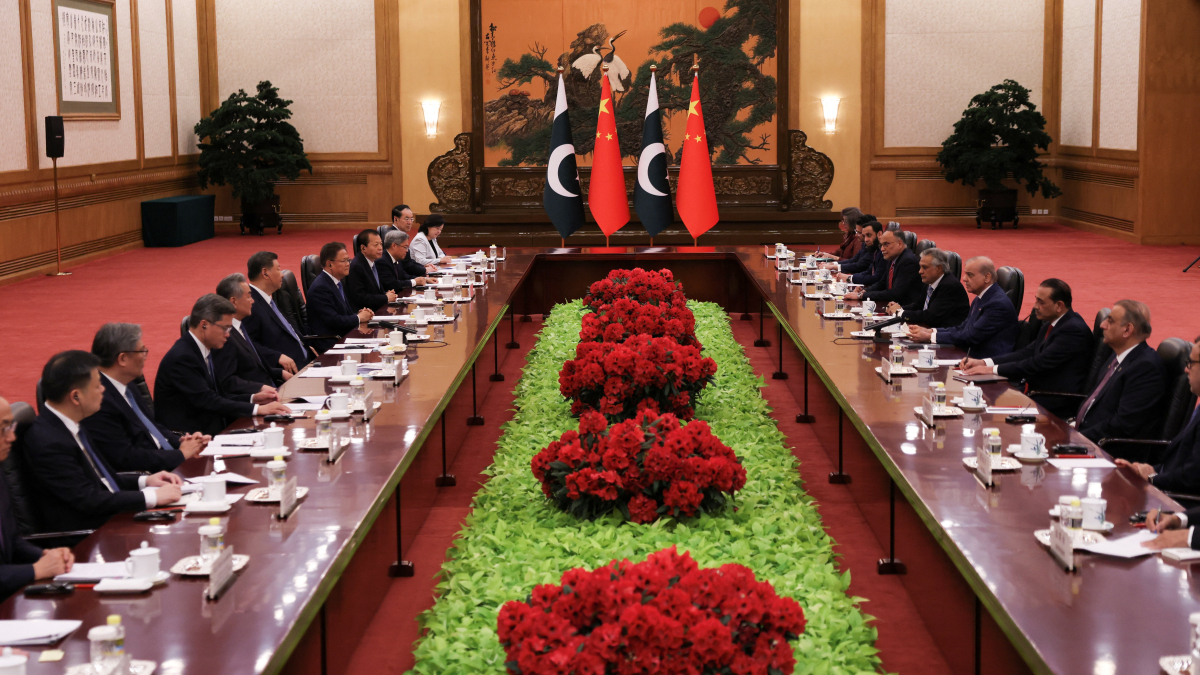
Pakistan PM says peace efforts ‘moving in the right direction’
Pakistan Prime Minister Shehbaz Sharif said peace efforts are “moving in the right direction” as army chief Asim Munir joined him in China amid renewed hopes for a deal to end the Iran conflict.
Speaking to Chinese leaders in Beijing alongside Munir, Sharif said, “The world is passing through a critical moment.”
“Things are moving in the right direction. I would like to thank China’s support to promote peace,” he added.
⦿ 08:51 GMT | UPDATE
Dollar drifts lower as oil falls on Hormuz deal optimism
Reuters
The dollar fell against major currencies as hopes of a deal to reopen Hormuz pushed oil prices below $100 per barrel, even as the U.S. and Iran played down the chances of reaching an agreement soon.
Meanwhile many global markets, including in the U.S., Hong Kong, the UK and the majority of Europe- are closed for holidays on Monday, thinning liquidity.
⦿ 08:46 GMT | UPDATE
Israeli soldier killed in southern Lebanon
Anadolu
The Israeli military said Monday that one of its soldiers was killed in southern Lebanon amid continued hostilities and ongoing clashes with Hezbollah.
Another soldier was wounded in the same incident, the military said in a statement. According to Israeli media reports, the casualties resulted from a Hezbollah drone attack.
⦿ 08:04 GMT | UPDATE
33 ships allowed through Strait of Hormuz, IRGC says
IRGC
A total of 33 vessels were allowed to sail through the Strait of Hormuz in a 24 hour period, Iran's Revolutionary Guards (IRGC) Navy announced on Sunday. The IRGC said there had been an increase in the number of ship transiting the narrow waterway since last week.
"The smart control of the Strait of Hormuz is being carried out vigorously by the IRGC Navy following the severe insecurity created following the aggression of the U.S. terrorist army in the Strait of Hormuz," the IRGC said.
Oil tankers and container ships were among the vessles allowed through the sea passage, after obtaining permits, and with the coordination and security of the IRGC Navy.
⦿ 07:46 GMT | UPDATE
Iran charging for services in Hormuz doesn't equate to a toll, Iranian Foreign Ministry says
Reuters
A spokesperson for Iran's Foreign Ministry has said it's "normal" that services related to the management of the Strait of Hormuz would require a price.
However the spokesperson denied this equated to Iran taking tolls on the sea passage.
Iran's plan to charge ships fees for using the narrow sea passage, which is important for the transportation of oil, has been strongly opposed by the U.S. and has become a major sticking point in peace talks.
Earlier, a Foreign Ministry spokesperson reiterated that management of the strait belonged to coastal countries.
⦿ 07:31 GMT | UPDATE
Deal between Iran and U.S. not imminent, Iranian Foreign Ministry says
Reuters
An agreement between Iran and the U.S. isn't imminent, despite a framework for a peace deal being reached, the Iranian Foreign Ministry has said.
A spokesperson for the Ministry added that the potential agreement between U.S. and Iran included no specific details about the management of the Strait of Hormuz, which has been an obsctacle in talks between Washington and Tehran.
The Foreign Ministry spokesperson reiterated that management of the strait belonged to coastal countries.
The U.S. has repeatedly opposed Iranian proposals to charge ships fees for using the narrow waterway, through which a significant share of global seaborne oil passes.
Tehran's Foreign Ministry spokesperson added the end of the war on all fronts, including in Lebanon, will be part of the potential agreement.
⦿ 07:25 GMT | UPDATE
Iran willing to discuss nuclear issues with U.S., Iranian diplomat says
Reuters
Iran would be willing to disucss its nuclear programme and the issue of its highly enriched uranium with the U.S. if Washington fulfils its commitments in a potential peace agreement currently being negotiated, a senior diplomat told Iran's INSA News Agency on Monday.
The nuclear matters would be talked about during 60-day negotiations in exchange for the lifting of sanctions and release of Iranian foreign assets, Hossein Nooshabadi said, according to the agency.
Iran’s uranium enrichment programme has been a major sticking points in negotiations with the U.S.
⦿ 06:09 GMT | UPDATE
Oil prices decrease amid mixed messages on U.S.-Iran peace deal
Oil prices have dropped amid cautious signs that the U.S. and Iran are closing in on a peace agreement.
Brent crude, the main standard for international oil prices, decreased by more than five percent on Sunday as U.S. President Donald Trump gave conflicting signals about the prospects for a complete end to the war.
⦿ 05:16 GMT | UPDATE
Iran executes man involved in anti-government protests, state media says
Reuters
Iran executed a man over charges related to the anti-government protests that took place nationwide in January, state media reported on Monday.
The individual was identified as Abbas Akbari, according to state media.
⦿ 04:28 GMT | UPDATE
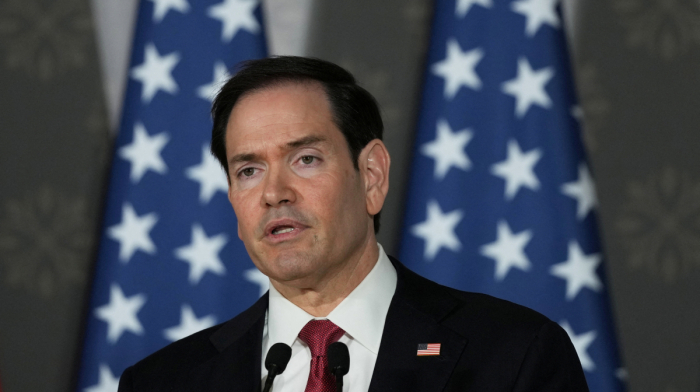
U.S. will get a good agreement or deal with Iran 'another way,' Rubio says
Reuters
U.S. Secretary of State Marco Rubio has said Washington will either reach a good agreement with Iran, or deal with the country in "another way".
Speaking in the Indian capital New Delhi, Rubio said that the U.S. would give diplomacy every chance before exploring "alternatives."
Rubio added that two of the most significant issues in talks between the two countries, the reopening of the Strait of Hormuz and Iran's nuclear capabilities, were now being addressed.
"[There is a] pretty solid thing on the table in terms of their ability to open up the strait, get the strait open, enter into a very real, significant, time-limited negotiation on the nuclear matter, and hopefully we can pull it off," Rubio said.
Meanwhile Iran's military has said the country is prepared for the possible collapse of negotiations with the United States.
Iran's Tasnim News Agency quotes a military source as saying that the Americans will face “Iran’s third version of confrontation” in the event of any aggression against the country.
⦿ 03:30 GMT | UPDATE
U.S. peace agreement may be cancelled, Iranian media reports
Reuters
A peace deal with the U.S. could be cancelled due to Washington's refusal to release Iran's blocked assets, Iranian media reported on Sunday.
Iran's Tasnim News Agency, which has close linked to the Iranian army's elite IRGC branch, said the U.S.'s continued obstruction of some clauses of the agreement threatened the overall deal.
It comes as U.S. President Donald Trump rowed back on earlier remarks suggesting an agreement between the two countries was almost complete, saying that a deal was not "fully negotiated" yet.
⦿ 03:10 GMT | UPDATE
Deal with Iran not 'fully negotiated yet,' Trump says
Tuth Social
U.S. President Donald Trump downplayed how close Iran and the U.S. were to reaching a peace agreement in a post on social media website Truth Social on Sunday.
Trump said that a deal with Tehran wasn't "even fully negotiated yet."
"If I make a deal with Iran, it will be a good and proper one, not like the one made by Obama, which gave Iran massive amounts of CASH, and a clear and open path to a Nuclear Weapon," Trump wrote.
"Our deal is the exact opposite, but nobody has seen it, or knows what it is," he added.
The remarks appear to contradict an earlier statement he made on Truth Social on Saturday, where he said a deal with Iran had been "largely negotiated."
"Final aspects and details of the Deal are currently being discussed, and will be announced shortly," Trump wrote in the earlier post.













What is your opinion on this topic?
Leave the first comment