As climate pressures and urbanisation accelerate worldwide, governments are increasingly investing in smart cities and villages to build more sustainable and resilient communities. Across the world, digital technologies are reshaping how cities and rural areas are planned and managed.
Urbanisation is one of the defining global trends of the 21st century. According to UN projections, nearly 70% of the world’s population could live in urban areas by 2050, placing growing pressure on housing, transport, energy systems and public services.
Cities are also at the centre of the climate crisis. The International Energy Agency estimates that urban areas generate around 70% of global CO2 emissions through industry, buildings, transport and energy consumption.
At the same time, cities are becoming increasingly exposed to climate risks including heatwaves, flooding, pollution and pressure on infrastructure.
This has accelerated global interest in concepts such as smart cities, smart villages and sustainable urban development.
What are smart cities and smart villages?
A smart city uses digital technologies, data systems and artificial intelligence to improve urban management, reduce emissions and increase the efficiency of public services.
The approach focuses on building more sustainable and resilient cities by optimising transport, energy use, water supply and emergency response systems in real time.
Alongside this, smart villages are gaining attention as billions of people continue to live in rural areas worldwide. Unlike smart cities, smart villages are generally more flexible and adapted to local needs.
European policy frameworks describe them as rural areas that build on local strengths while using innovation to improve quality of life and resource efficiency.
Europe and China search for new urban models
Across Europe, governments are investing heavily in sustainable urban transformation.
Under the European Union’s “100 Climate-Neutral and Smart Cities Mission,” 100 cities across the EU and 12 cities in countries associated with the bloc's Horizon Europe funding programme for research and innovation, have been selected to reach climate neutrality by 2030.
These cities serve as innovation hubs, testing governance models and technologies that support broader climate neutrality goals by 2050.
Cities such as Copenhagen, Amsterdam, Paris and Vienna are often cited as leading examples.
Amsterdam has long prioritised cycling infrastructure and circular economy policies, while Paris has promoted shared mobility and the “15-minute city” model, designed to ensure most daily needs and services are accessible within a short walk, cycle or public transport journey.
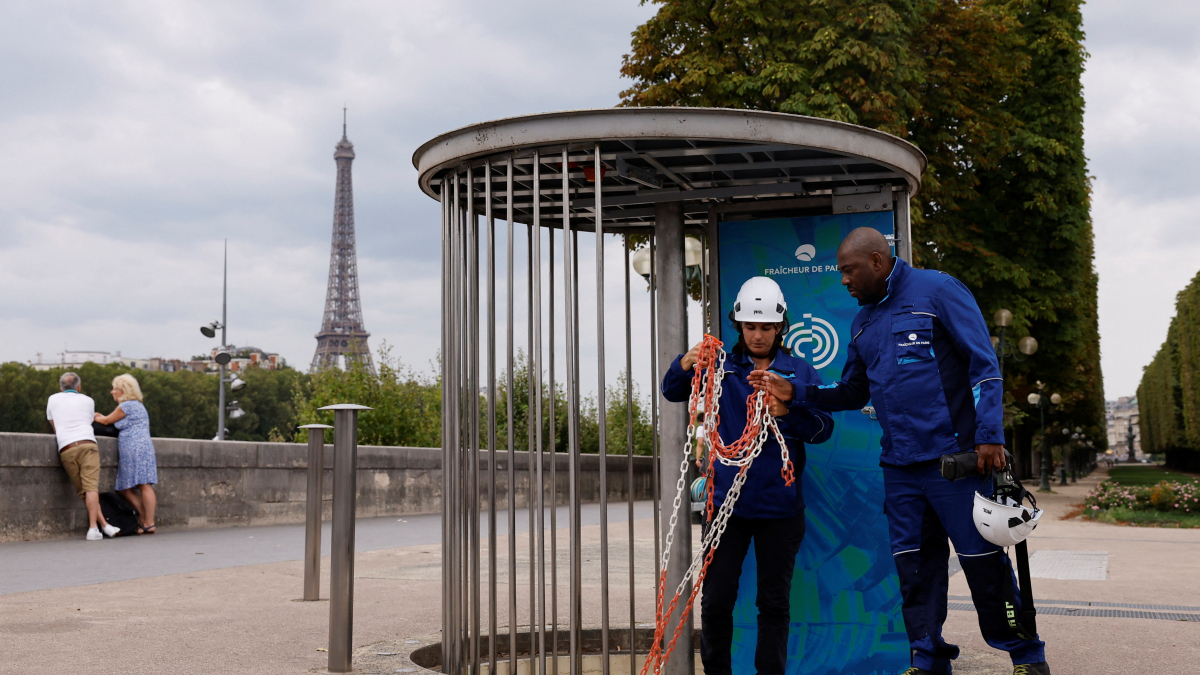
Employees work on a the access stairs to an underground urban cooling network power station developed by Fraicheur de Paris, using water from the Seine river to generate air conditioning used by an increasing number of buildings and public spaces, in Paris, France, 24 August, 2023.
Reuters
At the same time, China is shifting from rapid urban expansion towards more liveable and resilient cities, with a stronger focus on quality and efficiency rather than large-scale construction.
Speaking to AnewZ’s Anastasiya Lavrina, Kevin Muthini of Kenya’s SMACHS Foundation (Smart Mechanized Agriculture & Climate Action for Humanity & Sustainability) said sustainable urban development must go beyond infrastructure.
“It’s not just about the buildings that we are creating, but also about the green spaces that would be created from our organisational planning,” he said.
Azerbaijan’s smart city ambitions
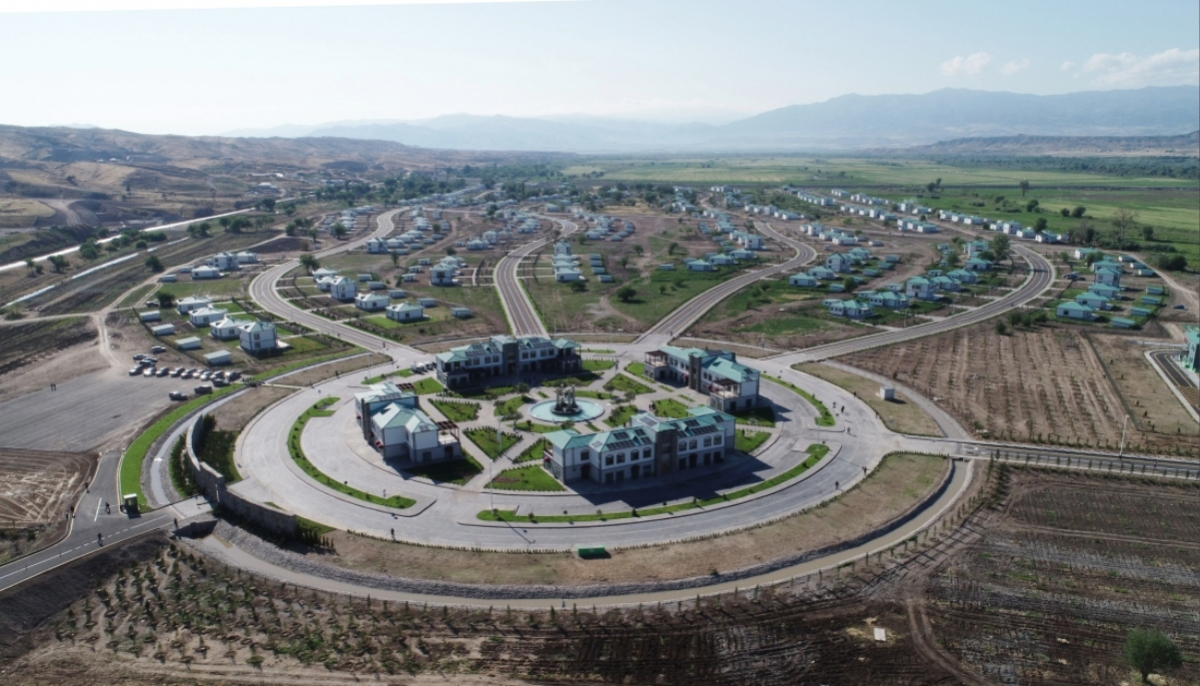
Azerbaijan is positioning itself within global urbanisation trends through reconstruction projects in the Economic Regions of Garabagh and East Zangezur, both in the west of the country. The regions are being developed as testing grounds for smart city and smart village models based on digital governance, renewable energy and sustainable infrastructure.
Projects in towns and villages in the region, such as Aghali, Mammadbeyli and Khojaly, include solar energy systems, digital irrigation technologies, Geographic Information System-based planning platforms and integrated public service systems.
An opening ceremony of the first stage of the "Smart Village" project has been held in Aghali village, Zangilan district, on 27 May, 2022.
Azertag
However, reconstruction efforts continue to face serious challenges linked to mine contamination.
Speaking during the World Urban Forum (WUF13) in Baku, Azerbaijan's President Ilham Aliyev described the rebuilding process as a “unique experience” in constructing cities and villages from scratch after widespread destruction.
"The city plans, 'smart cities', 'smart village' concept plan for every village, all that is being done. So this really, for those countries which suffered similar problems like we did, could be a pattern for reconstruction."
Anar Guliyev, Chairman of Azerbaijan's State Committee on Urban Planning and Architecture, noted that master plans for 68 out of 79 Azerbaijani cities have already been updated, with the remainder in progress.
He also highlighted the Baku 2040 Master Plan, which focuses on compact growth, integrated transport and improved public spaces.
WUF13 and why it matters
Hosted by UN-Habitat, WUF13 brought together participants from more than 180 countries to discuss housing, climate adaptation and sustainable development.
The forum highlighted Azerbaijan’s reconstruction efforts while positioning the country within global discussions on green energy and urban innovation.
Hikmat Hajiyev, Assistant to the President of Azerbaijan, described the event as a platform for international cooperation amid rising global challenges.
Challenges of smart development
Despite rapid progress, experts warn that smart city models remain expensive and not easily accessible to all. Many developing countries face infrastructure gaps, financing constraints and unequal access to digital technologies.
Urban researchers emphasise that successful cities must be not only technologically advanced, but also inclusive, resilient and designed around residents’ needs rather than prestige-driven projects.
Eng Han Tan is the Director of the UNITAR SDGs Singapore Center, described by the UN as "a hub for youth empowerment and sustainable development in the Asia-Pacific region." He cautioned that digital transformation should not exclude vulnerable groups or older generations.
“The more we get young people involved in city-building, the better future leaders we create.”
As urbanisation accelerates worldwide, governments are increasingly facing the challenge of balancing technology, sustainability and social inclusion while reshaping both urban and rural communities for the future.
Israeli military bulldozers have begun demolishing buildings in the West Bank city of Hebron on Friday, 23 October, following armed clashes with Palestinians that left two Israeli soldiers dead, according to the Israeli military.
Typhoon Champi swept past Taiwan on Saturday, leaving one person dead and more than 500 injured as strong winds and torrential rain brought down trees, cut power and disrupted transport across the island.
A powerful magnitude 7 earthquake has struck Tibet in southwestern China, killing 16 people and injuring 65, while forcing more than 12,000 residents to relocate as rescue teams respond to widespread aftershocks.
French President Emmanuel Macron on Friday described a deadly shooting in the towns of Trappes and La Verrière, west of Paris, as a racist attack and ‘a turning point’ for the country.
Azerbaijan is seeking international investment in a 3,000-kilometre green energy corridor to Europe, with banks, investors and energy companies gathering in Baku on Thursday to discuss financing for the ambitious project.
A female dusky shark trapped in a canal in Busan, South Korea, for more than a month has finally returned to the open sea after a successful rescue operation on Wednesday (21 October), following two failed attempts.
The world is on course for dangerous levels of global warming despite international climate pledges, with greenhouse gas emissions hitting record highs and the Paris Agreement’s 1.5°C target increasingly out of reach, according to a UN assessment.
As Armenia prepares to host COP17, the 17th Conference of the Parties to the Convention on Biological Diversity, new projections reveal a widening gap between global conservation promises and what countries are on track to deliver by 2030.





















What is your opinion on this topic?
Leave the first comment