Japan and the United Nations Development Programme are launching a $3 million environmental project in Kazakhstan to support the Caspian Sea and improve water monitoring, amid growing concern over falling sea levels and risks to regional trade routes.
The shrinking Caspian Sea is moving higher up the international agenda as environmental and economic concerns intensify across the region.
Japan and the United Nations Development Programme (UNDP) have launched a new $3 million environmental project in Kazakhstan aimed at supporting the sea and improving water monitoring systems.
Particular attention will be given to the North Caspian, which is directly linked to Kazakhstan’s Mangystau region, where declining water levels are becoming increasingly difficult to ignore.
The initiative will be carried out in partnership with Kazakhstan’s Ministry of Ecology and Natural Resources and the Ministry of Water Resources and Irrigation. However, environmental concerns are only part of the story.
Risks to the Middle Corridor
The Caspian Sea also plays an important role in the Trans-Caspian International Transport Route, better known as the Middle Corridor, which has become an increasingly significant trade link between Asia and Europe.
Japan’s interest in the region reflects those wider concerns. Development of the route was actively discussed during meetings held under the “Central Asia + Japan” format last year, as Tokyo sought closer ties with a region gaining importance in global transport and supply chains.
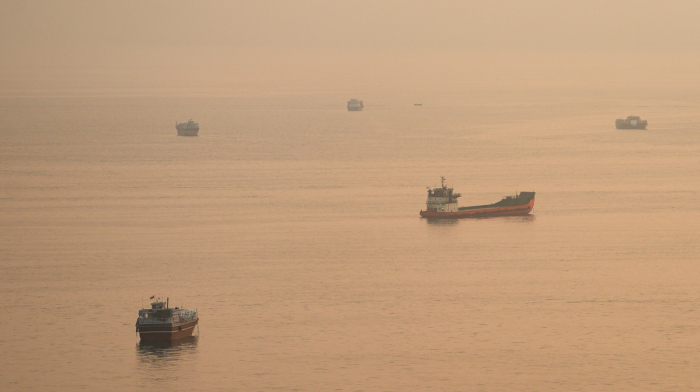
Falling sea levels in the Caspian could eventually affect port operations, cargo flows and shipping along the route.
Climate and environmental pressures
Scientists say the shrinking of the Caspian Sea is becoming one of the region’s most serious environmental challenges. Researchers link the decline to climate change, rising temperatures, increased evaporation, lower river inflows and growing pressure on water resources.
Kazakhstan has already warned that the situation may worsen. Vice Minister of Ecology and Natural Resources Mansur Oshurbayev has said water levels are expected to continue falling until 2050 and could approach minus 33 metres in the Baltic height system.
According to the ministry, the drop has already reached a critical level.
Kazakhstan steps up monitoring efforts
The new international funding comes alongside measures already introduced by Kazakhstan. Authorities have allocated around $2.1 million from a government reserve for research and preservation work linked to the Caspian Sea.
The funding will be used to purchase marine monitoring equipment as officials seek to improve forecasting and better understand how quickly water levels are changing.











What is your opinion on this topic?
Leave the first comment