Turkish President Recep Tayyip Erdoğan has called for deeper solidarity among Turkic states amid rising geopolitical tensions and rapid technological change.
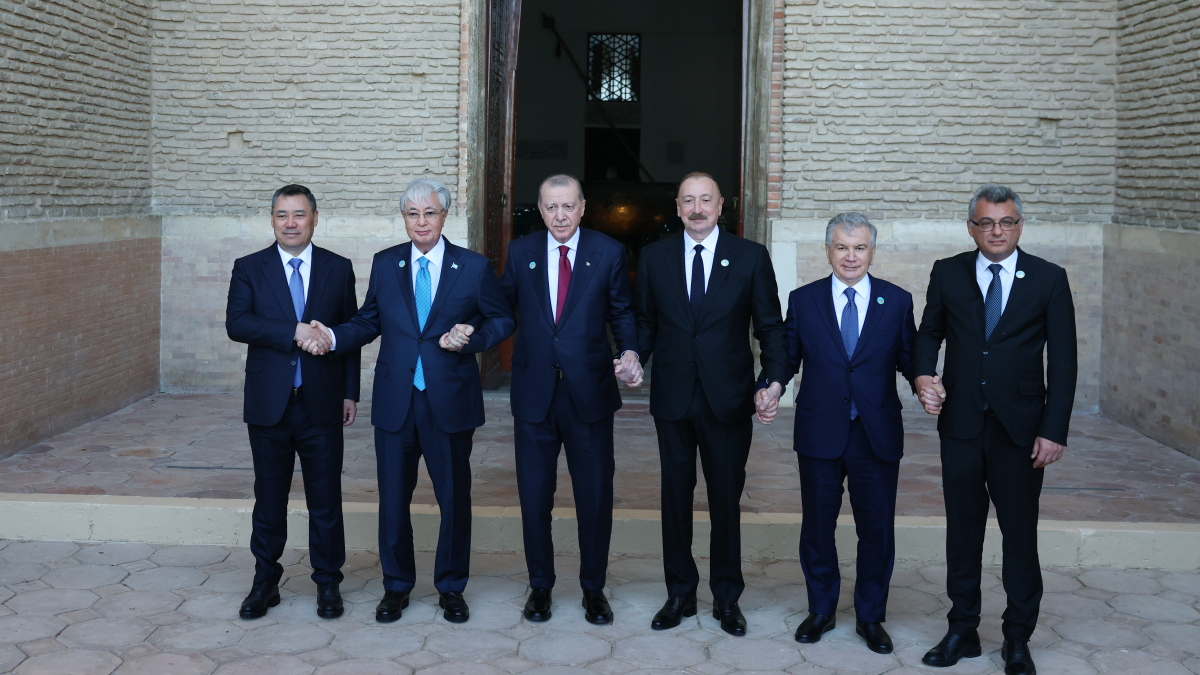
He made the remarks at an informal summit of the Organisation of Turkic States (OTS) held on Friday in the Kazakh city of Turkistan, often described as the “spiritual capital of the Turkic world.”
Addressing attendees, he said regional volatility and rapid digital transformation had underscored the need for closer ties, particularly in the fields of defence, industry and cybersecurity.
“Crises in Palestine, Lebanon, Iran, Ukraine, and many other countries show that we need to strengthen our defence and increase our cooperation in the industrial sector,” Erdoğan said.
He also urged the adoption of a common Turkic alphabet across education, culture, digital transformation and artificial intelligence.
Held under the theme “Artificial Intelligence and Digital Development”, the one-day summit brought together leaders from Azerbaijan, Kazakhstan, Kyrgyzstan, Türkiye and Uzbekistan - the organisation’s five core members - along with representatives from observer states.
Foreign ministers hold preparatory talks
Before the leaders’ summit, OTS foreign ministers held a separate meeting to review the organisation’s agenda and prepare draft documents for adoption by heads of state.
Turkish Foreign Minister Hakan Fidan attended the meeting alongside his counterparts from Azerbaijan, Kazakhstan, Kyrgyzstan and Uzbekistan.
According to the OTS Secretariat, the ministers discussed digitalisation, transport, trade, energy, tourism and connectivity, as well as regional and international developments.
Leaders endorse Turkistan Declaration
At the end of Friday’s summit, leaders jointly endorsed a “Turkistan Declaration,” which included resolutions aimed at strengthening the institutional and digital capacity of the OTS Secretariat.
They also announced the launch of the “Centre of Turkic Civilisation,” a cultural, scientific and tourism-focused project intended to showcase the Turkic world’s shared heritage.
Established in 2009, the five-member OTS has evolved from a cultural and political platform into a forum increasingly focused on trade, energy, digital governance and regional connectivity.
Read more:










What is your opinion on this topic?
Leave the first comment