Rising tensions in the Middle East are beginning to affect Kazakhstan’s economy and citizens, disrupting grain trade across the Caspian Sea and prompting the evacuation of hundreds of Kazakh nationals from several countries in the region.
For Kazakhstan, whose economy relies heavily on agricultural exports and international trade routes, instability in the region carries immediate risks. Economists warn that potential restrictions in the Strait of Hormuz, one of the world’s most important maritime corridors, could push global fertiliser prices higher.
For Kazakh farmers this would mean rising production costs in a sector where grain remains one of the country’s main export commodities.
Higher fertiliser prices could directly affect profitability for producers and exporters, particularly as regional tensions are already beginning to disrupt trade flows.
Grain shipments to Iran suspended
Shipments of Kazakh grain to Iran, one of the country’s key export markets, have effectively been suspended for an indefinite period.
During the previous agricultural season, Kazakhstan exported more than one million tonnes of grain to Iran, most of it transported across the Caspian Sea.
The disruption is now visible in maritime logistics. According to sources cited by Reuters, Iran has stopped accepting cargo through its main Caspian Sea port, Amirabad. Shipping data from the London Stock Exchange Group show that no grain vessels are currently approaching Iranian ports.
One Kazakh grain carrier, the Bellatrix, arrived near Amirabad on 2 March but has remained anchored offshore despite being fully loaded and unable to enter the port.
Grain shipments between the two countries normally pass through the Amirabad Grain Terminal Kish, a key hub for trade across the Caspian Sea.
Trade expansion plans stall
The halt in deliveries has also affected longer term trade plans.
Kazakhstan and Iran had previously discussed expanding bilateral trade to $3 billion. However, according to Kazakhstan’s Grain Union, negotiations over new grain supply contracts have now stalled.
Analysts warn that broader instability in the Middle East could disrupt up to 15% of global grain logistics.
Kazakhstan evacuates citizens from region
At the same time, the worsening security situation has raised concerns for Kazakh citizens living and travelling across the region, prompting evacuation efforts organised by the government.
According to the Civil Aviation Committee of Kazakhstan’s Ministry of Transport, flights arriving on 4 March brought home citizens evacuated from several Middle Eastern countries.
Airlines operated special flights from the Saudi cities of Medina and Jeddah, while additional routes were organised using both air and land corridors.
Kazakhstan’s diplomatic missions in Tehran, Ashgabat and Gorgan facilitated the safe passage of 15 citizens through the Incheburun border crossing on the Iran–Turkmenistan frontier before they continued their journey to the Caspian port city of Aktau.
In another operation, diplomats in Tehran and Yerevan organised the departure of the remaining 35 employees of the Zarkuh company from Iran. They crossed the Iranian–Armenian border by bus before returning home.
Additional evacuation flights were also arranged, including a route between Almaty and Muscat.
More than 800 citizens to be evacuated
Earlier, Deputy Foreign Minister Alibek Bakayev said Kazakhstan planned to evacuate more than 800 citizens from the United Arab Emirates and Qatar within two days, using transit routes through Oman and Saudi Arabia.
According to the Ministry of Foreign Affairs, around 3,500 Kazakh citizens are currently in the UAE, about 3,000 in Saudi Arabia and roughly 1,500 in Qatar.
Smaller groups remain elsewhere in the region, including 82 citizens in Iran, 168 in Bahrain, 134 each in Kuwait and Jordan and about 100 in Israel.
Tokayev thanks Oman for support
The evacuation efforts have also prompted diplomatic engagement at the highest level.
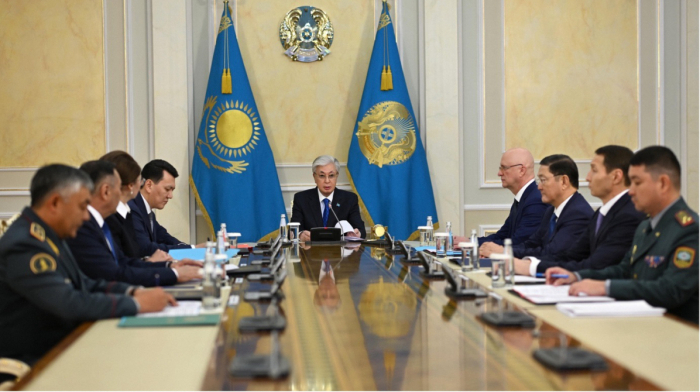
President Kassym-Jomart Tokayev held a telephone conversation with Sultan Haitham bin Tarik Al Said of Oman to discuss the situation and thank the Omani leadership for helping to facilitate the evacuation of Kazakh citizens through its territory.
During the call, Tokayev expressed concern about aerial attacks on civilian infrastructure in Gulf countries not involved in the conflict with Iran and reiterated Kazakhstan’s support for de-escalation.
He emphasised that Astana believes the crisis should be resolved through dialogue and diplomacy, noting Oman’s recognised role as a mediator in regional affairs.
Sultan Haitham in turn expressed appreciation for Kazakhstan’s support and confirmed he would pay a state visit to Kazakhstan later this year following an earlier invitation from the president.













What is your opinion on this topic?
Leave the first comment