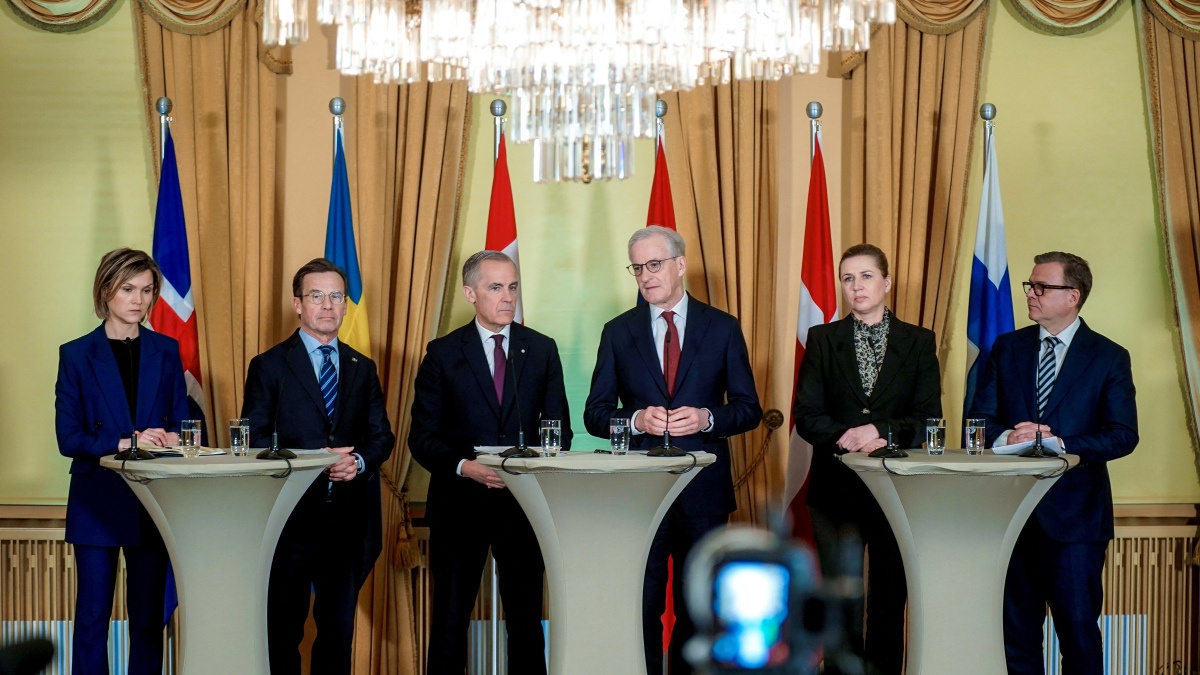
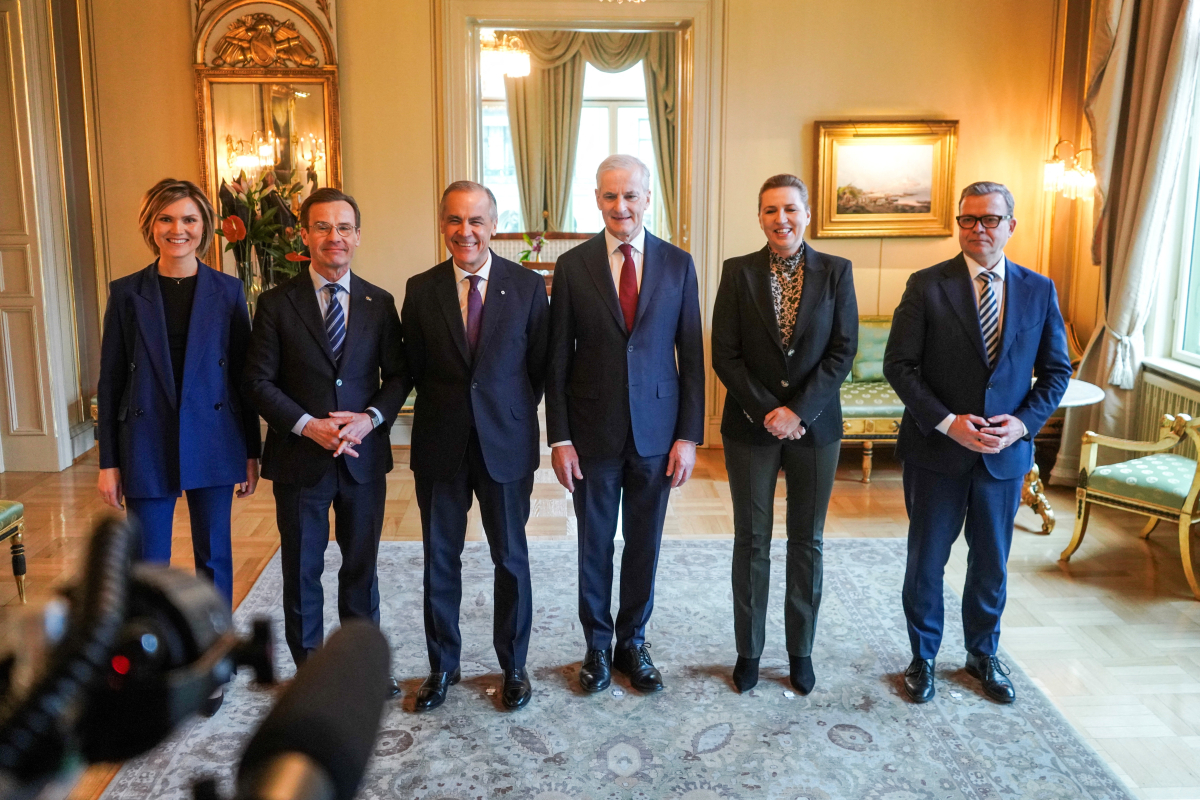
Canada and the five Nordic countries have agreed to deepen cooperation in military procurement and other areas, in the latest push by Canadian Prime Minister Mark Carney to build new global alliances.
Carney has sought closer ties with China and Middle Eastern countries as well as India and Europe as he tries to reduce his country's dependence on the U.S. and forge a trading order led by what he calls middle-power countries.
The push has found enthusiastic partners in Norway, Sweden, Denmark, Finland and Iceland.
Frederiksen: 'We have to build something new'
"The old world order is gone and will probably not come back," Danish Prime Minister Mette Frederiksen told reporters after a meeting of the six nations' premiers in Oslo.
"So we have to build something new and it has to be a world order that is built on the values that we represent," she said.
Frederiksen, who faces a tough re-election battle this month, praised Carney for his speech at the Davos World Economic Forum in January that called for what he called "middle powers" to join forces.
"People in Denmark- and I guess the same goes for the rest of the Nordic countries - have been talking about it; they have been reading your speech," she said.
Cooperation on defence procurement
In a joint statement, the countries said they aimed to work more closely together on defence procurement.
"We all agree that if we individually spend that money or we spend it in an uncoordinated way, it's not going to be value for taxpayers. It also will not protect our people as much as we should," Carney told reporters.
"We will still do a lot of procurement with the United States... but in all cases looking to procure much more in partnership," Carney said.
The group reiterated their support for Ukraine, international trade, building green economies and enhancing Arctic security.
All have territories in the polar region and have condemned U.S. President Donald Trump's push to take over Greenland, a Danish autonomous territory.
Norwegian Prime Minister Jonas Gahr Støre said the effort showed the middle powers coming up with concrete proposals for cooperation.
"This is not about building new institutions. This is about what Prime Minister Carney calls a variable geometry," he told Reuters.
"So ... in certain areas we go together, we deepen cooperation with different participants," he added, citing Australia, Japan and South Korea as other possible partners.












What is your opinion on this topic?
Leave the first comment