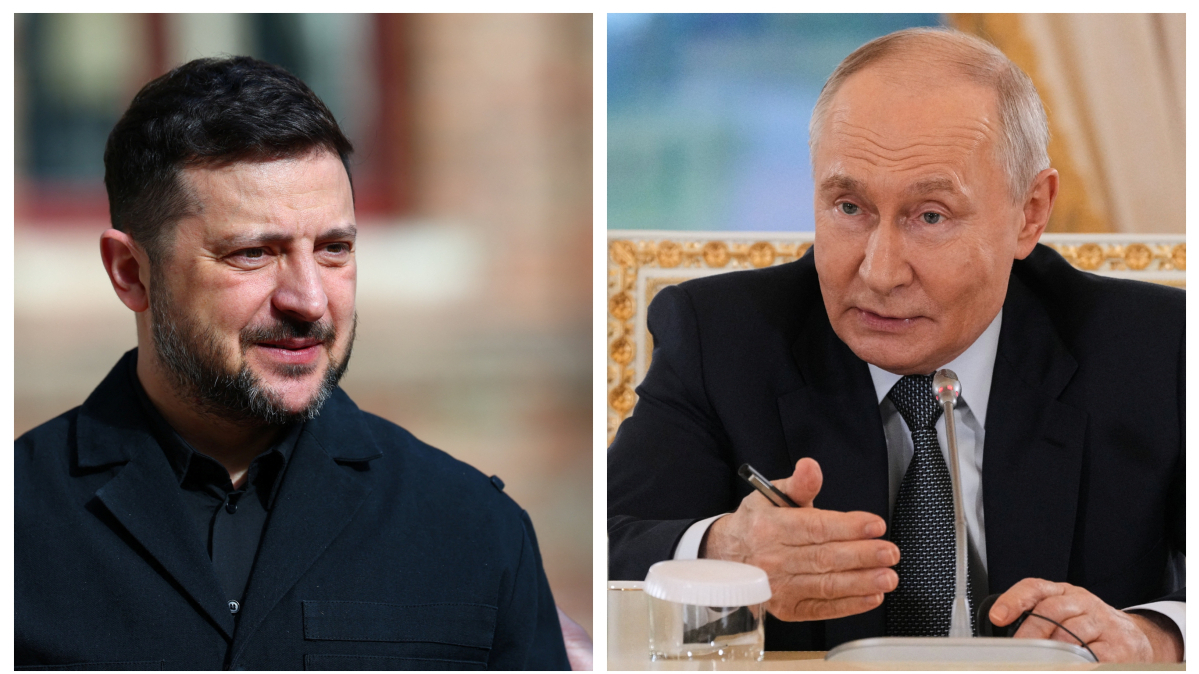
Ukrainian President Volodymyr Zelenskyy has publicly invited Russian President Vladimir Putin to meet for direct talks aimed at ending the war between their countries, saying Ukraine remains ready for peace but will continue fighting if no agreement can be reached.
In an open letter published on Thursday, Zelenskyy proposed a face-to-face meeting with Putin and outlined what he described as practical steps towards ending a conflict that is currently in its fifth year.
The letter was also shared with several countries, including the United States, according to the Ukrainian president's office.
Zelenskyy argued that many Russians had grown weary of the war and its consequences, including Ukrainian drone and missile strikes, rising inflation and fuel shortages.
Ceasefire first, then negotiations
The Ukrainian leader said any peace process should begin with a ceasefire along the front line, which he described as "the line from which diplomacy must begin".
Ukraine supports "a full ceasefire for the duration of the negotiations. This is standard practice," Zelenskyy said, adding that the United States had the ability to monitor such an arrangement.
He also suggested that the international community should not lose sight of the conflict while attention remains focused on tensions in the Middle East.
"With the United States focused on the conflict in Iran, it would be wrong to simply wait until the war in Europe returns to the centre of its attention," he wrote.
Proposal for peace talks
Zelenskyy proposed setting a clear date for a meeting and suggested that countries with a history of hosting peace negotiations, including Switzerland, Türkiye and several Arab nations, could provide a venue.
"Do not be afraid to take the path out of this war. That is the main thing that is required of you now," Zelenskyy wrote.
In one of the letter's strongest appeals, he called for direct engagement between the two leaders.
"Ukraine proposes ending this war through direct engagement between us - and you. I am proposing a meeting," he said.
Warning over ongoing conflict
At the same time, Zelenskyy made clear that Ukraine would continue to defend itself if no progress towards peace was made.
"If you do not personally come to the conclusion that it is time to end this war, Ukraine will continue fighting for its existence."
He also warned that a prolonged conflict could eventually weaken Putin's position at home.
"It is a fact of Russian history that you know well: when Russia grows tired, change comes."
Kremlin reviews proposal
The Kremlin said it had seen the letter and that Putin would be briefed on its contents.
Ukrainian Foreign Minister Andrii Sybiha said the proposal would also be delivered through official diplomatic channels.
Writing on X, Sybiha described the letter as "a serious and meaningful proposal to end the war" that contains "clear, doable steps and an invitation for a personal meeting".
"We expect a meaningful response to this proposal. It's time to end this war. It's time to choose peace," he added.
There was no immediate response from Putin, but the publication of the letter marks one of Zelenskyy's most direct public appeals to the Russian leader since the conflict began.









What is your opinion on this topic?
Leave the first comment