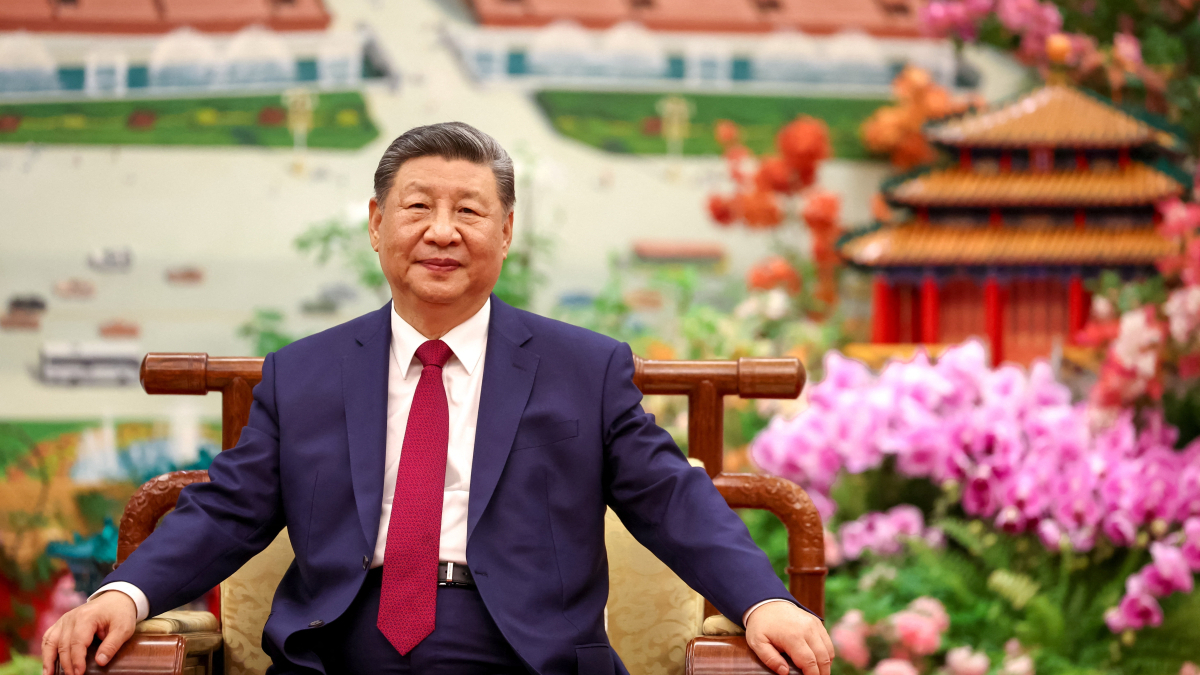
Chinese President Xi Jinping will visit North Korea on 8-9 June, marking his first trip to the country in nearly seven years as Beijing seeks to strengthen relations with its long-time ally.
The visit, announced by China's state news agency Xinhua on Friday (5 June), comes at a time of shifting regional dynamics and follows separate summits Xi held in Beijing last month with U.S. President Donald Trump and Russian President Vladimir Putin.
North Korean state media said Xi would travel to Pyongyang at the invitation of leader Kim Jong Un.
The trip reflects Beijing's efforts to re-establish its influence in North Korea after years of limited contact during the COVID-19 pandemic.
Relations between Pyongyang and Moscow have grown significantly in recent years, with North Korea supplying troops and weapons to support Russia's war in Ukraine.
"The message implicit from the Chinese side is ... we are still the principal actor when it comes to North Korea," said John Delury, a senior fellow at the Asia Society.
"One of the audiences is Russia," he added.
Kim attended a major military parade in Beijing last September, travelling on his trademark green armoured train, in what was seen as a sign of improving ties between the two neighbours.
Transport links reopen
Recent months have also seen the gradual restoration of links between the two countries.
Passenger train services between Beijing and Pyongyang resumed in March after a six-year suspension, while Air China later restarted flights between the capitals.
However, travel remains restricted, with bookings largely limited to business travellers and exchange students. Chinese tourists are still not permitted to visit North Korea.
First overseas trip of the year
The visit will be Xi's first foreign trip of 2026 and underlines the importance Beijing places on developments on the Korean Peninsula.
The Chinese leader, now 72, has travelled abroad less frequently in recent years. His last overseas visit came in October when he travelled to South Korea, where he also met Trump.
"At the symbolic level it is important for Xi to keep tabs on what's going on in Pyongyang," Delury said.
He added that Xi visiting both North and South Korea within a year would be "a big win" for the peninsula.
"There's a kind of symmetry that the Chinese like to keep up" regarding the two Koreas, he said.
Since becoming China's leader in 2012, Xi has visited North Korea once and South Korea twice. He also travelled to Pyongyang in 2008 while serving as China's vice president.
Nuclear ambitions in focus
The visit comes as North Korea continues to expand its military capabilities.
Earlier this week, state media reported that Kim had visited a newly operational nuclear material production facility and called for an "exponential" increase in the country's atomic arsenal.
Some analysts have linked the timing of that visit to Xi's upcoming trip. Before travelling to Beijing last September, Kim also inspected plans for a new intercontinental ballistic missile known as the Hwasong-20.
The meeting between Xi and Kim is expected to be closely watched for signs of how China intends to balance its relationship with North Korea as Pyongyang deepens ties with Russia and regional security concerns continue to grow.



















What is your opinion on this topic?
Leave the first comment