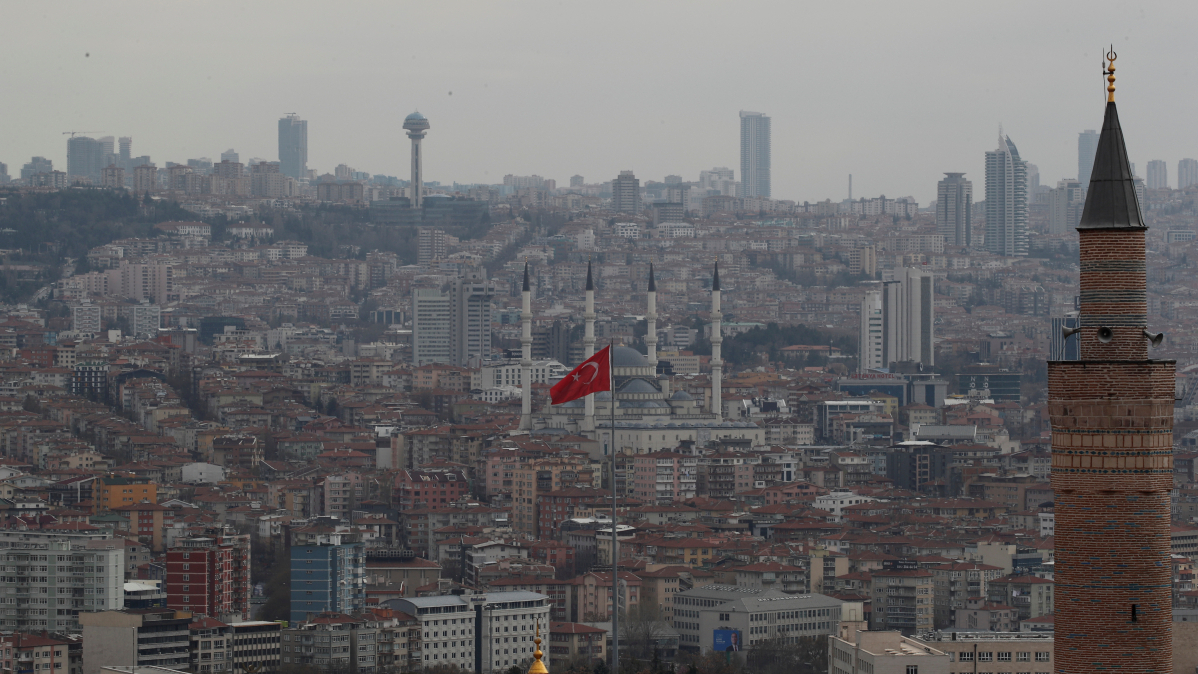
Türkiye, Egypt, and Qatar are trying to organise a meeting in Ankara between White House Special Envoy Steve Witkoff and top Iranian officials, according to reports in the U.S. and Turkish media.
All three countries previously worked with the U.S. administration to secure a shaky ceasefire in the Gaza Strip, and are now reportedly trying to facilitate talks aimed at averting another conflict between the United States and Iran.
The reported diplomatic push comes amid a massive U.S. military build-up in the region that has prompted fears of an imminent attack on Iran and Iranian reprisals against U.S. military targets.
Over the weekend, Iranian President Masoud Pezeshkian spoke by phone with Abdel Fattah al-Sisi, his Egyptian counterpart, to discuss ways of resolving the standoff diplomatically.
Hope for negotiations
During the call, al-Sisi reiterated Cairo’s opposition to further military escalation, while also affirming his country’s hope of bringing the two adversaries back to the negotiating table, according to Egyptian press reports.
Last month, al-Sisi stressed the importance of finding a diplomatic solution at a meeting with U.S. President Donald Trump on the sidelines of the World Economic Forum in Davos, Switzerland.
Last Friday, Pezeshkian also spoke by phone with Turkish President Recep Tayyip Erdogan, who expressed Ankara’s readiness to facilitate talks between Tehran and Washington.
On the same day, Iranian Foreign Minister Abbas Araghchi visited Istanbul for talks with his Turkish counterpart, Hakan Fidan, to discuss ways of averting another regional conflict.
Opposition to military force
At a joint press conference, Fidan said Ankara was ready to support a diplomatic solution, while also stressing Türkiye’s opposition to any foreign military intervention in Iran.
Araghchi, for his part, said Tehran was prepared to resume negotiations with Washington over its nuclear programme, but rejected the notion of holding talks while under the threat of a U.S. attack.
He also said Tehran’s ballistic missile capability, unlike its nuclear programme, would not be subject to negotiations.












What is your opinion on this topic?
Leave the first comment