NATO air-defence systems in the Eastern Mediterranean “neutralised” a third ballistic missile fired towards Türkiye, the Turkish Defence Ministry said on Friday.
In a statement, the ministry said “all necessary measures” were being taken “against any threat directed at our country’s territory and airspace.”
In a presumable reference to Iran, it added: “Consultations are being conducted with the relevant country to clarify all aspects of the incident.”
In a statement released shortly afterwards, a NATO spokesperson said the alliance “remains vigilant and stands firm in its defence of all allies”.
It was the third ballistic missile to be fired at NATO member Türkiye - and successfully intercepted - within the past nine days.
Following two previous interceptions on 4 March and 9 March, the Iranian military denied that its forces had launched any munitions towards Turkish territory or airspace.
Hours before the latest incident, sirens were heard at İncirlik Air Base in Türkiye’s southern Adana province, which hosts a contingent of U.S. military personnel, according to Turkish state media.
Soon afterwards, video footage began circulating online that appeared to show a missile being shot down over the skies of Adana.
As of publication, no official statements had been issued regarding the footage.
However, some local media outlets have claimed the video is fake, asserting that no missile activity in the area had been reported.
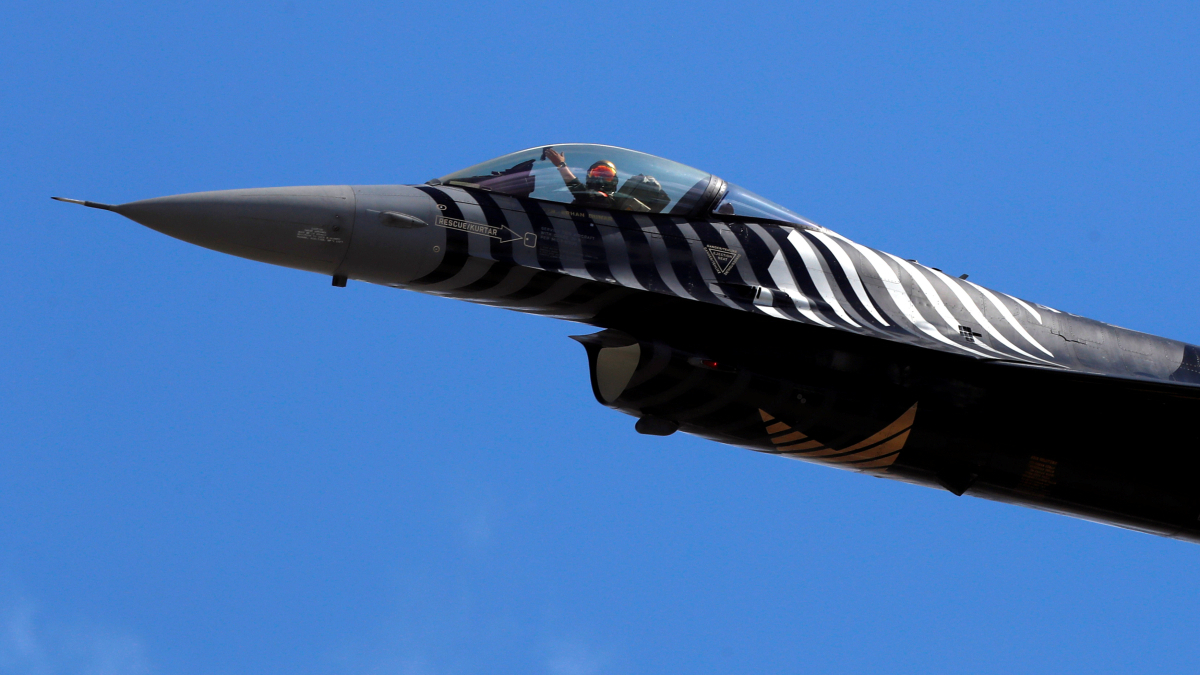
In a statement issued on Thursday, the Turkish Defence Ministry stressed that İncirlik is a Turkish-owned and operated military base hosting Turkish F-16 fighter jets, tanker aircraft and unmanned aerial vehicles.
“The presence of American soldiers there does not mean it is an American base,” the statement read. “Spanish, Polish and Qatari military personnel are also stationed there.”
Türkiye prepared for ‘any scenario’
On Thursday, Turkish Foreign Minister Hakan Fidan said Türkiye was making “intensive efforts” to end the ongoing regional war but was nevertheless prepared for “any scenario.”
Speaking alongside his German counterpart, Fidan also voiced Ankara’s staunch opposition to any attempt to “provoke civil war in Iran and fuel conflicts along ethnic or religious lines”.
He described the Israeli-U.S. attack on Iran - which triggered the war almost two weeks ago - as “unprovoked, unjust and unlawful.”
At the same time, he said Iranian strikes on neighbouring countries, especially the Gulf Arab states, were “equally wrong.”
Fidan said Iran’s territorial integrity should be respected, asserting that “goals like regime change should not be pursued”.
He also decried continued Israeli attacks on Lebanon, the collapse of which, the diplomat warned, “would deeply affect the entire region, especially neighbouring countries.”















What is your opinion on this topic?
Leave the first comment