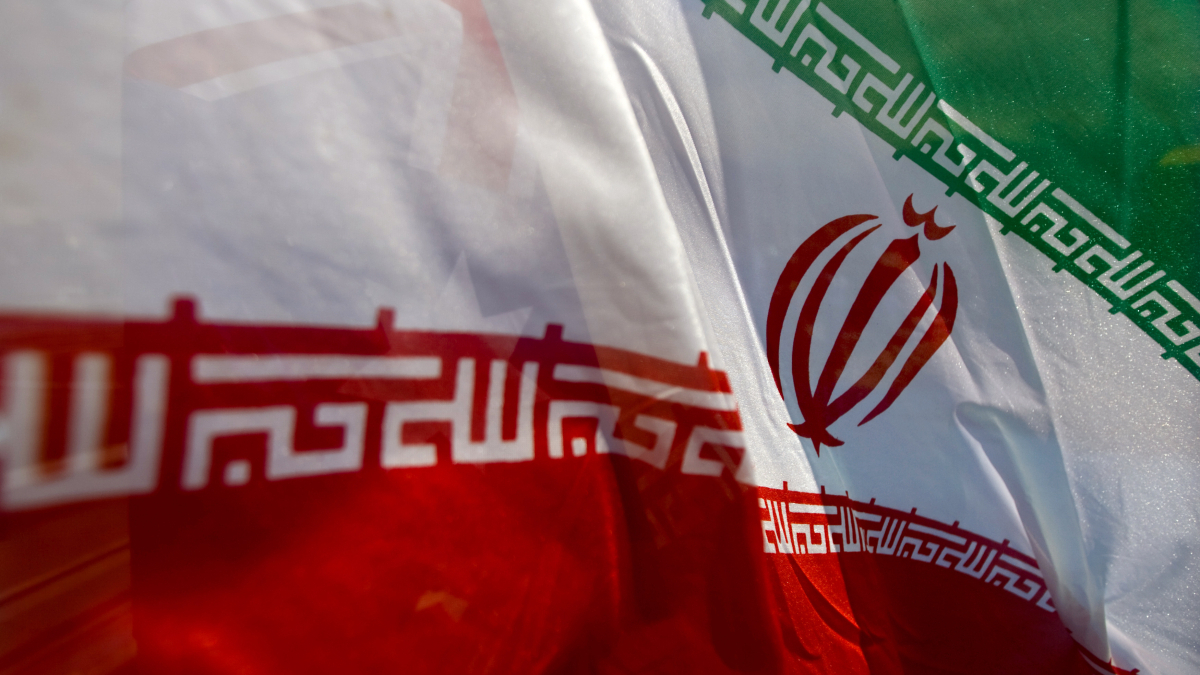
Any U.S. military strike on Iran would almost certainly trigger cross-border retaliation and could ignite a wider regional war, according to political analyst James M. Dorsey.
Speaking to AnewZ, Dorsey said both Washington and Tehran are trying to avoid war, but that their public positions and political constraints are pushing them closer to confrontation. He said Washington and Tehran are effectively “boxed into a corner”, even as both signal a preference for negotiations rather than military action.
“I think it’s clear that both US President Trump and Iran would like to avoid a military confrontation. The problem is that they’ve both, in many ways, boxed themselves into a corner from which it’s going to be very difficult to escape with some sort of face-saving solution for both sides.”
However, he warned that the structural realities of any conflict would make escalation difficult to contain and that, because Tehran has few internal targets to hit, it would instead respond against US and allied positions across the Middle East.
“There are no Israeli or US targets inside Iran, so by definition Iranian retaliatory strikes would have to be cross-border, presumably in Israel and potentially US military facilities in the Gulf and maybe even Gulf infrastructure.”
Nuclear issue remains the only viable entry point
While Washington has raised a broad list of demands, Dorsey said only the nuclear file offers realistic scope for compromise.
“The United States has several issues it wants to resolve ... nuclear, ballistic missiles, the crackdown on protesters, even though the protests for now have subsided and finally Iranian support for its non-state allies elsewhere in the Middle East.”
However, he stressed that Iran’s missile programme is not negotiable for any government in Tehran.
“There is a face-saving solution to be found, presumably on nuclear. But an issue like ballistic missiles is something that no Iranian government, whether Islamic revolutionary or post-revolutionary, would be able to accept. Ballistic missiles are core in the absence of any credible air force or navy.”
Against this backdrop, Iran has signalled readiness to explore diplomacy. Iranian President Masoud Pezeshkian has ordered the start of nuclear talks with the United States, according to Iranian media, while sources in Tehran say negotiations involving senior officials from both countries could begin in the coming days.
Hardening rhetoric undermines diplomacy
The recent exchange of terrorist designations between Iran and the European Union, Dorsey said, is reinforcing confrontation rather than encouraging dialogue.
“It doesn’t really contribute. The problem here is that you’ve had belligerent language, both from the United States and from Iran and that belligerent language is mutually reinforcing rather than conducive to creating an environment in which a negotiated way out could be found.”
Unrest inside Iran driven by economic collapse
Dorsey said Iran’s recent protests stem largely from economic hardship, not foreign manipulation.
“There’s no doubt that there is widespread dissatisfaction in Iran, accelerated by the radical economic downturn that we’ve seen in recent months, the collapse of the Iranian currency, and mushrooming or spiralling inflation.”
“These protests were genuine, and Iran has a history - the Islamic Republic has a history since 1979 - of protests over various issues.”
He added that even if provocations occurred, they do not change the underlying nature of the unrest.
“That does not detract from the genuineness of these protests.”
Regional actors face direct exposure
Some regional states are quietly trying to lower tensions by urging a gradual approach.
“Türkiye is trying to do that alongside countries like Qatar. The Turkish foreign minister, in a recent interview, suggested to the Americans that rather than trying to resolve all issues at once, they take it issue by issue, starting with the nuclear problem.”
The scale of any conflict would depend heavily on the nature of Washington’s actions.
“Is it a one-time strike? Is it a sustained military campaign? What is the United States going to target?”











What is your opinion on this topic?
Leave the first comment