The AnewZ Opinion section provides a platform for independent voices to share expert perspectives on global and regional issues. The views expressed are solely those of the authors and do not represent the official position of AnewZ
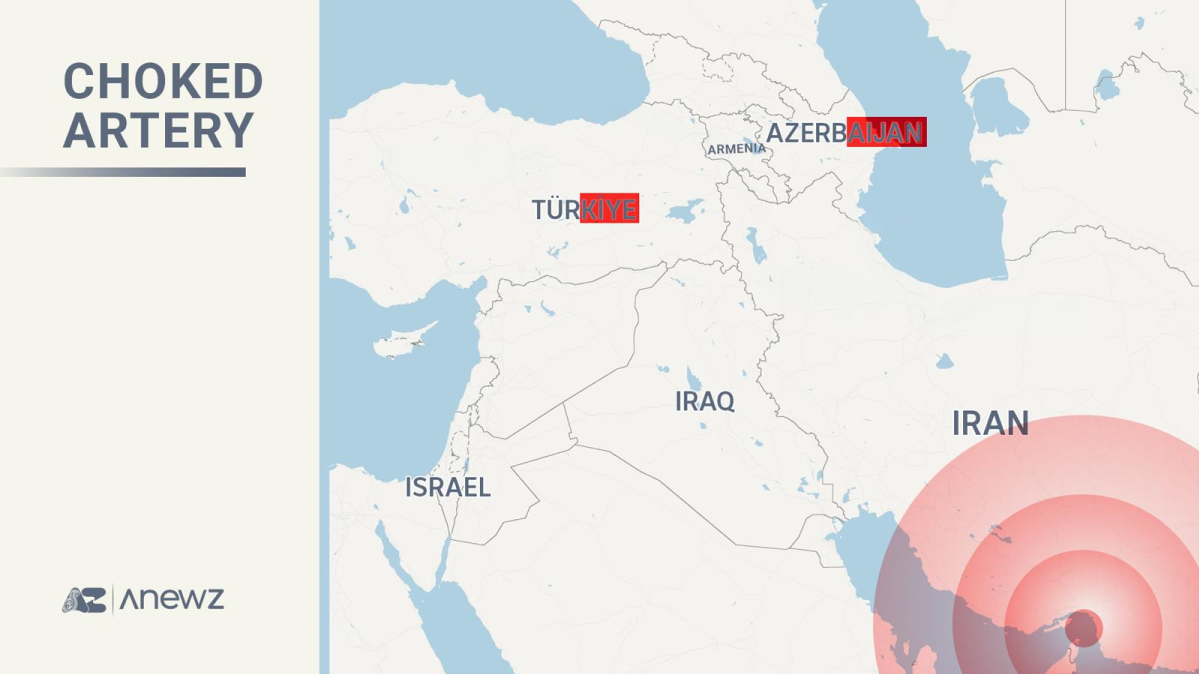
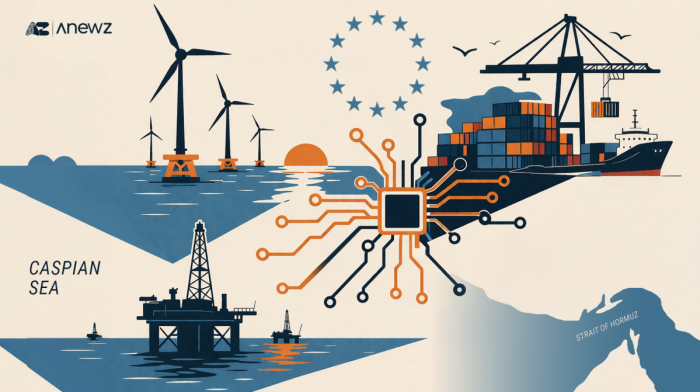
Some geographies are small on the map yet immense in history. The Strait of Hormuz is one. About a quarter of global oil trade and a fifth of LNG flows pass through this narrow corridor - around 20 million barrels per day sustaining the global system.
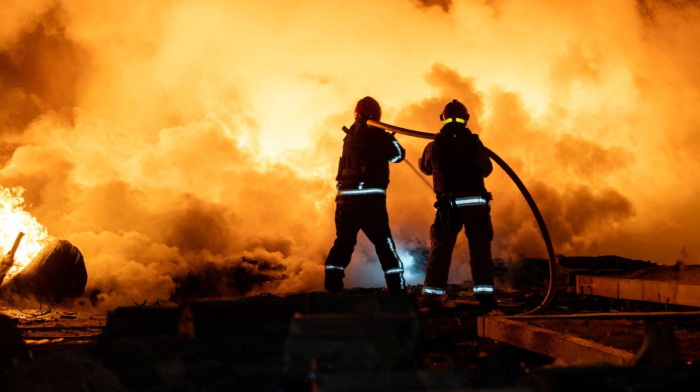
Recent tensions, strikes linked to Iran, regional flare-ups and cycles of retaliation have delivered a clear message: Hormuz is no longer a guaranteed passage. Ceasefires may come and go. Diplomacy can be revived. Yet systems have memory. Once risk is revealed, it does not disappear; it becomes embedded.
New Era: Not an energy crisis, but a flow crisis
For decades, energy security was framed around reserves - who has how much, who can produce more. That lens is now insufficient.
What matters is not possession, but uninterrupted flow.
Disrupt the sea lane and the consequences cascade: shipping halts, insurance premiums spike, trade falters and prices overshoot. The system does not adjust smoothly; it convulses. Energy geopolitics has therefore migrated from geology to logistics - routes, corridors and redundancy.
Gulf strategies: Quiet diversification, limited relief
Gulf producers understood this earlier than most. Saudi Aramco has expanded east–west pipelines to move crude to the Red Sea, while the Abu Dhabi National Oil Company has built a corridor to Fujairah, enabling exports to bypass Hormuz.
These are significant, even indispensable, steps. Yet they are not a solution. Their combined capacity covers only a fraction of Hormuz volumes. They are best understood as shock absorbers, not substitutes - mechanisms that soften a blow rather than prevent it.
Eastern Mediterranean options: Political, yet inevitable
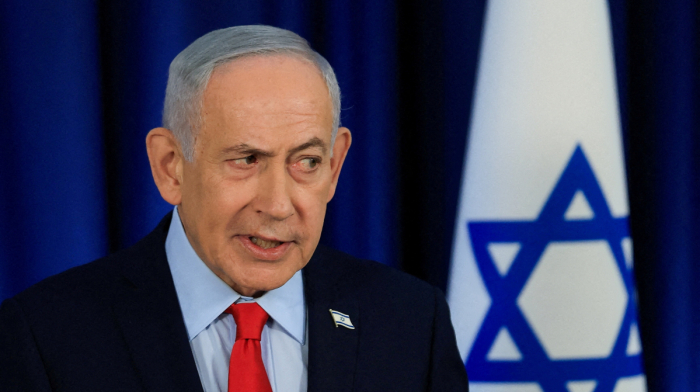
Israel’s ideas - linking the Red Sea to the Mediterranean, routing gas via Egypt’s LNG plants, advancing Eastern Mediterranean exports - remain politically sensitive and commercially contested. But the direction is unmistakable.
Energy flows can no longer be hostage to a single chokepoint.
Iraq’s corridor dilemma: The Türkiye Gate
For Iraq, the most realistic outlet beyond Hormuz remains a northern route to the Mediterranean via Türkiye. The Kirkuk–Ceyhan line is more than infrastructure; it is a geopolitical exit.
Given Iraq’s production profile, expanding and modernising this corridor is no longer optional. It is structural.
Azerbaijan angle: A proven corridor that bypasses Hormuz
If there is one functioning example of diversification that already works, it is Azerbaijan. Through the Baku–Tbilisi–Ceyhan pipeline, Azerbaijani crude reaches the Mediterranean without ever touching Hormuz. Via the Trans-Anatolian Natural Gas Pipeline, gas flows onward to Europe through the Southern Gas Corridor.
This is not theory. It is operational reality.
Azerbaijan demonstrates three things. First, that land-based corridors anchored in stable partnerships can deliver strategic resilience. Second, that scale can be built incrementally through interconnected systems. Third, that Türkiye is not merely a transit geography, but the central spine of a wider Eurasian energy architecture.
In a world searching for exits from Hormuz, the Caspian–Türkiye–Europe axis is already one of the few routes that is both politically viable and technically proven.
Türkiye: Transit country or system architect?
Türkiye’s advantage lies not in a single pipeline but in the architecture of a network.
Caspian flows, potential Middle Eastern volumes, Eastern Mediterranean prospects and LNG infrastructure can converge on Turkish territory and connect seamlessly to European markets. This is not a corridor; it is a platform.
With the right strategy, Türkiye can evolve from a country that hosts pipelines into one that orchestrates flows - balancing sources, routes and markets in a more volatile world.
No single alternative will replace Hormuz
No credible scenario suggests that Hormuz can be replaced outright. Even in the most optimistic case, alternative routes collectively offset only a portion of the volumes at risk.
But this is precisely the point. The objective is not total substitution. It is to prevent systemic collapse in moments of crisis. Redundancy does not eliminate risk; it manages it.
Toward a new regime for Hormuz?
A more fundamental question now emerges: can Hormuz, under its current conditions, remain sustainable?
If the strait continues to be exposed to recurring geopolitical shocks, the global economy will face repeated episodes of acute vulnerability. That makes a search for an international framework increasingly compelling - one that could stabilise passage and reduce the weaponisation of the chokepoint.
The precedent is clear. The Montreux Convention established rules for transit through the Turkish Straits, balancing sovereignty with international passage. A comparable regime for Hormuz would be complex, politically fraught - and yet, perhaps, necessary.
Absent such a framework, today’s energy security crisis risks becoming a permanent structural condition.
New energy map: From single artery to multiple systems
The global system is shifting away from dependence on a single artery towards a mesh of corridors, regional hubs and alternative logistics.
This system will be more expensive. It will be harder to coordinate. But it will also be more resilient - better able to absorb shocks and maintain continuity.
Inevitable Choice and Türkiye’s moment
The world cannot abandon Hormuz. But it can no longer afford to depend on it blindly.
Two imperatives therefore stand side by side: to pursue a more stable international framework for Hormuz, and to accelerate alternative corridors - including those anchored in Türkiye and extending through Azerbaijan - without delay.
This is not a policy preference. It is a strategic necessity. Because the lesson is now unmistakable: energy ownership is not enough. If you cannot move it securely, you do not truly control it.
In this unsettled geometry - stretching from the Black Sea to the Eastern Mediterranean, from the Caspian to the Gulf - Türkiye faces a historic choice: To stand at the centre of the new system, shaping flows and outcomes, or to remain a participant in a game designed by others.










What is your opinion on this topic?
Leave the first comment