The AnewZ Opinion section provides a platform for independent voices to share expert perspectives on global and regional issues. The views expressed are solely those of the authors and do not represent the official position of AnewZ
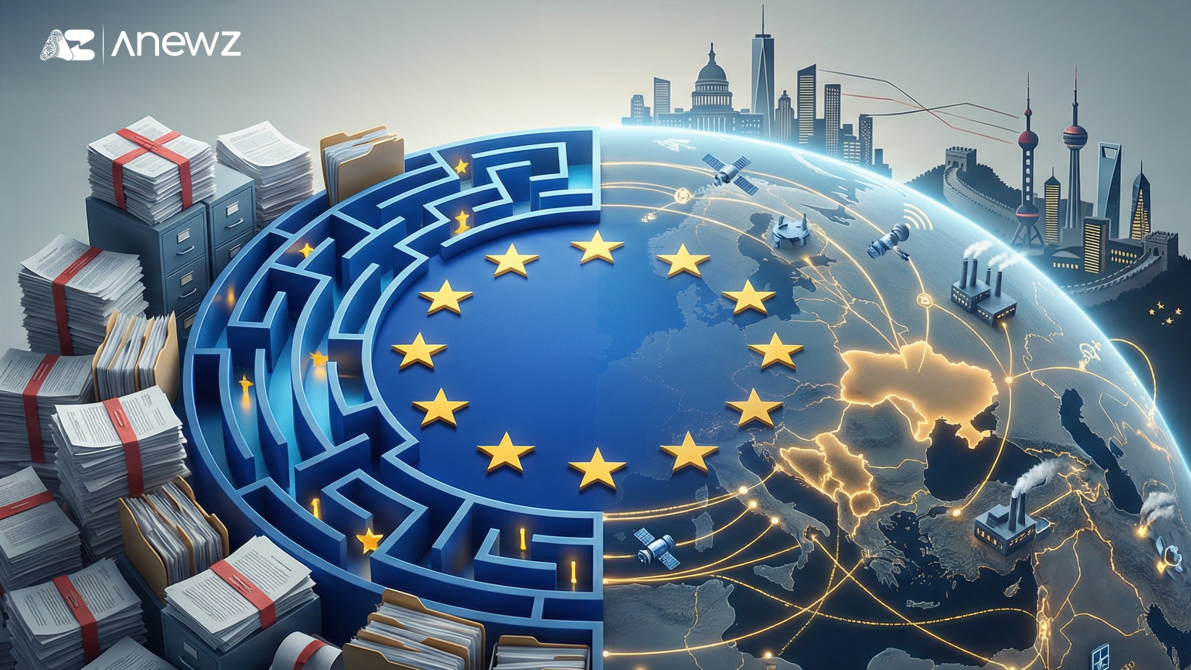
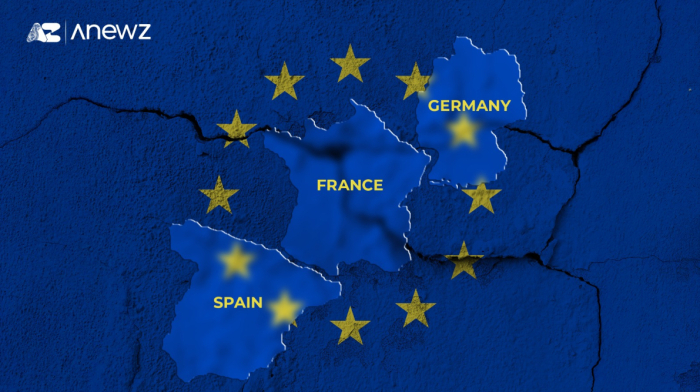
Despite its economic might, the European Union is often labelled a “geopolitical dwarf.” The only region where it acts as an indisputable player, able to assert its will with relative ease, is the Western Balkans, along with parts of Eastern Europe.
But does the 27-nation bloc have the capacity to strengthen its influence in the global arena?
Over the decades, Eurosceptics and outspoken critics of the EU have consistently accused Brussels of turning the EU into a bureaucratic, overregulated entity. EU leaders have rarely paid attention to such accusations, instead focusing on implementing their agendas. Some authors have even described the narrative of the EU’s overregulation as a “myth.”
Things, however, began to change after the United States - considered to be the world’s sole superpower - started criticising Brussels not only for its regulatory approach to artificial intelligence (AI) - a point emphasised by U.S. Vice President J.D. Vance in February 2025 - but also across a wide range of other issues.
When Elon Musk, in December 2025, framed the EU’s €120 million ($140 million) penalty on X as an “attack on free speech and an example of overregulation,” it was a clear sign that significant parts of the American establishment do not approve Brussels’ increasingly heavy-handed regulatory approach. Despite the public spat between EU officials and the owner of X, the 27-nation bloc’s leaders seem to have concluded that fundamental change was necessary.
Ahead of summits of EU political and business leaders on 11 February, European Commission President Ursula von der Leyen said that the European Union “must simplify its regulations to make the bloc more competitive against the likes of the United States and China.”
At the same time, German Chancellor Friedrich Merz called on the EU to "deregulate every sector.” But how realistic is that, given that the European Union has long positioned itself as a champion of regulation and bureaucracy?
China's advantage
In Merz’s view, while China builds the world’s largest solar farms within a few months, in the EU, it takes years just for the project to get approved.
“Therefore, I propose to implement a fundamental principle in most permitting processes. Any project that is not treated within a few weeks or months will be regarded approved automatically,” German Chancellor stressed on 11 February.
Such a move is undoubtedly a cause for concern among conservative forces in Europe, as it affects the very decision-making process and undermines member states’ sovereignty. But from Brussel’s perspective, it is unacceptable that countries such as Hungary and Slovakia - often acting as key partners for Beijing and Washington within the European Union - veto EU’s decisions.
That is why, in the coming months and years, EU leaders are expected to look for ways to work more efficiently, which could eventually lead to reforms that reduce national veto powers and speed up decision-making across the bloc. However, the fact that the tiny Balkan nation of Montenegro, the EU candidate since 2010, rejected proposals for new members to give up their veto power upon joining the bloc, signals that it will not be easy for Brussels to persuade Washington-backed Budapest and Bratislava to follow suit.
The EU will, therefore, not only have a hard time reforming itself, but may also struggle to catch up with China in terms of economic and technological competitiveness. Its leaders have repeatedly warned that China’s rapid industrial rise and state-backed investment model are reshaping global competition, urging the European Union to “cut dependencies, speed up decision-making, and defend its industry without sliding into isolationism.”
All of this will be easier said than done, as the centre of economic gravity is rapidly shifting to Asia.
Even in seemingly peripheral spheres, such as tourism, it has become evident that Europe no longer plays a key global role. During the recently held ASEAN Tourism Forum in the Philippines, the South East Asian group foreign ministers adopted a 32-point joint statement not mentioning Europe even once. Also, the vast majority of ASEAN members view tourists from the region, as well as from China, India, and even Russia, as their major markets, while Europe remains of the periphery of their interest.
In Central Asia, on the other hand, the EU is actively struggling to expand its role across all spheres, but it faces strong competition - not from Russia, whose influence is rapidly declining, but from China. Given its geographic proximity, the People’s Republic is in a far better position to strengthen its economic foothold in the strategically important region, which means that the EU’s presence in Central Asia is likely to remain limited.
Reliance on U.S.
Thus, at this point, the only region where the EU is likely to remain the major player is the Western Balkans, where the countries’ economies are heavily dependent on the European Union’s market. In parallel with this, in Ukraine - another EU candidate - the bloc is gradually replacing the U.S. as a major backer, although politically, Washington, rather than Brussels, seems to still have the final say.
More importantly, it is the United States that clearly benefits from the ongoing situation in which the EU - still unable to produce enough weapons itself - purchases arms from the American military-industrial complex and then provides them to Kyiv. Although EU leaders are anything but happy about this, it does not mean that the European Union and the United States are rivals.
Regardless of all differences between Brussels and Washington, European NATO members continue to conduct joint military exercises with U.S. forces, and host American military bases on their soil. Thus, any talk of a EU-U.S, “divorce” is premature.
For the foreseeable future, the EU is likely to play the role of Washington’s “junior partner” while trying to strengthen its position on the global stage - a task that will be anything but easy.











What is your opinion on this topic?
Leave the first comment