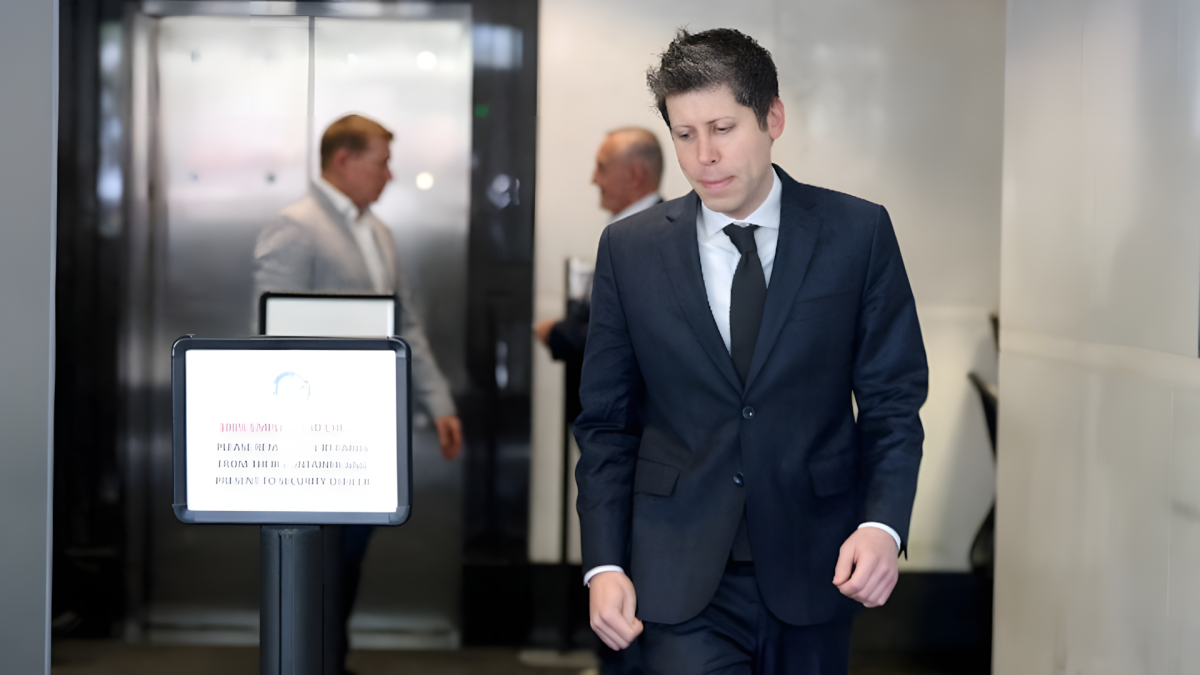
A high-powered lawyer representing Elon Musk attacked the personal and professional credibility of OpenAI CEO Sam Altman on Thursday, as a landmark federal trial in California nears its conclusion.
The jury will have to decide whether to hold the ChatGPT maker and its leadership legally and financially responsible for allegedly transforming a humanitarian nonprofit organisation into a vehicle designed to enrich themselves and their corporate partners.
OpenAI's legal team fought back. They claimed the world's richest person waited far too long to file his lawsuit that claimed OpenAI breached its founding agreement to build safe artificial intelligence (AI) to benefit humanity. Furthermore, and couldn't claim he was essential to its success.
"Mr. Musk may have the Midas touch in some areas, but not in AI," stated William Savitt, a lead lawyer for OpenAI. "To succeed in AI, as it turns out, all Mr. Musk can do is come to court.”
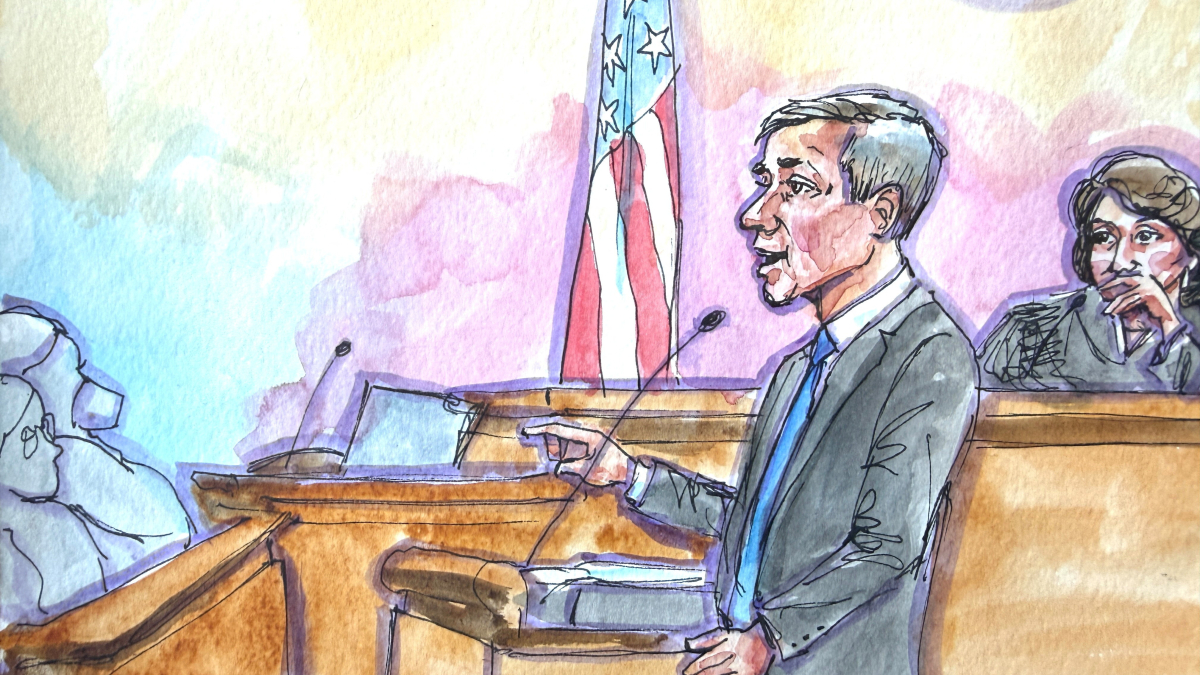
These claims were delivered during the final closing arguments of a weeks-long trial held in the Oakland, California, federal court.
Musk is formally suing OpenAI and Altman for breach of charitable trust and unjust enrichment. He has accused them of manipulating him into donating $38 million to the initial project, and going behind his back by attaching a highly lucrative, for-profit business entity to the original nonprofit structure.
He also alleges this was done by accepting tens of billions of dollars from Microsoft and other venture capital investors to rapidly scale the business, abandoning its original open-source ethos.
Elon Musk is seeking approximately $150 billion in financial damages from OpenAI and Microsoft, money he stipulates must be paid directly back to OpenAI's original nonprofit arm. Furthermore, he is demanding that both Altman and OpenAI President Greg Brockman be permanently removed from their executive roles.
Musk's lawyer faults 'arrogance' and highlights 'liar' testimonies
In a fiery closing argument, Musk's lawyer, Steven Molo, told the jurors that five separate witnesses, including Musk himself, former OpenAI board members, and notably, former OpenAI Chief Scientist Ilya Sutskever, had all testified under oath that Sam Altman was a liar.
Molo also noted during Tuesday's cross-examination that Altman did not answer "yes" unequivocally when asked point-blank if he was completely trustworthy and did not mislead people in his business dealings.
"Sam Altman's credibility is directly at issue in this case," Molo told the jury. "If you don't believe him, they cannot win."
Molo accused OpenAI of wrongfully attempting to enrich venture capitalists and corporate insiders at the nonprofit's expense, whilst failing to prioritise the safety of AI development. He also directly challenged Greg Brockman's stated goals for the business, citing Brockman's own recent statement that his personal equity stake in OpenAI was now worth nearly $30 billion.
"The arrogance, the lack of sensitivity, the failure to account for just common decency is really, really abhorrent," Molo argued.
Musk's legal team also took aim at Microsoft, which invested an initial $1 billion in OpenAI in 2019, followed by a staggering $10 billion injection in 2023. They accused the software giant of actively aiding and abetting OpenAI's wrongful conduct to secure a monopoly on the technology.
"Microsoft was aware of what OpenAI was doing every step of the way," Molo asserted.
OpenAI claims Musk wanted total control and suffers from 'selective amnesia'
Sarah Eddy, another prominent lawyer representing the OpenAI defendants, launched a blistering counter-attack, accusing Musk and his legal team of resorting to "sound bites and irrelevant false accusations" to mask a weak legal case.
Eddy detailed that by 2017, absolutely everyone associated with OpenAI, including Musk, who was then still sitting on its board of directors, knew the organisation required vastly more capital to fulfil its computing mission than it could ever hope to raise purely as a charitable nonprofit.
"Mr. Musk wanted to turn OpenAI into a for-profit company that he could control," she argued to the jury. "But the other founders refused to turn the keys of AGI (artificial general intelligence) over to one person, let alone Elon Musk."
She also said if Musk truly believed AI should serve humanity, he would not have pushed to fold OpenAI into his electric car company Tesla or made his rival xAI a for-profit company.
Musk had a three-year statute of limitations to sue and OpenAI's lawyers said his August 2024 lawsuit came too late because he knew several years earlier about OpenAI's growth plans.
Eddy expressed disbelief at Musk's testimony claiming he did not read a crucial four-page term sheet in 2018 that discussed OpenAI's plan to seek outside corporate investments.
"One of the most sophisticated businessmen in the history of the world" wouldn't have "stuck his head in the sand," Eddy mocked.
Savitt went further, explicitly accusing Musk of feigning "selective amnesia."
Microsoft's lawyer, Russell Cohen, said in his closing statement that Microsoft was not involved in the key governance events of the case and acted as "a responsible partner at every step."
Both Altman and Brockman were present in the courtroom for the closing arguments. Musk was absent, as he is currently accompanying U.S. President Donald Trump on a state visit to China.
Public concern about AI and a trillion-dollar IPO
The trial concludes at a moment of public anxiety regarding AI as it penetrates every facet of modern society. Consumers and corporations alike now use AI for a myriad of purposes, from facial recognition and financial advice to journalism and medical diagnoses, whilst simultaneously grappling with the threat of harmful, AI-generated deepfakes. Surveys show many people express deep distrust of the technology and worry it could permanently displace them from the workforce.
The nine-person jury is expected to begin deliberations on Monday (18 May).
U.S. District Judge Yvonne Gonzalez Rogers and the lawyers will return to court that same day to discuss how OpenAI should be legally restructured and exactly what damages should be paid if Musk wins. There will be no remedies applied if Musk loses.
OpenAI is currently preparing for a possible initial public offering (IPO) that financial analysts suggest could value the business at $1 trillion.
Meanwhile, Musk's own AI venture, xAI, is now officially part of his space and rocket company SpaceX, which is also actively preparing for a potential blockbuster IPO of its own in the near future.
Read more:

















What is your opinion on this topic?
Leave the first comment