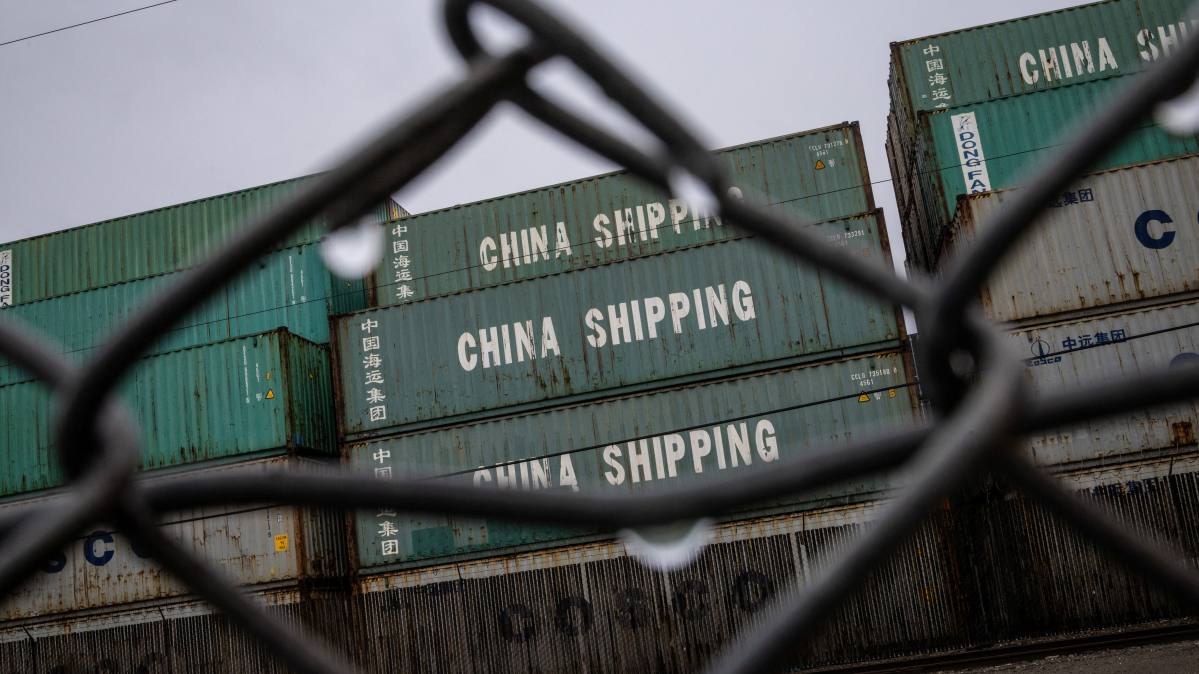
China says it's making a "full assessment" of the U.S. Supreme Court's tariff ruling and urged Washington to lift "relevant unilateral tariff measures" on its trading partners, the Chinese commerce ministry said in a statement on Monday (23 February).
"U.S. unilateral tariffs ... violate international trade rules and U.S. domestic law, and are not in the interests of any party," the Chinese ministry added.
The ministry said it noticed the U.S. planned to maintain tariffs on trading partners through alternative means including trade investigations.
"China will continue to pay close attention to this and firmly safeguard its interests," the ministry said.
Meanwhile, Hong Kong stocks jumped on Monday, led by tech and mainland shares listed in the city, after the U.S. Supreme Court ruling.
China should see the largest tariff reduction as it faces the highest tariff rates at the outset, declining to 24% from 32%, according to analysts at Morgan Stanley.
President Trump will travel to China from 31 March to 2 April for a highly anticipated meeting between the leaders of the world's two biggest economies.
The developments come as the Supreme Court ruled 6-3, Friday (20 February), that President Trump had exceeded his authority in imposing broad tariffs under an economic emergency law.
Within hours, President Trump announced a temporary 10% tariff on almost all imports, which he then raised to 15% on Saturday.
Trump's planned new levies are grounded in a separate but untested law, known as Section 122, that allows tariffs up to 15% but requires congressional approval to extend them after 150 days. No president has previously invoked Section 122, and its use could lead to further legal challenges.
Meanwhile, the U.S. Customs and Border Protection agency said it will halt collections of tariffs imposed under the International Emergency Economic Powers Act (IEEPA) at 12:01 a.m. EST (0501 GMT) on Tuesday, more than three days after the U.S. Supreme Court declared the duties illegal.
The IEEPA tariff collection halt coincides with Trump's imposition of a new, 15% global tariff under a different legal authority to replace the ones struck down by the Supreme Court on Friday.












What is your opinion on this topic?
Leave the first comment