President Donald Trump said on Saturday (21 February) that he will raise temporary tariffs on nearly all U.S. imports from 10% to 15%, the maximum allowed under the law, after the Supreme Court struck down his previous tariff program.
Trump had immediately announced a 10% across-the-board tariff on Friday after the court's decision, which found the president had exceeded his authority when he imposed an array of higher rates under an economic emergency law.
The new levies are grounded in a separate law, known as Section 122, that allows tariffs up to 15% but requires congressional approval to extend them after 150 days.
In a social media post on Saturday, Trump said he would use that period to work on issuing other "legally permissible" tariffs.
The administration intends to rely on two other statutes that permit import taxes on specific products or countries based on investigations into national security or unfair trade practices.
"I, as President of the United States of America, will be, effective immediately, raising the 10% Worldwide Tariff on Countries, many of which have been 'ripping' the U.S. off for decades, without retribution (until I came along!), to the fully allowed, and legally tested, 15% level," he wrote in a Truth Social post.
Trump has shown little sign of backing off his global trade war in the hours since the court's 6-3 decision, attacking individual justices in personal terms and insisting he retained the power to impose tariffs as he sees fit.
International reaction
French President Emmanuel Macron said the U.S. Supreme Court ruling demonstrates the importance of checks and balances in democracies.
“It is not bad to have a Supreme Court and, therefore, the rule of law,” Macron said at the annual agricultural fair in Paris, referring to the court’s decision that tariffs imposed under the International Emergency Economic Powers Act (IEEPA) were illegal.
“It is good to have power and counterweights to power in democracies.”
Macron added that France would assess the consequences of Trump’s new 10% global tariff and adapt accordingly, stressing that France intends to continue exporting agricultural, luxury, fashion and aeronautical goods.
The Supreme Court’s decision rejects one of Trump’s most controversial assertions of presidential power and carries significant implications for the global economy.
The tariffs have been central to the global trade war that Trump initiated after beginning his second term, a conflict that has alienated trading partners, unsettled financial markets and heightened economic uncertainty worldwide.
The Trump administration has not released tariff collection data since 14 December. However, economists at the Penn Wharton Budget Model estimated on Friday that more than $175 billion had been collected under tariffs imposed pursuant to the International Emergency Economic Powers Act (IEEPA).
That amount would now likely need to be refunded following the Supreme Court’s ruling against the IEEPA-based tariffs.
The U.S. Constitution grants Congress - not the president - the authority to levy taxes and tariffs. Mr Trump instead relied on statutory authority, invoking IEEPA to impose tariffs on nearly every U.S. trading partner without congressional approval.
He has imposed additional tariffs under separate laws that were not at issue in this case. Government data from October to mid-December show that those measures accounted for roughly a third of the revenue generated by Trump-imposed tariffs.
IEEPA allows a president to regulate commerce during a national emergency.
Mr Trump described the tariffs as essential to U.S. economic security, stating in November that without them “the rest of the world would laugh at us because they’ve used tariffs against us for years and took advantage of us”.
Treasury Secretary Scott Bessent and other administration officials said the United States would pursue alternative legal justifications to preserve as many of the tariffs as possible.
These include a statutory provision permitting tariffs on imported goods deemed to threaten U.S. national security, as well as another allowing retaliatory measures - including tariffs - against trading partners that the Office of the U.S. Trade Representative determines have engaged in unfair trade practices against American exporters.
However, none of these alternatives offers the flexibility or blunt-force impact that IEEPA provided Trump, and they may not be able to replicate the full scope of his tariffs quickly.
Trump’s ability to impose tariffs immediately on goods from any trading partner under a declared national emergency had significantly strengthened his leverage in trade negotiations.
The Congressional Budget Office has estimated that if all current tariffs stay in place, including the IEEPA-based duties, they would generate about $300 billion annually over the next decade.
Total U.S. net customs duty receipts reached a record $195 billion in fiscal 2025, which ended on 30 September, according to U.S. Treasury Department data.
Key actions, trade impact and ongoing lawsuits
On 2 April, the president announced what he called "reciprocal" tariffs on goods imported from most U.S. trading partners, again invoking IEEPA to address what he called a national emergency related to U.S. trade deficits -despite the United States having run trade deficits for decades.
In February and March of 2025, Trump invoked IEEPA to impose tariffs on China, Canada and Mexico, citing the trafficking of the often-abused painkiller fentanyl and illicit drugs into the United States as a national emergency.
IEEPA was passed by Congress and signed by Democratic President Jimmy Carter. In enacting the measure, Congress placed additional limits on the president's authority compared to a predecessor law.
The cases on tariffs before the justices involved three lawsuits.
The Washington-based U.S. Court of Appeals for the Federal Circuit sided with five small businesses that import goods in one challenge, and the states of Arizona, Colorado, Connecticut, Delaware, Illinois, Maine, Minnesota, Nevada, New Mexico, New York, Oregon and Vermont in another.
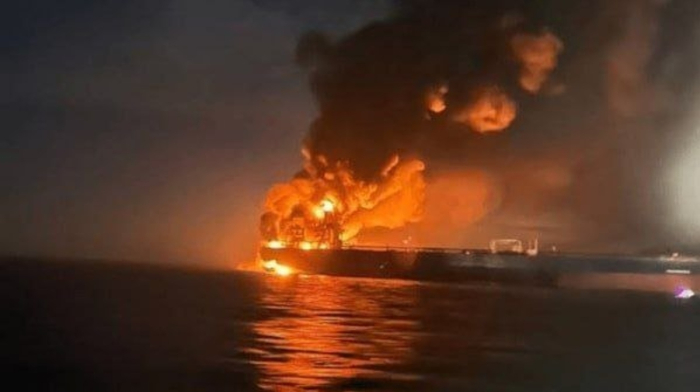
Saudi Aramco has ordered staff to evacuate its headquarters amid escalating Houthi attacks on the kingdom. Two people were killed in an attack on Dammam airport, while Iran's IRGC Navy claimed strikes on seven vessels and warned the U.S. of a wider response.
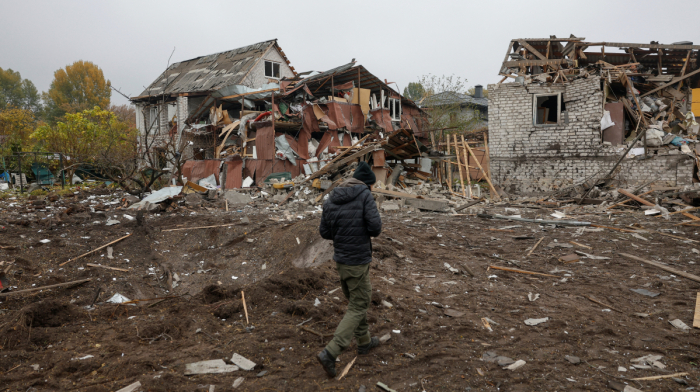
Russian strikes on Ukraine overnight killed at least two people and injured 15 others, including two children, Ukrainian authorities said. Meanwhile, Russia said it had intercepted the vast majority of 630 Ukrainian drones launched towards Moscow.
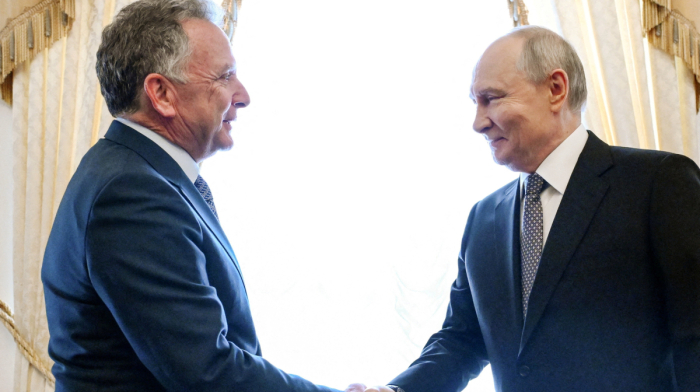
Russia is willing in principle to resume peace talks with Ukraine and the United States in November, Kremlin aide Yuri Ushakov said after President Vladimir Putin met U.S. special envoy Steve Witkoff in St Petersburg.
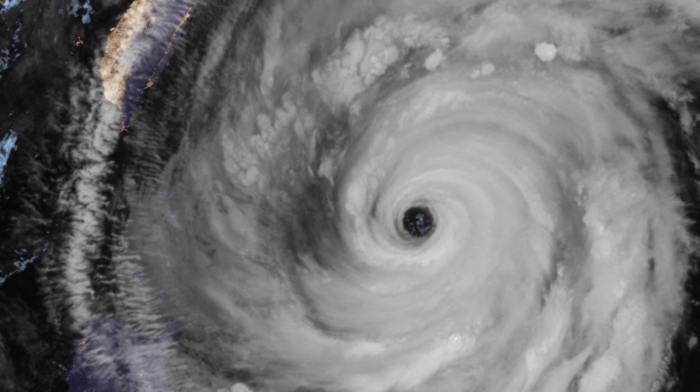
Super typhoon Champi is set to batter Japan’s Okinawa Prefecture from Friday (23 October), bringing violent winds, torrential rain and waves up to 11 metres high, as airlines cancel flights and organisers scrap a major festival.
The modern state has been formed within the framework of the principle of secularism. For this reason, the principle of secularism is reflected in constitutional texts, which are regarded as a social contract and regulate relations between the state and society (citizens).
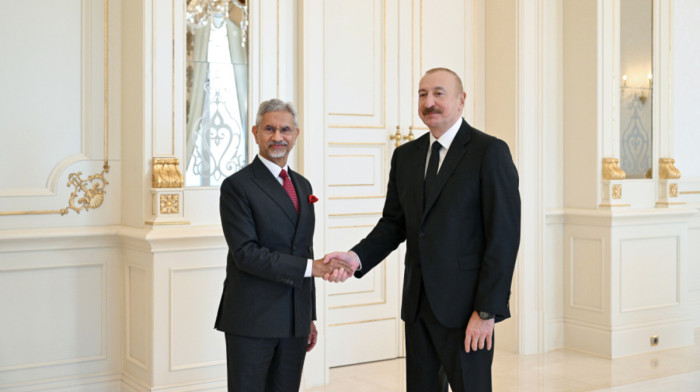
Azerbaijani President Ilham Aliyev met India’s Minister of External Affairs in Baku for talks on strengthening bilateral relations, with a focus on trade, investment, energy and technology.
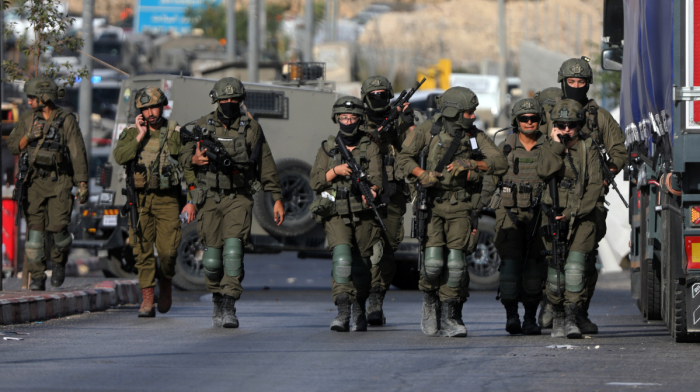
Israeli military bulldozers have begun demolishing buildings in the West Bank city of Hebron on Friday, 23 October, following armed clashes with Palestinians that left two Israeli soldiers dead, according to the Israeli military.
Greece’s parliament has passed a bill banning under-15s from using social media from 1 January 2027, as the country steps up efforts to protect children online. The new law will require platforms to enforce age restrictions.
France's Interior Minister Laurent Nunez said on Friday that 70,000 security forces would be mobilised throughout the country to keep order on Saturday, adding there have been calls for looting and violence from the ultra-left.
Missile and drone attacks have put Saudi Arabia on high alert, disrupting life in Riyadh and testing a new defence pact with Türkiye and Pakistan as regional tensions escalate.
Download the AnewZ app
You can download the AnewZ application from Play Store and the App Store.








What is your opinion on this topic?
Leave the first comment