India says it's going to stop buying Russian oil and lower trade barriers after U.S. President Donald Trump announced a trade deal with India on Monday (2 February) that cuts American tariffs on Indian goods to 18% from 50%.
Trump announced the deal on social media following a call with Indian Prime Minister Narendra Modi, noting that India would now buy oil from the U.S. and potentially Venezuela.
A White House official told Reuters that the U.S. was rescinding a punitive 25% duty on all imports from India over its purchases of Russian oil that had stacked on top of a 25% "reciprocal" tariff rate.
Trump's announcement added to positive sentiment over semiconductor makers and artificial intelligence (AI), lifting major indexes into positive territory on the day.
Modi also committed India to "BUY AMERICAN at a much higher level," in addition to buying more than $500 billion worth of U.S. energy, including coal, along with technology, agricultural and other products, Trump added.
"They will likewise move forward to reduce their Tariffs and Non Tariff Barriers against the United States, to ZERO," Trump said of India.
Trump's Truth Social message provided few details, including on the start date for the lower tariff rates, the deadline for India to end Russian oil purchases, trade barrier reductions.
The deal brings India "broadly in line with its Asian peers on tariff rates" of 15% to 19%, said Madhavi Arora, economist at Emkay Global, adding that it would eliminate a disproportionate drag on India's exports and its rupee currency.
India and the United States are expected to issue a joint statement on their trade deal in the near term, once a “final understanding” is reached and technical procedures are completed, Indian Trade Minister Piyush Goyal said on Tuesday.
Separately, an Indian trade ministry source said India plans to offer zero tariffs to the United States mostly on industrial goods.
Indian markets had been battered since the tariffs were levied by Washington, making it the worst-performing market among emerging nations in 2025, with record outflows of foreign investors.
The U.S. Chamber of Commerce, which has long advocated a market-opening trade deal with India, called Trump's announcement progress towards that goal.
"We are optimistic that this is the first step toward a comprehensive trade agreement that will unlock even more private sector collaboration, and we look forward to reviewing the details of the deal," Chamber CEO Suzanne Clark said in a statement.
'Big thanks' from Modi
"Wonderful to speak with my dear friend President Trump today. Delighted that Made in India products will now have a reduced tariff of 18%," Modi said in a social media post on X.
"Big thanks to President Trump on behalf of the 1.4 billion people of India for this wonderful announcement."
India's Trade Minister Piyush Goyal said the deal would draw the U.S. and Indian economies closer together.
"This agreement unlocks unprecedented opportunities for farmers, MSMEs, entrepreneurs, and skilled workers to Make in India for the world," Goyal said in a post on X.
The deal comes less than a week after India signed a long-awaited trade deal with the European Union that is expected to eliminate or reduce tariffs on 96.6% of traded goods by value. That deal excludes EU soybeans, beef, sugar, rice and dairy from tariff reductions.
Western Hemisphere oil
On Saturday (31 January), Trump teased a potential deal for India to buy Venezuelan oil after the U.S. seized Venezuelan President Nicolas Maduro in a military raid in early January.
The deal followed months of tense trade negotiations between the world's two largest democracies.
Last August, Trump doubled duties on imports from India to 50% to pressure New Delhi to stop buying Russian oil, and earlier this month said the rate could rise again if it did not curb its purchases.
Purchases of Venezuelan oil would help replace some of the Russian oil bought by India, the world's third-biggest oil importer.
India relies heavily on oil imports, covering around 90% of its needs, and importing cheaper Russian oil has helped lower its import costs since Moscow invaded Ukraine in 2022 and Western nations enacted sanctions on its energy exports.
Leaders of countries from the Commonwealth of Independent States (CIS) have agreed to hold coordinated population censuses around 2030. They took the decision at the CIS Council of Heads of State meeting in Awaza, Turkmenistan on Friday, media reported.
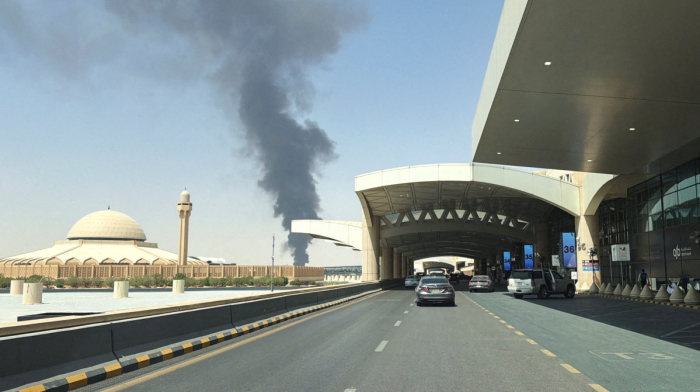
A powerful explosion has been reported at King Khalid International Airport in Riyadh, raising fresh concerns over aviation security in Saudi Arabia as tensions across the region continue to escalate.
Britain and Israel have reached a temporary compromise over the future of the British Consulate General in East Jerusalem, easing a diplomatic dispute that had threatened to further strain relations between the two countries.
South African judge Navanethem “Navi” Pillay won the Nobel Peace Prize on Friday “for her efforts to promote peace and international law,” the Norwegian Nobel Committee said.
The U.S. has imposed sanctions on the International Criminal Court (ICC) on Friday (9 October) escalating tensions with European allies and potentially targeting companies that provide services to the tribunal. The move came hours after former ICC judge Navi Pillay won the Nobel Peace Prize.
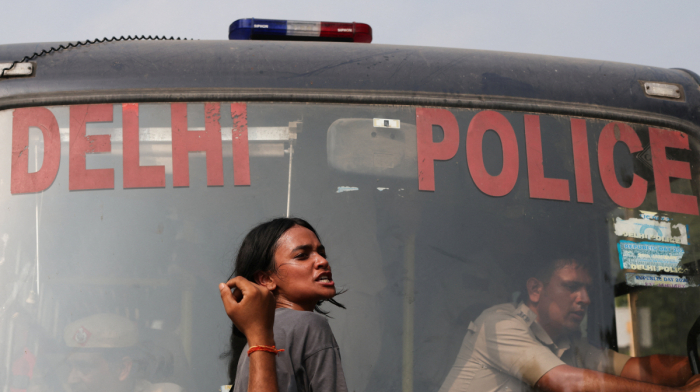
Indian police detained more than 2,000 protesters in Delhi on Saturday as authorities blocked a planned demonstration calling for the resignation of Chief Election Commissioner Gyanesh Kumar over disputed changes to voter lists.
At least 12 people, including three children, have been killed in a Russian attack on the Ukrainian city of Zaporizhzhia, a day after U.S. President Donald Trump announced a deal to ease sanctions on Russian diesel.
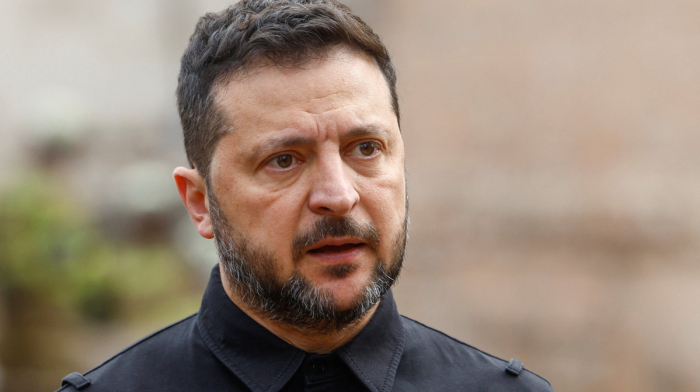
Ukrainian President Volodymyr Zelenskyy has criticised U.S. President Donald Trump’s decision to ease sanctions on Russian diesel exports, questioning why Moscow was granted an economic benefit without an apparent concession towards ending the war in Ukraine.
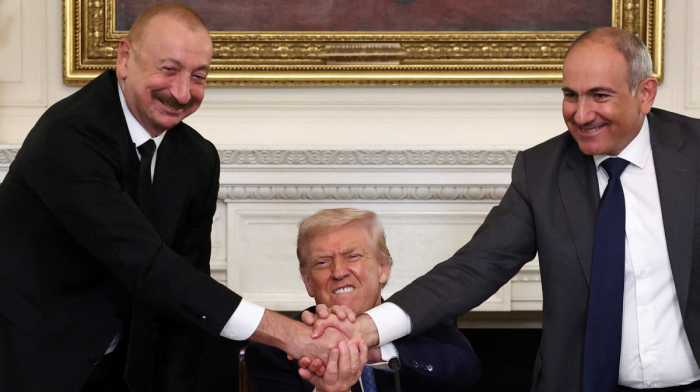
Russian President Vladimir Putin expressed surprise after Donald Trump mediated the Armenia-Azerbaijan peace agreement in 2025, the U.S. President said at a rally in New York state on Friday.
The United Nations has condemned a sharp rise in attacks on civilians in Ukraine, reporting that more than 100 people were killed and at least 429 injured in a single week as Russian strikes hit residential areas, passenger buses and critical infrastructure.
Download the AnewZ app
You can download the AnewZ application from Play Store and the App Store.














What is your opinion on this topic?
Leave the first comment