Indonesia and the United States have finalised a trade agreement lowering U.S. tariffs on Indonesian goods to 19% from 32%, with exemptions secured for palm oil and several other major exports.
The deal was signed in Washington by senior economic minister Airlangga Hartarto and U.S. Trade Representative Jamieson Greer during President Prabowo Subianto’s visit to the United States.
Airlangga described the agreement as a “win-win” that respects both countries’ sovereignty, while the White House said the pact would remove trade barriers and advance U.S. economic interests.
Export exemptions and textile quota
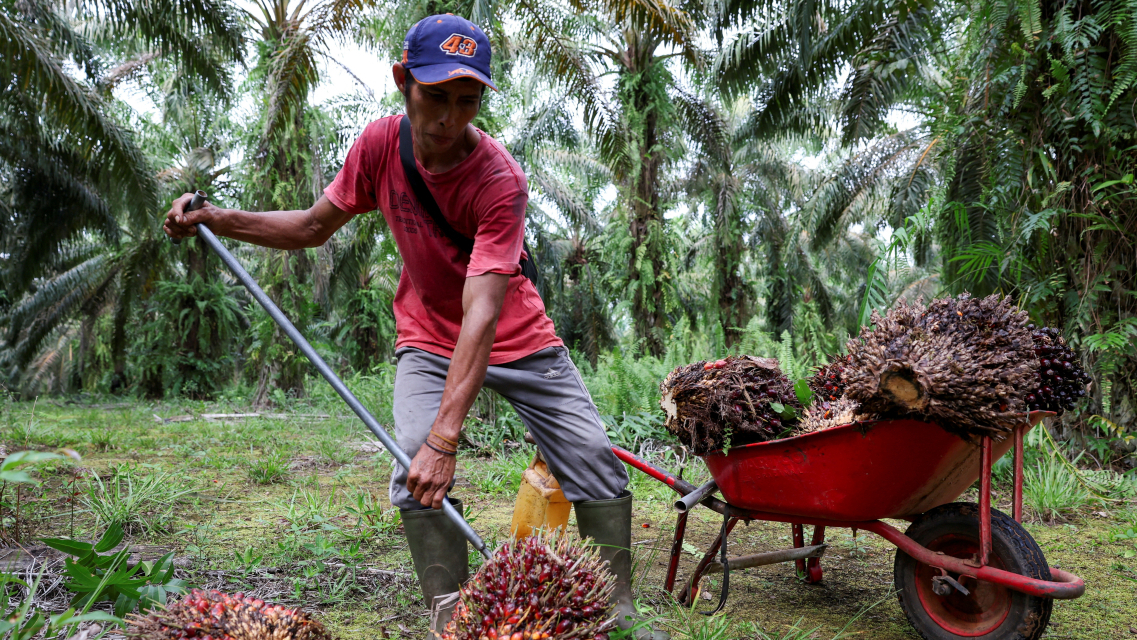
Palm oil, which accounts for around 9% of Indonesia’s total exports, will be exempt from the 19% tariff. Indonesia is the largest supplier of palm oil to the United States, accounting for between 61% and 85% of total imports in recent years. Exports were valued at about $3.36 billion in early 2025, significantly higher than those of other suppliers.
Between 2020 and 2025, Indonesia commanded roughly 61% to 90% of the U.S. palm oil market, well ahead of Malaysia, the second-largest supplier, followed by Colombia and Ecuador.
Coffee, cocoa, rubber and spices will also be exempt from tariffs.
Selected clothing and textile products made with U.S.-sourced cotton and synthetic materials will qualify for a zero tariff under a quota mechanism that is still being finalised. The quota will be determined by the volume of U.S. inputs used in production.
In return, Indonesia will remove trade barriers on more than 99% of U.S. imports across sectors including agriculture, healthcare products, seafood, technology and automotive-related goods.
Jakarta has also committed to facilitating over $30 billion in purchases of American goods, including cotton, soybeans, beef, Boeing aircraft and energy supplies.
Indonesia agreed to accept U.S. product standards covering vehicle safety, emissions, medical devices and pharmaceuticals, and to address non-tariff barriers such as local content requirements.
Critical minerals cooperation
The agreement includes measures related to critical minerals, a sector viewed as strategically important by Washington.
Indonesia will ensure production at foreign-owned mineral processing facilities aligns with national mining quotas for nickel, cobalt, bauxite, copper and manganese. It also pledged to take action against foreign-controlled companies operating in ways that harm U.S. trade interests and to facilitate investment in critical minerals and rare earth development.
Airlangga said U.S. requests to include non-economic issues, such as nuclear reactor development and the South China Sea, were dropped during negotiations.
The pact will take effect 90 days after both sides complete the required legal procedures.
During the visit, President Prabowo and President Donald Trump also signed a document titled “Implementation of the Agreement Toward a New Golden Age for the U.S.-Indonesian Alliance,” aimed at strengthening long-term economic security and growth.
Earlier in the week, Indonesian and U.S. companies announced commercial agreements worth $38.4 billion across mining, technology, textiles and other sectors.















What is your opinion on this topic?
Leave the first comment